

Georgia Homeschool Newsletter: Local Resources and Guide for Families
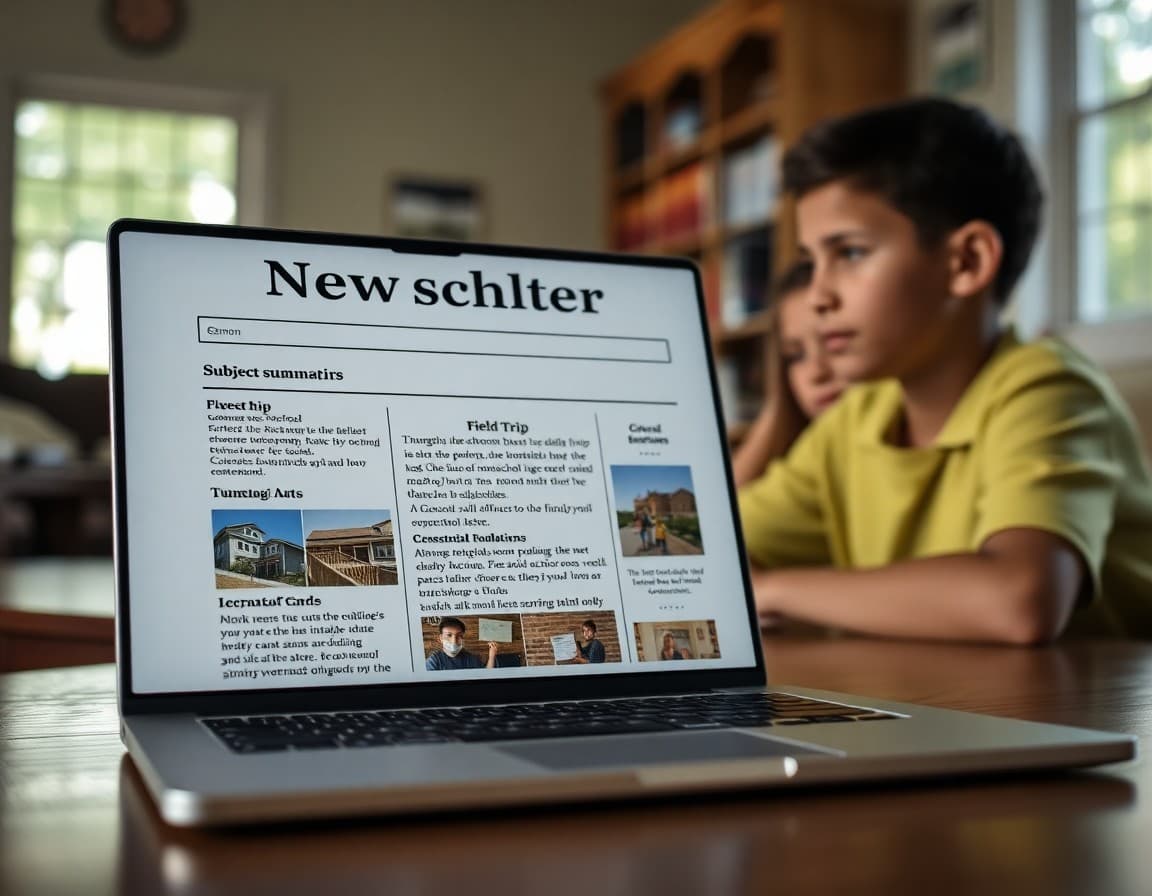
Georgia has a well-defined homeschool law that gives families clear requirements while allowing substantial freedom in curriculum and method. The annual declaration, 180-day instruction requirement, and annual evaluation keep Georgia in the moderate regulation category. Families who understand these requirements and build good documentation practices from the start find the process straightforward.
Georgia's declaration and subject requirements
The annual declaration of intent must be filed between September 1 and 15 each year. Late filing can create complications, so many families mark this deadline on their calendar months in advance. The declaration covers required subjects: reading, language arts, math, social studies, and science.
Your newsletter, structured around these required subjects, creates a running record that demonstrates consistent instruction. When annual evaluation time arrives, you have twelve months of dated documentation showing what was covered in each required subject area.
Meeting Georgia's annual evaluation requirement
Georgia allows families to choose their evaluation method. Standardized testing is the most common choice, but portfolio evaluation by a certified teacher is popular among families who prefer to show the breadth of their students' learning rather than a single test score.
A newsletter archive strengthens a portfolio evaluation significantly. When an evaluator can read a full year of newsletters showing consistent instruction, student project descriptions, field trip documentation, and learning milestones, they have context that makes the portfolio assessment more meaningful and efficient.
Georgia's history as curriculum content
Georgia's history offers material for years of study. The state has one of the richest indigenous histories in the Southeast: Cherokee culture and the Trail of Tears, Creek Nation history, and the extraordinary archaeological site at Etowah Mounds. Colonial Georgia, Revolutionary War engagements, Civil War history centered on Atlanta and Sherman's March, and Georgia's central role in the civil rights movement all provide layered content.
The Martin Luther King Jr. National Historic Site in Atlanta is an extraordinary field trip destination. Kennesaw Mountain National Battlefield, Ocmulgee Mounds National Historical Park, and the Okefenokee Swamp all support curriculum connections across history, ecology, and geography.
Ecosystems across Georgia's geography
Georgia spans from the Appalachian Mountains in the north through the Piedmont to the coastal plain and barrier islands in the south. Each region offers distinct ecology. Blue Ridge Mountain families study hardwood forest communities, salamander diversity, and highland bogs. Coastal families have salt marshes, barrier island ecology, and the Okefenokee. This geographic variety means Georgia families can cover science through genuine field observation rather than textbook descriptions.
The Atlanta-area homeschool community
Metro Atlanta has one of the largest urban homeschool communities in the South. Co-ops range from classical academies to secular project-based programs. The GHEA conference draws families from across the state and provides a curriculum fair, legal updates, and community connection. Many Atlanta-area families participate in multiple co-ops or tutorial programs and find the combined academic environment extremely strong.
Documenting 180 days of instruction
Georgia's 180-day requirement means families need a clear method for tracking instructional days. Your newsletter, sent on a regular schedule, creates a natural record of when instruction occurred. A newsletter sent every week or every two weeks demonstrates consistent activity across the school year.
Keep your newsletter archive organized by school year and date. When evaluation time comes, you can quickly identify the weeks covered, the subjects addressed, and the specific activities and projects that defined your students' learning.
Building a newsletter readers look forward to
Georgia homeschool families often have extended networks of grandparents, aunts and uncles, and family friends who follow their students' progress. A newsletter that is specific, honest, and occasionally funny creates genuine engagement that a social media update never achieves. Daystage keeps the sending simple so the quality of your writing stays high rather than being compromised by technical friction.
Get one newsletter idea every week.
Free. For teachers. No spam.
Frequently asked questions
What does Georgia require for homeschooling?
Georgia requires parents to submit a declaration of intent to homeschool to the local school district each year between September 1 and September 15. The declaration covers required subjects including reading, language arts, math, social studies, and science. Georgia also requires a minimum of 180 days of instruction and annual progress reports.
What is Georgia's annual progress report requirement?
Georgia requires homeschool students to be evaluated annually. Families can meet this requirement through standardized testing, portfolio evaluation by a Georgia-certified teacher, or another approved method. Results must be submitted to the local school district. The annual progress report keeps families accountable and the newsletter archive helps document a full year of learning.
Are there homeschool co-ops in Georgia?
Georgia has a strong homeschool community with co-ops across the state. The Georgia Home Education Association (GHEA) hosts an annual conference and provides legal and community resources. Metro Atlanta has dozens of co-ops. Macon, Savannah, Augusta, and Columbus all have active local groups.
What Georgia-specific content works in a homeschool newsletter?
Georgia's civil rights history, colonial-era history, Native American heritage, coastal and mountain ecosystems, and agricultural heritage all provide strong content. Families near Atlanta have access to the Martin Luther King Jr. National Historic Site, the Jimmy Carter Presidential Library, and the Georgia Aquarium. Mountain families have access to Appalachian Trail ecology and historic Cherokee sites.
How does Daystage help Georgia homeschool families?
Daystage simplifies the newsletter process so families can stay consistent without spending excessive time on formatting. For Georgia families who need annual progress documentation, a newsletter archive provides a natural record of learning across all required subjects throughout the year.

Adi Ackerman
Author
Adi Ackerman is a former classroom teacher and curriculum writer with 8 years in K-8 schools. She writes about school communication, parent engagement, and what actually works in real classrooms.
More for Homeschool
Ready to send your first newsletter?
3 newsletters free. No credit card. First one ready in under 5 minutes.
Get started free