

Utah High School Newsletter Guide for Teachers
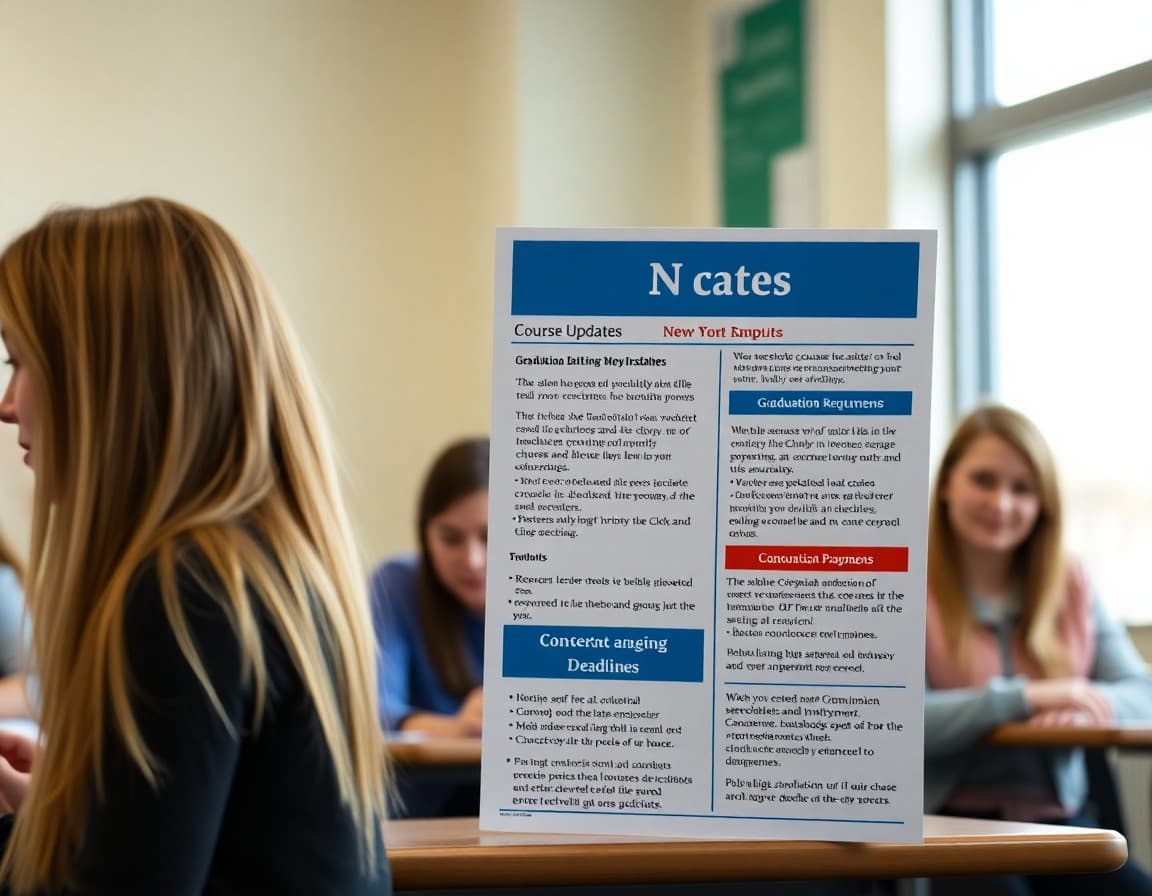
Utah high school teachers serve students in a state with strong academic expectations, a competitive college-going culture in many communities, and significant economic and demographic diversity that is not always visible from the outside. The Wasatch Front suburban districts have high college-going rates and engaged parent populations. Rural Utah districts and communities in the Colorado Plateau region face access challenges that change what "college and career readiness" looks like in practice. A newsletter that works across these contexts is honest, specific, and avoids assumptions about what families already know.
Utah's High School Academic Framework
Utah high school students work toward a 24-credit graduation requirement and take the Utah Aspire Plus assessment in grades 9 through 11. Utah Aspire Plus is developed with ACT and provides ACT-aligned data that both families and students can use for college planning. Many Utah high schools offer concurrent enrollment through Utah Valley University, Snow College, or other USHE institutions, and AP courses are widely available in suburban districts. Career and Technical Education (CTE) pathways are strong in Utah, particularly in trade and technical fields that align with the state's construction, technology, and healthcare industries.
Planning Your Newsletter Calendar for the Utah School Year
Utah's school year runs from late August through late May. Key newsletter dates: September for course expectations and the semester arc, October for first-quarter grade reports and concurrent enrollment information, November for Utah Aspire Plus score release (for students who tested in spring), January for semester results, February for junior ACT preparation and AP exam registration, March for Utah Aspire Plus testing window preparation, April for AP exam schedules, and May for end-of-year information. Senior-specific newsletters should add October for FAFSA submission and November for priority scholarship deadlines at Utah System of Higher Education institutions.
What Goes in Each Issue
Useful Utah high school newsletters stay focused on four sections: Course Update (what students are learning and why it matters for Utah Aspire Plus or future coursework), Upcoming Dates (tests, deadlines, school events), College and Career Corner (grade-appropriate from concurrent enrollment introduction in 9th grade to specific FAFSA and scholarship deadlines in 12th), and Resources (tutoring, office hours, Utah Futures platform for career exploration). Under 400 words total. Every issue, without exception.
A Template Section for Utah High School Classrooms
Here is how a junior-level US History teacher in Alpine School District formats their monthly update:
US History Update: We are finishing our unit on the Progressive Era and students have a document-based question essay due Thursday. This essay type appears on both the AP US History exam (for AP students) and measures critical thinking skills assessed on the Utah Aspire Plus. Students should use the source analysis graphic organizer posted on Canvas before writing their introduction. For students who want to review document analysis before Thursday, I have office hours Monday after school and Wednesday at lunch. Strong performance on this essay type is the single biggest driver of success on standardized history assessments.
That section covers content, gives a deadline, connects to both AP and Aspire Plus, offers resources, and explains the why. Five sentences, everything families need.
Communicating Utah's Concurrent Enrollment Opportunity
Utah's concurrent enrollment program is one of the most accessible in the country, with tuition subsidized significantly for eligible students. A student who takes three concurrent enrollment courses per year from their junior and senior years can arrive at college with a full semester of credit already earned, saving thousands of dollars. Your newsletter should introduce this opportunity to ninth-grade families and provide specific application information and deadlines starting in junior year. For first-generation college families, this is often genuinely news that changes the financial calculation of college attendance.
Addressing the Utah Aspire Plus Assessment
Utah Aspire Plus measures college and career readiness through ACT-aligned assessments in English, mathematics, reading, and science for grades 9-11. Results appear on student score reports and inform both placement decisions and college planning. Your newsletter should explain Aspire Plus to families who are unfamiliar with ACT-style assessments, flag the testing window, and give families specific preparation suggestions. Many Utah families want to support Aspire Plus preparation but do not know what it looks like in practice beyond "study hard."
Supporting Utah's Diverse High School Families
Utah's high school population is more diverse than its reputation suggests. Salt Lake City, West Valley, and Kearns have large Hispanic and Pacific Islander populations. Refugee families from multiple countries are present in Salt Lake County and Weber County. First-generation college-going families are common in rural Utah districts and many urban neighborhoods. Newsletter communication that assumes all families are familiar with college application processes, concurrent enrollment, and scholarship systems will miss these families. Plain-language explanations of every process and pathway serve all families better than communication designed for families who already know how the system works.
When to Go Beyond the Newsletter
Your newsletter handles routine communication. It does not replace direct contact when a student has missed several assignments, when a family has not been engaging with school communication for a month, or when a significant grade change is coming. Build the habit of using open rate data from your newsletter to identify families who are not engaging digitally, then follow up by phone. The newsletter is not a substitute for a relationship. It is a tool that makes maintaining that relationship more efficient by ensuring families always have context when you do reach out directly.
Get one newsletter idea every week.
Free. For teachers. No spam.
Frequently asked questions
What should Utah high school newsletters cover?
Utah high school newsletters should address current coursework and upcoming assessments, Utah graduation requirement milestones, Utah Aspire Plus assessment schedules, concurrent enrollment deadlines and application processes, and college application timelines for juniors and seniors. Utah's emphasis on college and career readiness through the Utah Futures platform is also worth referencing in newsletters for juniors.
What are Utah's high school graduation requirements?
Utah requires students to earn 24 credits for graduation, including three English, three mathematics (including algebra and a higher-level math), two lab sciences, three social studies, one fine arts, two health and PE, and specific elective requirements. Students must also demonstrate proficiency in key areas and complete a personalized education plan starting in eighth grade. Newsletters that help families track progress against these requirements prevent late-year surprises.
How does concurrent enrollment work in Utah and how should it appear in newsletters?
Utah's concurrent enrollment program allows high school students to take college courses through Utah System of Higher Education institutions at significantly reduced cost. Students can earn both high school and college credit simultaneously. Your newsletter should introduce concurrent enrollment to families in ninth grade so they understand it is available, and provide application deadlines to eligible students starting in their junior year. Many first-generation college families are unaware of this opportunity.
How often should Utah high school teachers send newsletters?
Monthly newsletters supplemented by targeted communications around Utah Aspire Plus testing, AP exam registration, and senior scholarship deadlines work well for most Utah high school teachers. Some departments in large Utah high schools send a combined departmental newsletter monthly, which is more sustainable than individual teacher newsletters and reduces the total volume of school emails families receive.
What makes Daystage useful for Utah high school teachers?
Daystage lets Utah high school teachers create professional newsletters and send them directly to parent email lists without formatting overhead. You can schedule monthly newsletters during busy AP exam and testing periods, track which families are opening each issue, and set up department-level distribution lists for larger course teams. The open rate data helps you identify families who may need direct outreach rather than assuming digital communication is reaching everyone.

Adi Ackerman
Author
Adi Ackerman is a former classroom teacher and curriculum writer with 8 years in K-8 schools. She writes about school communication, parent engagement, and what actually works in real classrooms.
More for High School
Ready to send your first newsletter?
3 newsletters free. No credit card. First one ready in under 5 minutes.
Get started free