
April Newsletter Ideas for 11th Grade Teachers: What to Send This Month

April is the most compressed month of junior year. AP exams are three weeks away, college prep conversations are ramping up, prom is on the calendar, and students are trying to hold it all together. Your newsletter this month is not a routine update. It is a navigation tool for families who are genuinely trying to figure out what to prioritize.
AP exams are the urgent item
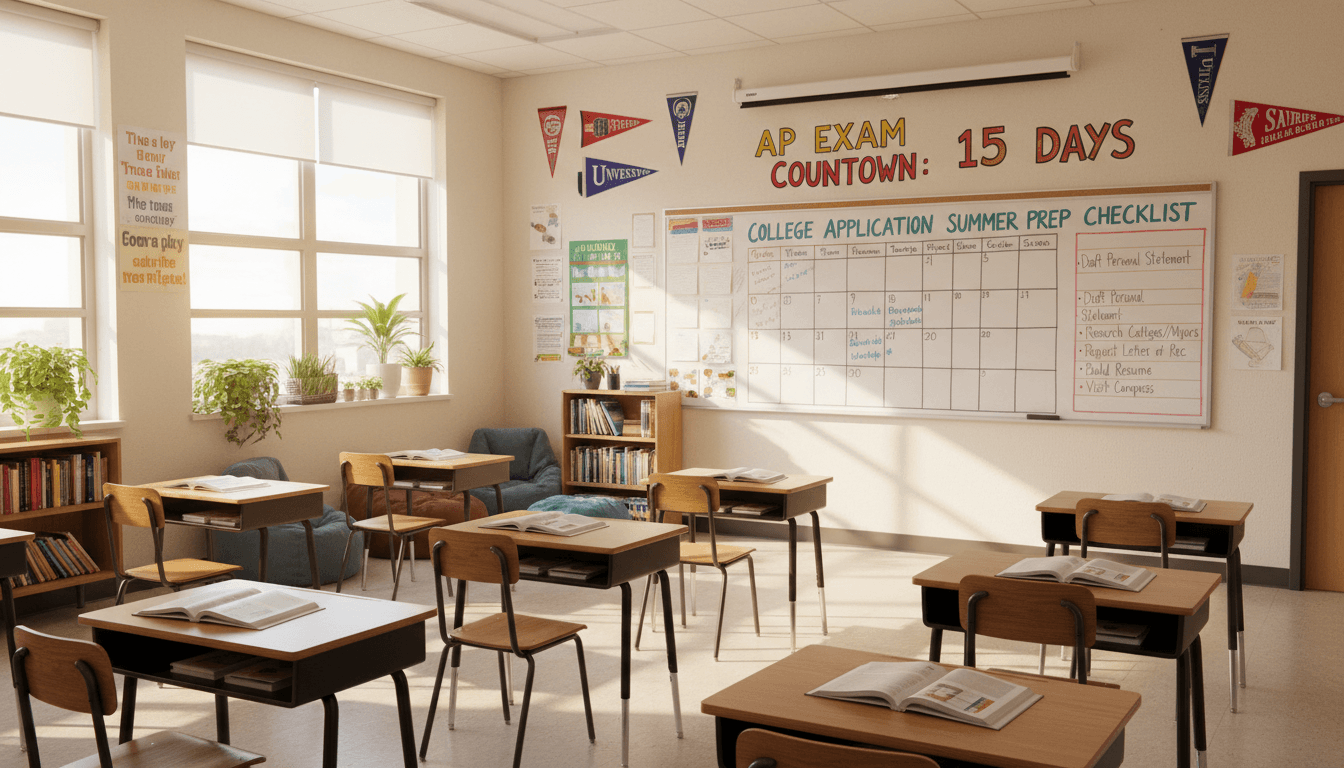
For juniors in AP courses, May exams are weeks away. That makes April the critical review window, not the week before the exam. Your newsletter should name the specific exam date for your subject, outline what the exam covers, and give families a clear sense of what focused preparation looks like between now and test day. Link to the College Board content page if it is useful. Families who understand the structure of the exam are better partners in supporting review at home.
Explain what students should be doing right now
A lot of junior families have no idea what AP review actually involves. Give them a concrete picture: review one unit per week, practice free-response questions, use past exams under timed conditions. If you have a class review schedule, share it. Parents who know what their student is supposed to be working on can ask better questions than "how is school going?" They can ask "did you finish the Chapter 4 review?" That specificity makes a difference.
Address the prom timeline directly
Junior prom typically falls in late April or early May. Students lose multiple days of focus to planning, shopping, and the event itself, which is normal. What is not normal is losing a week of AP review to prom prep. Name the date in the newsletter, note any assessments that fall nearby, and be clear about your expectations. This is not punitive. It is honest, and families respect it.
Open the summer college prep conversation
April is the right time to plant this seed. Junior families who wait until June to think about college prep lose the summer. What should their student do before September? Campus visits, Common App account setup, essay brainstorming, activity list drafting. You do not need to be a college counselor to include a short list of three or four concrete summer tasks. That kind of practical guidance is exactly what families are looking for from the teachers who know their student.
Flag what happens to grades in April and May
Junior year GPA is closely watched by colleges. A student who earns a 3.8 through three years and dips in the last semester tells a story admissions readers notice. Tell families this directly: finishing strong matters, and the AP exam score is only part of the picture. Class performance, participation, and final project grades still feed into the transcript that goes out with college applications.
Mention senior year course selection if it is still open
Some schools finalize senior year schedules in April. If course selection is still open, include a short reminder about your subject area: what advanced options are available, what the enrollment requirements are, and when the deadline is. Students who want to take a specific course senior year sometimes miss the window because they did not know it was closing.
Name your office hours and review sessions
Include your availability through the end of the school year, with specific attention to April and early May. If you are running AP review sessions outside of regular class time, put dates and times in the newsletter. Not every student will come, but every parent will know the option existed. That matters when a student falls short on exam day and the parent wonders what support was available.
Keep it under 500 words and send it now
This newsletter needs to arrive in the first week of April. Junior families who get this information on April 7th have three weeks to act on it. Families who get it on April 21st do not. Use headers for the AP section and the summer prep section. Those are the two parts people will reference later. Everything else should be brief and scannable.
Get one newsletter idea every week.
Free. For teachers. No spam.
Frequently asked questions
What should an 11th grade April newsletter focus on?
AP exam preparation is the centerpiece. Exams start in early May, which means April is the last real stretch of focused review time. Beyond AP, junior families need guidance on summer college prep: campus visits, essay brainstorming, and early application timelines. Prom is also happening for many juniors in April or May, so logistics around that are worth a brief mention.
How do I help junior families manage AP exam stress in April?
Give them practical information rather than general encouragement. Publish a week-by-week review plan, share College Board resources, and name the specific exam dates for your subject. Families who have a concrete schedule feel more in control. Also remind parents that their student's job right now is to review, not to start new content, which is a relief for many families who fear they are behind.
What college prep content belongs in an April junior newsletter?
Focus on summer action items: which campuses to visit, when to start Common App essays, and whether any early action deadlines require materials before the fall. Juniors who do summer prep arrive at senior year significantly less overwhelmed than those who wait. A short bullet list of three or four things to do before September is more useful than a paragraph of general advice.
Should I address prom in a junior newsletter?
Yes, briefly and practically. Many juniors attend prom in April or May, and the days surrounding prom can affect attendance and focus. Acknowledge it, name the date if you know it, and note your expectations around any assessments that fall near the event. Families appreciate teachers who handle this with honesty rather than pretending it does not exist.
What newsletter tool works best for high school teachers?
Daystage helps junior year teachers send organized, professional newsletters without the formatting headaches. You can publish an AP exam countdown, link to review resources, and add summer prep reminders in a single newsletter that goes straight to parent inboxes. For a month as loaded as April, having a tool that keeps communication clear and timely takes one thing off a very full plate.

Adi Ackerman
Author
Adi Ackerman is a former classroom teacher and curriculum writer with 8 years in K-8 schools. She writes about school communication, parent engagement, and what actually works in real classrooms.
More for High School
Eleventh Grade College Prep Newsletter: Communicating the Junior Year College Search to Families
High School · 7 min read
Eleventh Grade Newsletter Ideas: Topics for Junior Year Family Communication
High School · 7 min read
Eleventh Grade Newsletter Examples: Templates and Real Examples That Work
High School · 7 min read
Ready to send your first newsletter?
3 newsletters free. No credit card. First one ready in under 5 minutes.
Get started free