
10th Grade Social Studies Newsletter: Communicating World History and Current Events to Sophomore Parents

World History and Modern World History are intellectually ambitious courses. Students are reading primary sources, analyzing competing interpretations of major events, debating complex moral questions, and writing sustained research papers, often for the first time at this academic level. Parents who understand what their student is doing are better positioned to support the work and less likely to be blindsided when challenging content comes up.
A social studies newsletter for 10th grade parents is one of the more useful communications you can send because this course often generates more parent questions than any other 10th grade subject.
Name the course and describe the big picture
Start with the basics: the course name, the grade level, and the broad arc of what students will cover during the year. A brief overview like "This year in Modern World History we move from the age of exploration through the Cold War, with an emphasis on analyzing how major political and economic forces shaped human societies" gives parents a mental map before they get into the details.
If the course follows a specific state curriculum framework or connects to state standards, you can mention this briefly. It signals that the content is academically grounded and not the teacher's personal selection.
Primary source analysis: what it is and why it matters
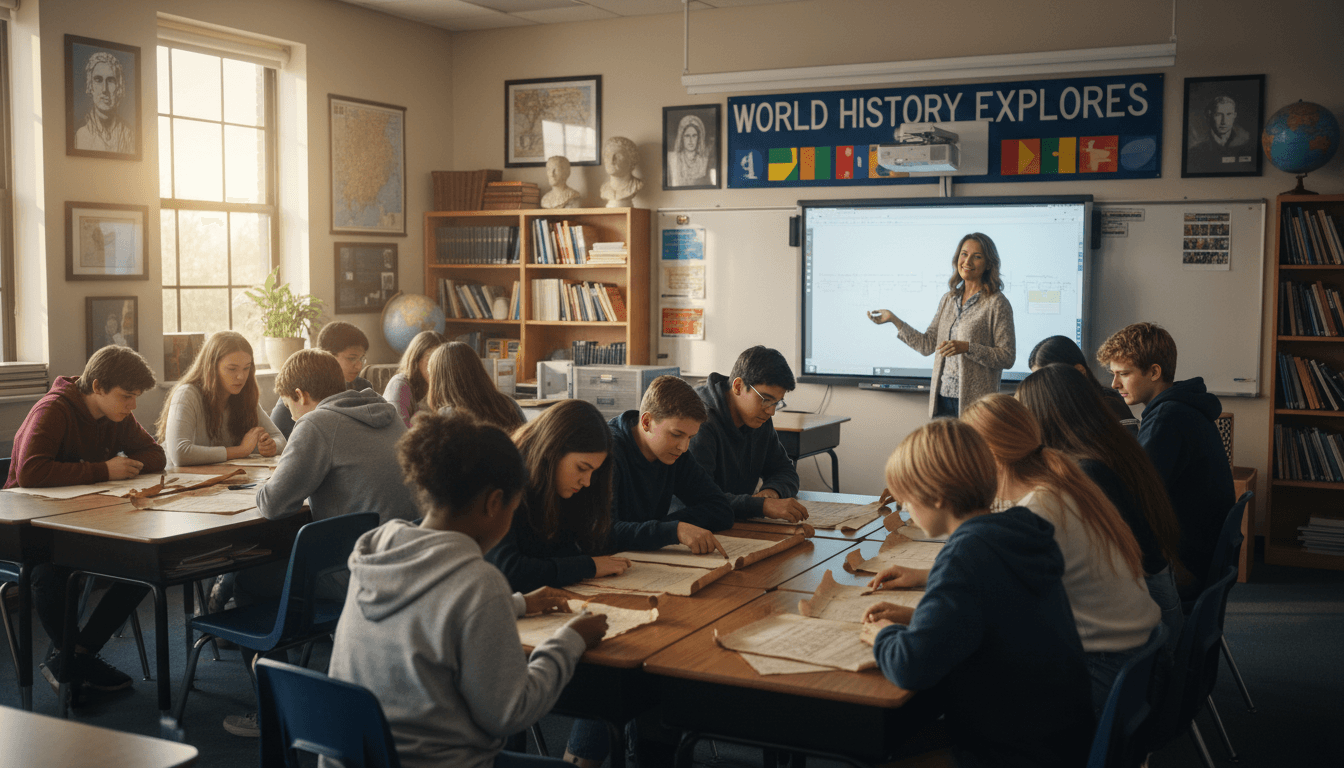
Many 10th grade social studies courses use primary sources as the core of their analytical work. Parents who went through social studies as a textbook-reading exercise may not understand what primary source analysis involves or why it takes so much class time.
A paragraph explaining that students read original documents, speeches, letters, and images from historical periods, and practice analyzing them for perspective, bias, and context, helps parents appreciate the intellectual rigor. It also explains why the homework sometimes involves reading a short, dense excerpt rather than answering textbook comprehension questions.
Debate and discussion on sensitive topics
Social studies courses routinely engage with topics that are historically, politically, or ethically complex. Genocide, colonialism, imperial exploitation, slavery, and contemporary geopolitical conflicts are all legitimate and important areas of historical study. Some of this content can be emotionally difficult for students, particularly those whose families have personal connections to these histories.
Your newsletter should preview upcoming sensitive units and explain your pedagogical approach. Saying "We will be studying the Holocaust as part of our World War II unit, including primary accounts from survivors, and I approach this content with care for students who may have personal or family connections" is enough to prepare parents without overpromising. Let families know they can reach out if they have concerns before the unit begins.
Research paper expectations
Many 10th grade social studies teachers assign a substantial research paper during the year. This is often the first time students write a fully documented, multi-source academic paper, and parents are frequently unsure how much they should be involved.
Be explicit in your newsletter about the scope of the paper, the citation format required (MLA, Chicago, or another), the approved research sources, and the due date timeline with intermediate checkpoints. Also address what legitimate parental support looks like: asking their student to explain their thesis, helping locate print or digital library resources, or reviewing for clarity. Clarify that editing or co-writing the paper is not appropriate and will be caught by the academic integrity process.
Current events integration
If you weave current events into your course, tell parents how. Some teachers use a weekly current events protocol where students bring in and discuss a news story. Others make explicit connections between historical units and contemporary events as they arise. Either way, parents who know this is happening can support the habit at home, especially if dinner table discussions about the news connect to what students are studying that week.
If you recommend specific news sources for students to follow, include them in the newsletter. Knowing that their student's teacher suggests a particular news outlet is useful information for parents trying to guide media consumption.
Connecting to AP World History
If your course is a feeder into AP World History or if some students in your class are already in an AP section, acknowledge this connection. A brief note on how standard coursework builds the analytical foundation that AP courses require helps parents make informed choices about their student's academic trajectory.
You might also briefly mention what the AP exam involves for parents who are early in the decision process, not as a sales pitch but as context for why the skills you are building now matter beyond sophomore year.
Close with what to expect next and how to reach you
End your newsletter with upcoming unit topics, major assignment due dates, and your contact information. A platform like Daystage makes this kind of structured, multi-section newsletter easy to send directly to parent inboxes, with links to supplemental resources and a clean layout that holds up on both desktop and mobile.
Get one newsletter idea every week.
Free. For teachers. No spam.
Frequently asked questions
What social studies courses do most 10th graders take?
The most common 10th grade social studies courses in the United States are World History, Modern World History, and Geography. Some districts place students in AP World History at this grade level, which carries a significantly heavier reading and writing load. Your newsletter should name the specific course and level so parents understand the scope of what students are studying.
How should a 10th grade social studies newsletter address potentially sensitive topics?
Proactive communication is far better than reactive. If your course covers genocide, colonialism, slavery, or contemporary political conflicts, tell parents in advance what units are coming and frame the educational purpose clearly. Acknowledging that some content may be emotionally difficult while explaining the scholarly approach you will take builds trust and reduces the chance of a surprised or upset parent call in the middle of a unit.
How should research paper expectations be explained in a social studies newsletter?
Cover the basics: the topic scope, the expected length, the citation format required, the research sources students should use, and the due date timeline. Parents of 10th graders are often more involved in research paper preparation than parents realize is appropriate, so clarifying what is student work versus legitimate parental support, such as asking questions or helping locate library resources, is genuinely helpful.
How do you handle current events in a 10th grade social studies class?
Many 10th grade social studies teachers integrate current events as a regular part of the course, whether through weekly news discussions, article analysis, or making explicit connections between historical units and contemporary news. Your newsletter should explain how current events are used and whether students are expected to follow specific news sources. This also lets parents know when dinner table conversations about the news connect directly to what students are studying.
What newsletter tool works best for communicating social studies units to high school parents?
Daystage is built for this kind of structured parent communication. Social studies unit newsletters often need to cover several topics, including the course overview, upcoming sensitive content, research expectations, and current events connections, and Daystage's formatting makes it easy to organize these into clearly labeled sections. Teachers can include links to the research guide or approved news sources, and parents receive it directly in their inbox.

Adi Ackerman
Author
Adi Ackerman is a former classroom teacher and curriculum writer with 8 years in K-8 schools. She writes about school communication, parent engagement, and what actually works in real classrooms.
More for High School
10th Grade Science Unit Newsletter: How to Communicate Labs, Safety, and AP Connections to Parents
High School · 6 min read
10th Grade Homework Policy Newsletter: What Parents Need to Know About the Sophomore Workload
High School · 5 min read
11th Grade Classroom Newsletter Ideas: What to Send Junior Parents All Year
High School · 7 min read
Ready to send your first newsletter?
3 newsletters free. No credit card. First one ready in under 5 minutes.
Get started free