

Teacher Newsletter for AP Psychology Units: What Families Need to Understand
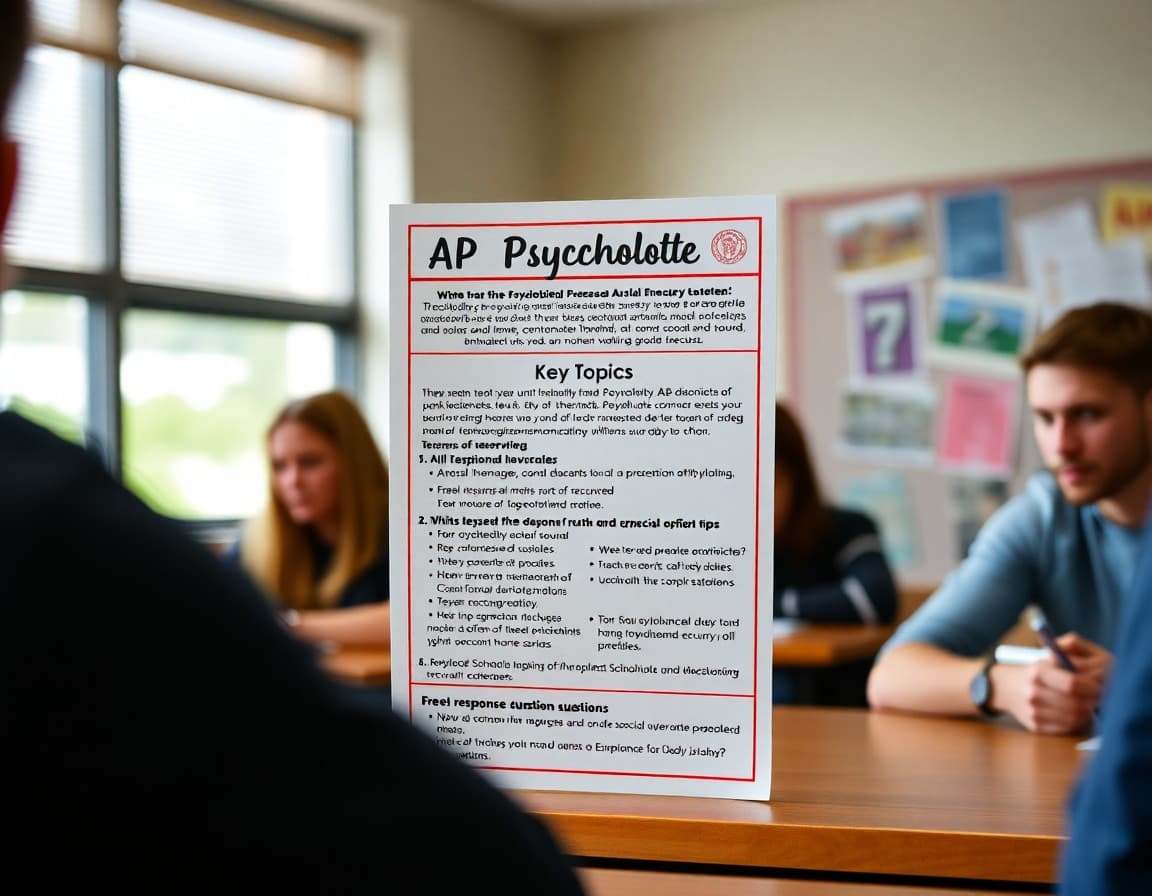
What AP Psychology Asks Students to Do
AP Psychology covers the scientific study of human behavior and mental processes across fourteen major units. The course requires students to learn a large vocabulary, understand key research studies, and apply psychological concepts to novel scenarios. It is not a self-help course or a discussion of personal experience, though personal connection to the material can make studying more engaging. A unit newsletter that sets this expectation helps families support academic preparation rather than assuming the course requires no study effort.
The Current Unit: Major Concepts and Key Researchers
Each AP Psychology unit has a recognizable set of concepts, researchers, and studies. Naming them in the newsletter gives students and families a checklist for the unit and helps families ask specific questions rather than generic ones. A student who can explain Pavlov's experiment, describe classical conditioning, and give a modern-day example of it understands the material at the level the exam requires.
Vocabulary Load and Study Strategies
AP Psychology has one of the highest vocabulary loads of any AP course. Students who try to memorize all terms the week before the exam consistently underperform compared to those who review in shorter, more frequent sessions throughout the unit. Spaced repetition with flashcards, practice applying terms to scenarios, and cumulative review of earlier units all matter. Your newsletter should recommend specific strategies rather than just telling students to study more.
Application Questions: The Real Challenge
Most students can define a psychological term after studying. The harder skill, and the one the exam primarily tests, is applying the term to a scenario they have not seen before. A newsletter that explains this and gives families a simple practice strategy, asking their student to connect a daily behavior to a psychology concept, directly prepares students for the exam format.
Free Response Questions in AP Psychology
The AP Psychology free response section includes two questions. One is a concept application question that describes a scenario and requires students to apply multiple psychological concepts from across the course. The other is a research methods question. Both require specific, accurate application rather than general discussion. Let families know this format so they understand why their student's studying goes beyond reading the textbook.
Connecting Psychology to Family Life
AP Psychology concepts appear in everyday family interactions. Reinforcement, attribution, confirmation bias, attachment, and social influence are all visible in daily life. Families who notice these concepts and mention them to their student are giving them natural, low-effort application practice that reinforces classroom learning.
Regular Updates With Daystage
AP Psychology moves through units quickly. Daystage makes it easy to send a brief newsletter at the start of each unit so families stay oriented and can support the specific study demands of the current content area.
Get one newsletter idea every week.
Free. For teachers. No spam.
Frequently asked questions
What should an AP Psychology unit newsletter include?
An AP Psychology unit newsletter should explain the unit's conceptual focus, the key terms and researchers students need to know, what the multiple-choice and free response questions look like for this content area, and how students should be studying. AP Psychology has a high vocabulary load and requires application skills, not just definition recall.
How many units does AP Psychology cover?
AP Psychology covers nine units: history and approaches, research methods, biological bases of behavior, sensation and perception, states of consciousness, learning, cognition, motivation, emotion and personality, developmental psychology, testing and individual differences, treatment of psychological disorders, and social psychology. The course moves quickly and the cumulative vocabulary load is significant.
What is the difference between recognizing a term and applying it?
Many AP Psychology multiple-choice questions ask students to apply a concept to a new scenario rather than simply recognize the definition. A student who can define operant conditioning but cannot identify it in a description of parenting behavior has partial knowledge. A newsletter that explains this application requirement helps families understand why their student needs to study beyond flashcard recognition.
How can families help AP Psychology students study?
AP Psychology is well-suited to scenario-based review. Families can describe a real behavior or situation and ask their student to name the psychological concept it illustrates. This kind of conversational application practice is more useful than rereading notes and tests exactly the skill the exam requires.
What tool helps AP teachers send newsletters efficiently?
Daystage is built for school communication. AP Psychology teachers use it to send formatted newsletters with unit overviews, study strategy tips, and exam preparation notes directly to parent email lists.

Adi Ackerman
Author
Adi Ackerman is a former classroom teacher and curriculum writer with 8 years in K-8 schools. She writes about school communication, parent engagement, and what actually works in real classrooms.
More for High School
Teacher Newsletter for AP History Units: Communicating Skills and Content to Families
High School · 6 min read
Teacher Newsletter for AP Government Units: Connecting Civics to Current Events
High School · 6 min read
Teacher Newsletter for Honors Class Introductions: Setting Expectations With Families
High School · 6 min read
Ready to send your first newsletter?
3 newsletters free. No credit card. First one ready in under 5 minutes.
Get started free