

Teacher Newsletter for AP Human Geography Units: Building Geographic Thinking at Home
Geography as Analysis, Not Memorization
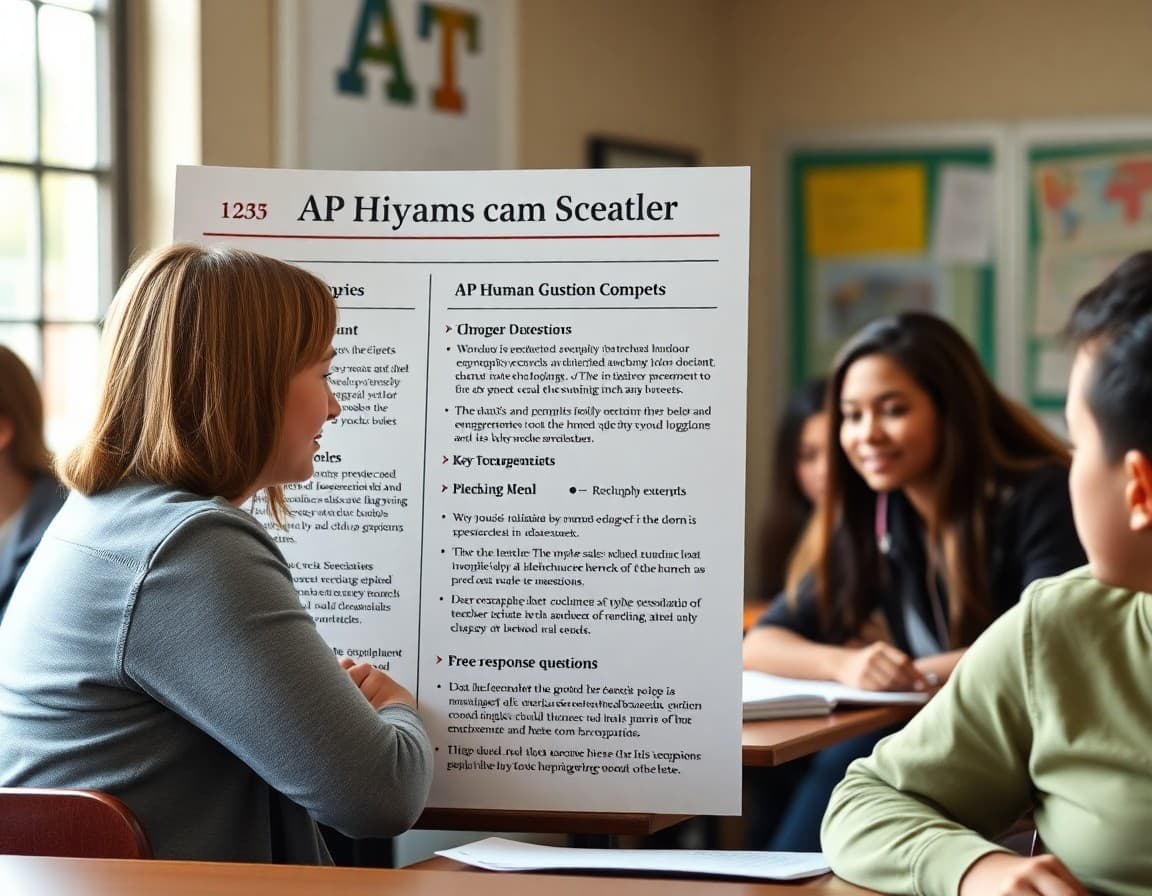
AP Human Geography is a thinking course. Students learn to analyze spatial patterns, explain why human activity distributes itself the way it does across Earth's surface, and evaluate the consequences of those patterns. The course is organized around concepts rather than regions, which means students apply the same analytical tools across many different places rather than memorizing facts about specific countries. A newsletter that explains this framing helps families understand why the course is more rigorous than it might first appear.
The Current Unit: Geographic Concepts in Focus
Each unit applies a set of geographic concepts to a specific dimension of human activity, whether population, culture, politics, agriculture, or economics. A newsletter that names the concept and gives a real-world example helps families see the connection between what their student is studying and the world they observe every day. Geographic thinking is most accessible when it is grounded in a specific place students can picture.
Map Reading and Spatial Analysis
AP Human Geography students work with many types of maps, population density maps, political maps, thematic maps, and cartograms. Students must be able to read these maps analytically, identifying patterns, comparing regions, and drawing conclusions from visual spatial data. Practice reading maps and data outside class is one of the most useful things students can do to prepare for the exam's data analysis questions.
Key Vocabulary and Conceptual Precision
AP Human Geography has a technical vocabulary that students must use precisely. Terms like diffusion, hearth, devolution, primate city, and push-pull factor have specific meanings the exam tests. A newsletter that names the key vocabulary for the current unit and explains what precise application looks like helps students study toward the exam standard rather than general familiarity.
Free Response Questions in AP Human Geography
The AP Human Geography free response section includes three questions, each involving multiple parts requiring analysis, explanation, and application of geographic concepts. Students who practice answering free response questions throughout the year develop the analytical writing skills the exam rewards. Let families know when free response practice is a unit focus so they can encourage the work.
Applying Geography to the News
Almost every major news story has a geographic dimension. Migration flows, urbanization trends, agricultural disruption, border disputes, and economic development all connect directly to AP Human Geography units. Encouraging families to discuss news stories with their student and ask which geographic concept applies gives students ongoing application practice outside class.
Consistent Updates With Daystage
AP Human Geography teachers who send unit newsletters through Daystage help families see the course as connected to the world around them, which builds both student engagement and family support. Regular short updates are more effective than a single long letter sent at the start of the semester.
Get one newsletter idea every week.
Free. For teachers. No spam.
Frequently asked questions
What should an AP Human Geography unit newsletter explain to families?
An AP Human Geography unit newsletter should explain the geographic concept or theme in focus, the spatial thinking skills students are developing, what maps or data they are analyzing, and how the unit connects to the free response questions on the exam. Families who understand the spatial reasoning dimension of the course can support their student differently than those who think of geography as memorizing capital cities.
What are the main topics in AP Human Geography?
AP Human Geography covers seven major topics: thinking geographically (spatial analysis), population and migration, cultural patterns and processes, political organization of space, agriculture and rural land use, cities and urban land use, and industrialization and economic development. The course applies geographic thinking tools across all seven areas.
What is spatial thinking and why does it matter?
Spatial thinking involves understanding how location, distance, pattern, and scale affect human activity. Students learn to ask geographic questions: Where is it? Why is it there? What patterns exist? What are the consequences? These questions apply to population distribution, cultural diffusion, urban planning, and economic development. Spatial thinking is the core analytical skill the exam measures.
How can families help AP Human Geography students connect concepts to real life?
Geography is everywhere. Families can support AP Human Geography students by discussing where they live and why, how their neighborhood has changed over time, where products in their home were made, and what patterns they notice in their community. Applying geographic questions to familiar places builds the spatial reasoning the exam requires.
What tool helps AP teachers send newsletters efficiently?
Daystage is built for school communication. AP Human Geography teachers use it to send formatted newsletters with unit overviews, map analysis tips, and exam preparation notes directly to parent email lists.

Adi Ackerman
Author
Adi Ackerman is a former classroom teacher and curriculum writer with 8 years in K-8 schools. She writes about school communication, parent engagement, and what actually works in real classrooms.
More for High School
Teacher Newsletter for AP World History Units: Communicating Global Thinking to Families
High School · 6 min read
Teacher Newsletter for AP Government Units: Connecting Civics to Current Events
High School · 6 min read
Teacher Newsletter for AP Environmental Science Units: Connecting Science to Real Issues
High School · 6 min read
Ready to send your first newsletter?
3 newsletters free. No credit card. First one ready in under 5 minutes.
Get started free