
Life Science High School Newsletter: Learning Updates for Parents
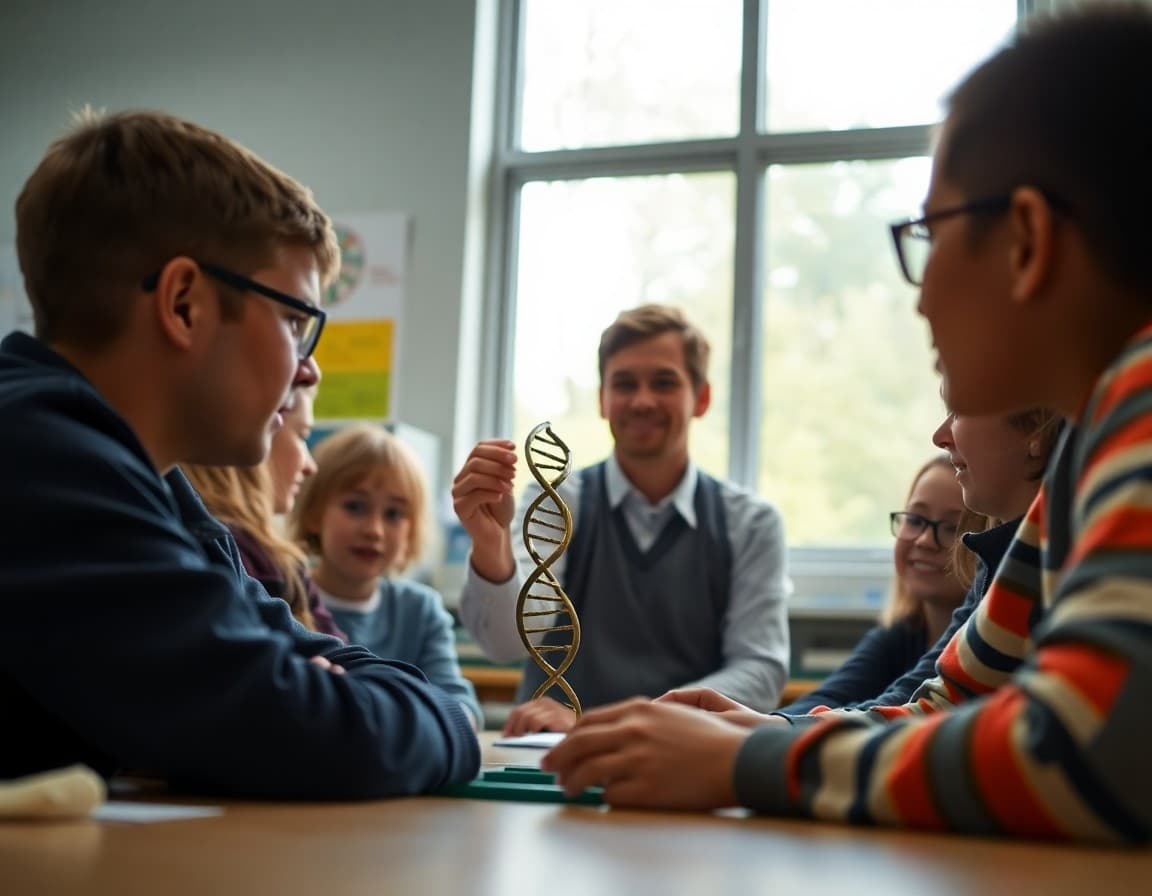
Life science in high school covers the biology that is most directly relevant to a student's own life: how their cells work, how their genetics were determined, how the immune system fights disease, how populations evolve, and how ecosystems depend on interdependent relationships. A newsletter that connects these topics to things families and students actually care about turns biology from a class full of terminology into something worth engaging with.
Lay Out the Year's Curriculum
Give families a roadmap. A typical high school biology sequence might look like: cell biology in September and October, genetics and heredity in November and December, evolution in January and February, ecology in March, and human body systems in April and May. Some schools do a biochemistry unit at the start. Tell families where you are in the sequence and where the class is heading, so they can connect current work to the larger picture.
Explain the Lab Component
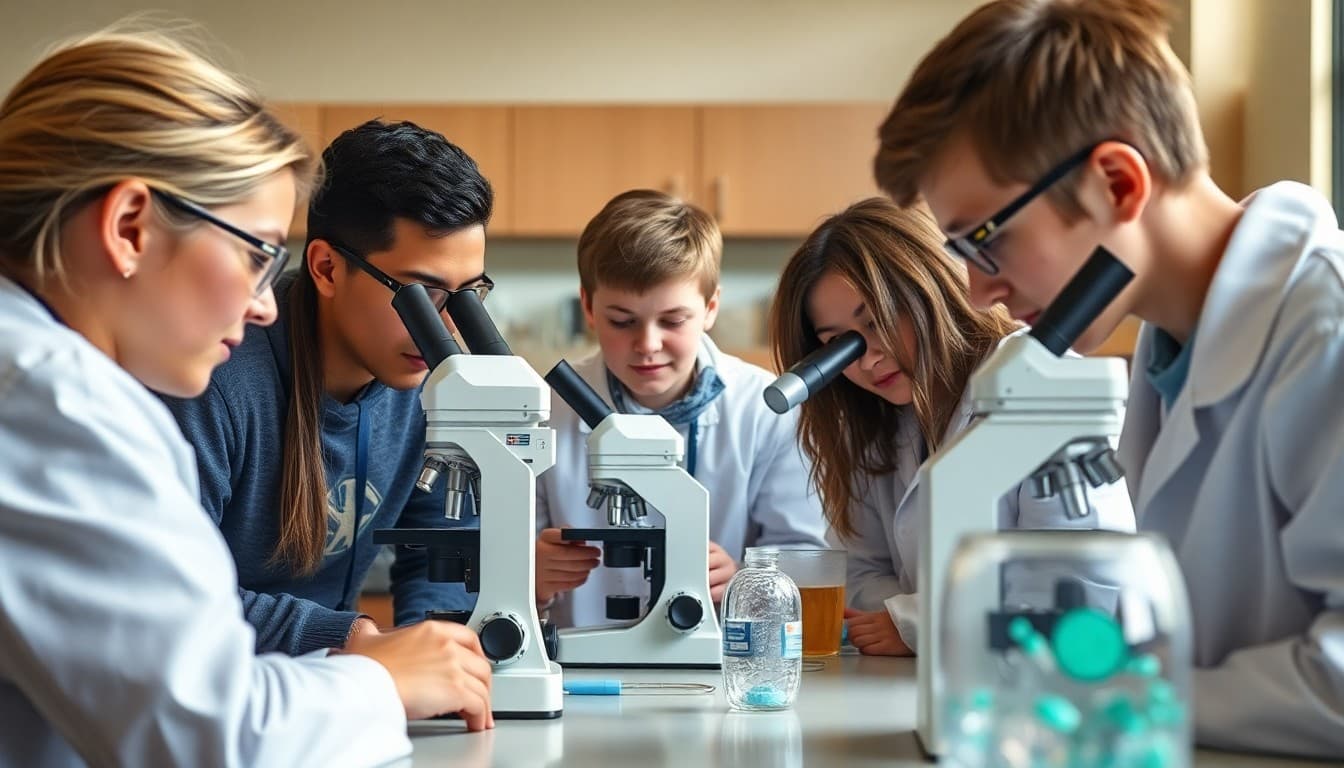
Biology labs are a significant part of the course and deserve a section in your newsletter. Explain what students are doing in the lab and why it matters. A microscopy lab is not just looking at slides: it is building the observation skills and visual analysis abilities that AP Biology and college courses require. A genetics lab is not just Punnett squares: it is understanding probability in biological systems. Families who understand the purpose take lab work more seriously.
Connect the Current Unit to Real-World News
Biology generates more real-world news connections than almost any other high school course. During a genetics unit, connect to recent CRISPR gene editing research or a news story about genetic testing. During an evolution unit, connect to antibiotic resistance, which is evolution happening in real time. During a cell division unit, connect to how cancer develops and why certain treatments target specific cell processes. These connections make biology feel relevant and help students retain what they are learning.
Name the Key Concepts and Vocabulary
Biology is vocabulary-dense. In a cell division unit: mitosis, meiosis, cell cycle, interphase, chromatid. In a genetics unit: allele, dominant, recessive, genotype, phenotype, codominance. In an ecology unit: producer, consumer, trophic level, carrying capacity, niche. Your newsletter should include a brief vocabulary list for the current unit so families know what terms students should be able to use and explain.
Describe What Students Are Expected to Do with the Content
At the high school level, biology assessment often includes explanation and application, not just recall. A test question might ask students to explain what would happen to an ecosystem if a top predator were removed, not just name the top predator. A genetics question might ask them to design a cross to determine if a trait is dominant or recessive. Your newsletter should tell families that understanding the concepts well enough to apply them in new situations is the standard.
Sample Newsletter Section for Life Science
Here is copy you can adapt:
"We are finishing our genetics unit and starting evolution next week. Students should be able to solve monohybrid and dihybrid crosses and explain how natural selection produces evolutionary change over time. A good home question: ask your student to explain why antibiotic resistance is an example of evolution, and what this means for treating bacterial infections. This is a real-world application of everything we studied this unit. Quiz on genetics is [DATE]."
Address AP Biology Separately if Relevant
If you teach AP Biology, your newsletter should be explicit about the difference in depth and speed compared to a standard biology course. AP Biology covers the same content at a significantly higher level of biochemical and molecular detail and moves faster. The free-response section of the AP exam requires students to design experiments, analyze data, and make predictions. Families whose students are in AP Biology should understand that lab reports, experimental design assignments, and data analysis are preparation for the May exam, not just coursework.
Recommend Free Learning Resources
Khan Academy has full AP Biology and introductory biology courses with videos and practice exercises. CrashCourse Biology on YouTube covers most high school biology topics in accessible 10-minute videos. The Howard Hughes Medical Institute has free, high-quality educational biology videos. Include these in your newsletter so families have specific resources when their student needs help outside of class.
Get one newsletter idea every week.
Free. For teachers. No spam.
Frequently asked questions
What is covered in a high school life science or biology course?
A standard high school biology course typically covers cell biology (cell structure, function, and division), genetics (Mendelian genetics, DNA replication, gene expression), evolution, ecology, and human body systems. AP Biology goes deeper on molecular biology, biochemistry, and experimental design. Your newsletter should give families a roadmap of the year so they can connect current units to the larger picture.
How can families support life science learning at home?
Connect content to things students can observe. During a cell unit, ask their student to explain what the mitochondria actually does in plain English. During a genetics unit, explore family trait patterns together. During an ecology unit, ask about local environmental issues they have seen in the news. These conversations build the kind of verbal fluency that helps students succeed on essay and free-response assessments.
What lab skills do students develop in high school life science?
Students learn to use microscopes, conduct staining procedures, analyze genetic crosses, set up controlled experiments, record and interpret data, and write formal lab reports. These skills transfer to every science course at the AP, college, and graduate level. Families who understand this see lab grades as more than procedural compliance.
How is life science relevant to students who are not planning to study science in college?
Directly. Health literacy requires understanding how cells, genetics, immune systems, and disease work. Environmental citizenship requires understanding ecology. Medical decisions, public health crises, and climate policy all require biological literacy. A student who finishes high school life science understanding how vaccines, genetics, and evolution work is a more informed citizen regardless of their career.
What newsletter tool makes it easy to share life science updates with high school families?
Daystage lets you include photos from lab activities, link to free resources like Khan Academy Biology or CrashCourse, and send a unit update that looks professional. Families who receive organized communication from a science teacher take the subject more seriously.

Adi Ackerman
Author
Adi Ackerman is a former classroom teacher and curriculum writer with 8 years in K-8 schools. She writes about school communication, parent engagement, and what actually works in real classrooms.
More for High School
Ninth Grade Science Newsletter: Communicating Biology and Earth Science to Families
High School · 7 min read
9th Grade Science Unit Newsletter: How to Communicate Science Learning to Freshman Parents
High School · 6 min read
Earth Science High School Newsletter: Learning Updates for Parents
High School · 6 min read
Ready to send your first newsletter?
3 newsletters free. No credit card. First one ready in under 5 minutes.
Get started free