
Earth Science High School Newsletter: Learning Updates for Parents
Earth science connects the physical world students live in to the scientific principles that explain it. Earthquakes, climate patterns, ocean currents, and geological history are not abstract concepts: they are the processes that shaped the ground under the school and the weather that students walked through this morning. A newsletter that connects your curriculum to this kind of real-world relevance engages families and students in a way that textbook chapter summaries do not.
Share the Year's Curriculum Overview
Start with a roadmap. Tell families what major units are coming over the year. A typical sequence might be: minerals and rocks in September, plate tectonics and geologic history in October, earthquakes and volcanoes in November, weathering and soils in January, weather systems in February, climate and climate change in March, and oceanography and astronomy in the spring. Families who see the full year are more engaged than those who only know the current unit.
Connect the Current Unit to Current Events
Earth science has more natural connections to real-world news than almost any other high school course. During a plate tectonics unit, name a recent earthquake and ask families to talk with their student about what caused it. During a climate unit, reference a recent extreme weather event and explain the scientific context. During an oceanography unit, mention a recent story about ocean temperatures or coral bleaching. These connections are easy to make and dramatically increase engagement.
Explain the Lab Work and What Students Are Learning from It
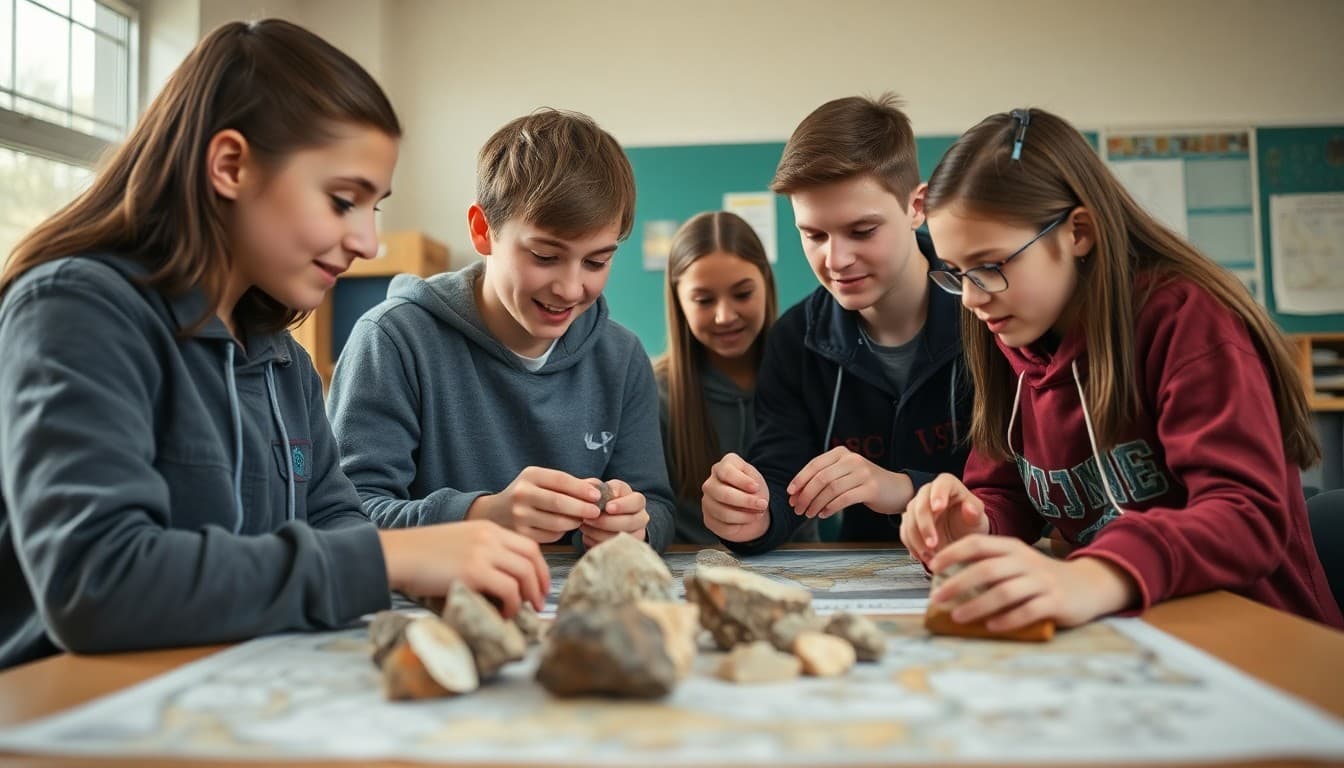
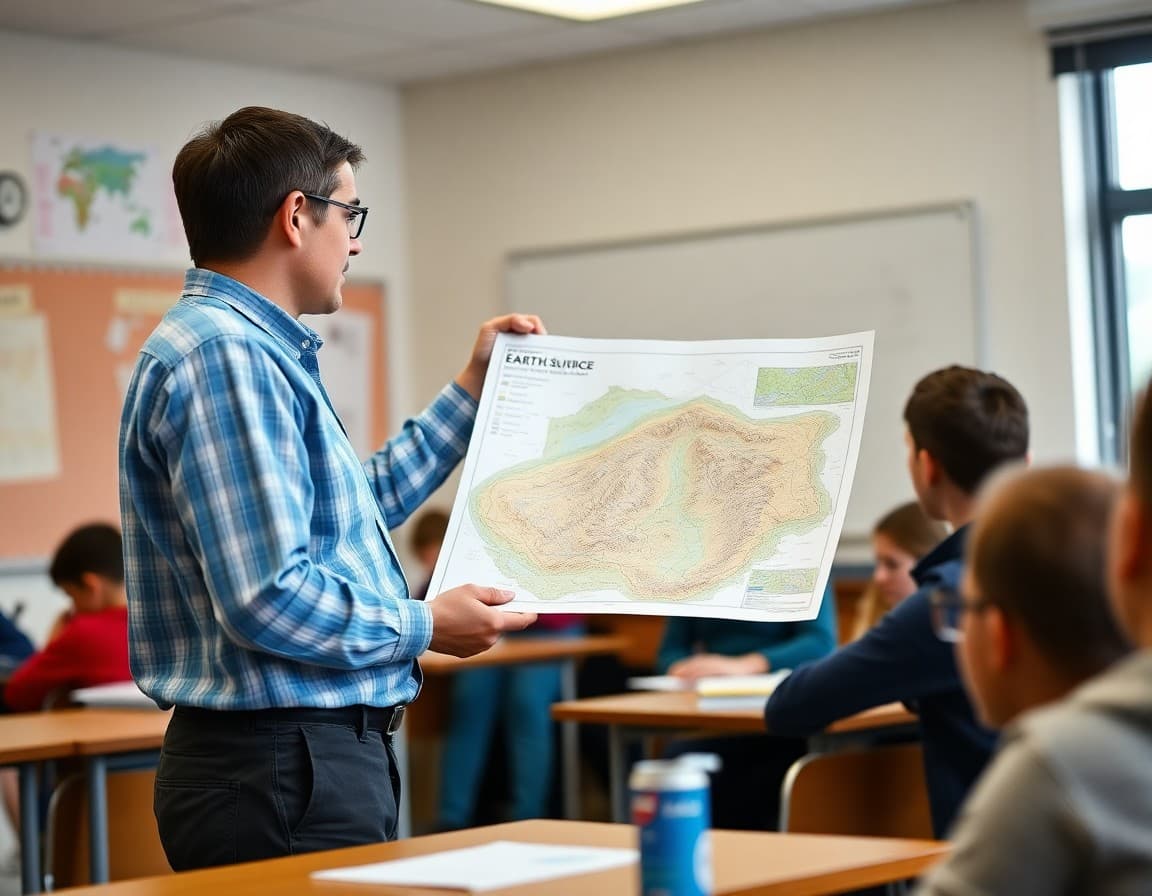
Tell families what lab work is happening and why. Mineral identification labs build observation and physical property analysis skills. Topographic map labs build spatial reasoning and data interpretation skills. Weather data analysis labs build quantitative literacy. Families who understand what a lab is actually teaching are more likely to ask their student about it at home in a way that reinforces learning.
Describe the Scientific Method in the Earth Science Context
Earth science gives students a specific scientific method experience: observational data from the real world forms the basis for hypotheses, which are then tested against additional data or experimentation where possible. Some earth science questions (how did this rock formation form?) require inference from evidence rather than direct experimentation. Explaining this to families helps them understand why earth science labs look different from chemistry or biology labs.
Name the Key Vocabulary for the Current Unit
Earth science has extensive domain-specific vocabulary that families may not know. In a geology unit: igneous, sedimentary, metamorphic, stratigraphy, lithosphere. In a weather unit: isobar, front, barometric pressure, convection. Include a brief vocabulary list in each newsletter so families can use the terms at home and ask their student to explain what they mean.
Sample Newsletter Section for Earth Science
Here is copy you can adapt:
"This month we are studying plate tectonics. Students should be able to explain why earthquakes and volcanoes occur in predictable locations around the world. A useful home connection: the earthquake that hit [LOCATION] last week happened at the boundary between the [PLATE] and [PLATE] plates. Ask your student to show you on a map where the tectonic plate boundaries are and explain what type of boundary caused that specific earthquake. Next quiz: [DATE]."
Recommend Free Resources for Home Learning
USGS (United States Geological Survey) has real-time earthquake, volcano, and geologic maps at usgs.gov. NASA has free climate data visualization tools and educational materials at nasa.gov/earth. NOAA has weather and oceanography data at noaa.gov. These are professional-grade resources with student-accessible interfaces. Including them in your newsletter gives families somewhere to go beyond the textbook.
Tie to College and Career Pathways
Earth science connects to a wide range of college majors and careers: geology, environmental science, meteorology, oceanography, civil engineering, urban planning, climate policy, and natural resource management. For families wondering how earth science is relevant to their student's future, a brief mention of these pathways grounds the course in something practical. A student who did not know environmental consulting was a career may leave the conversation with a genuine new idea.
Get one newsletter idea every week.
Free. For teachers. No spam.
Frequently asked questions
What topics are covered in a high school earth science course?
A typical high school earth science course covers geology (plate tectonics, rock cycle, minerals), meteorology (weather systems, climate), oceanography, astronomy, and environmental science. Some courses also include environmental policy and human impact on Earth systems. The mix varies by state standards and teacher focus, so your newsletter should outline the year's curriculum so families know what is coming.
How can families support earth science learning at home?
Connect content to the real world. During a weather unit, ask their student to explain the weather system that just brought a storm. During a geology unit, visit a local park with interesting rock formations and ask their student what they see. NASA and USGS both have free, student-friendly resources tied to the content taught in most earth science courses.
What lab skills do high school earth science students develop?
Students learn to read and interpret topographic maps, identify minerals and rocks using physical properties, analyze weather data, and interpret climate graphs. They also practice laboratory safety, scientific method documentation, and data analysis skills that transfer to every science course they will take after this.
How is earth science connected to current events?
More directly than most high school science courses. Earthquakes, climate change, extreme weather events, volcanic eruptions, and rising sea levels are all earth science topics that appear in the news regularly. A teacher who connects the curriculum to current events builds engagement that abstract textbook content alone does not. Tell families which current events tie to your current unit.
What newsletter tool makes earth science updates easy to send to high school families?
Daystage lets you include photos from lab work, link to news articles connected to the current unit, and send a parent update that looks professional and works on every device. Teachers can build a unit-aligned newsletter in 15 minutes.

Adi Ackerman
Author
Adi Ackerman is a former classroom teacher and curriculum writer with 8 years in K-8 schools. She writes about school communication, parent engagement, and what actually works in real classrooms.
More for High School
Ninth Grade Science Newsletter: Communicating Biology and Earth Science to Families
High School · 7 min read
9th Grade Science Unit Newsletter: How to Communicate Science Learning to Freshman Parents
High School · 6 min read
9th Grade Science Fair Newsletter for Families: Full Guide
High School · 6 min read
Ready to send your first newsletter?
3 newsletters free. No credit card. First one ready in under 5 minutes.
Get started free