
July Newsletter Ideas for 9th Grade Teachers: What to Send This Month

For incoming freshmen, July is the first time most families hear from high school directly. The middle school chapter is closed, the new building is still abstract, and families are starting to wonder what they should be doing to prepare. Your July newsletter is the first impression. Make it welcoming, practical, and short enough to actually read.
Welcome incoming freshmen and their families
Start with a genuine welcome. Name what you teach, what the year will look like in broad strokes, and that you are glad they are coming. This is not fluff. Incoming freshman families are often nervous in ways they do not say out loud, and a direct, warm opening from their actual teacher changes the emotional temperature before the year begins. Keep it to two or three sentences.
Cover summer reading clearly
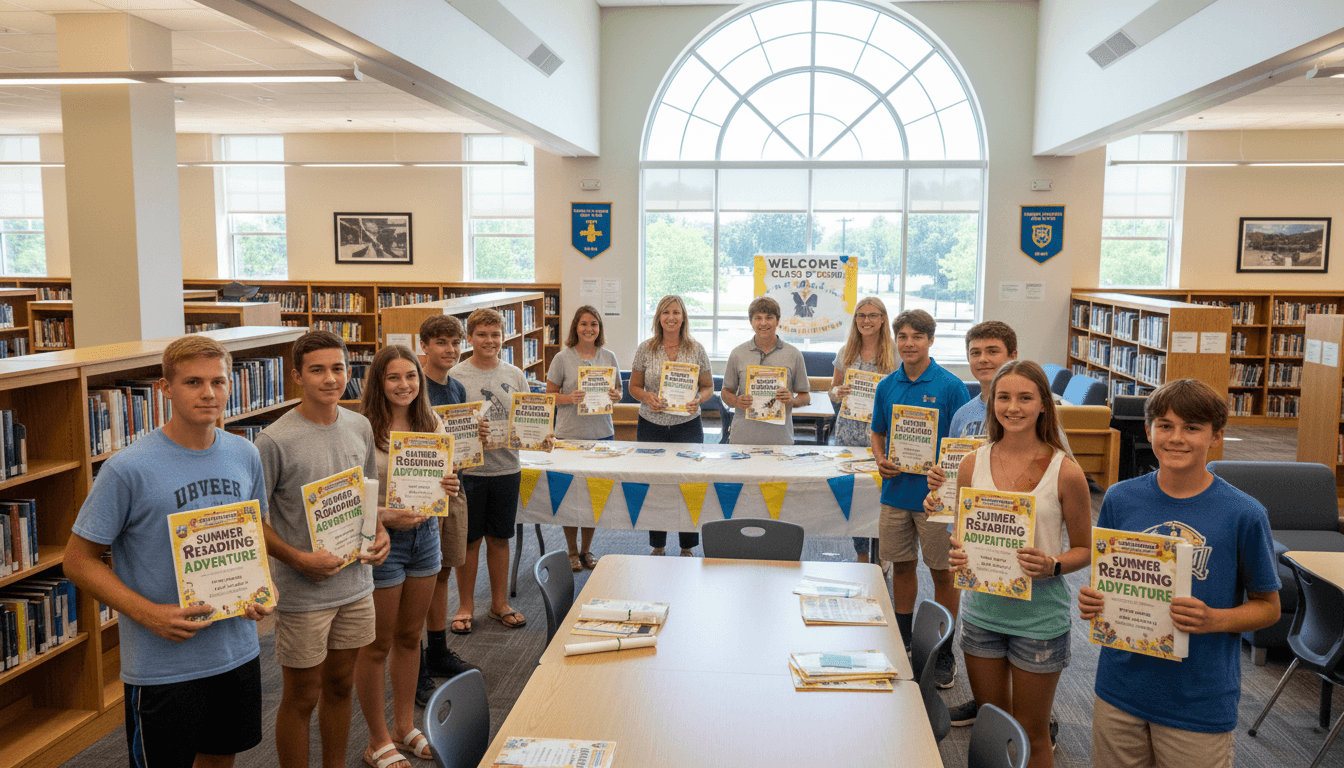
Give the full title, the author, and the due date. If your school or department has a summer reading assignment, tell families where to find the book, whether it is available through the school library or a free digital platform, and what students will be expected to do with it in September. Some families have not bought the book yet in July. Reducing access friction increases the number of students who arrive in September having actually read it.
Share orientation and schedule pickup details
Date, time, and location for freshman orientation. When and how students pick up their schedules. If there is a freshman-specific event before the first day of school, include those details. Families of incoming freshmen often do not know to look in the school portal for this information yet. Your newsletter should carry it directly to their inbox.
List any required materials for your class
Specific notebook sizes, binders, calculators, required software, or anything else students need on the first day. Be precise. Families who receive "bring school supplies" will show up with what their student had in middle school. Families who receive a specific list will show up prepared. If your school has a supply list that covers everything, link to it and add any additional requirements specific to your class.
Set one or two high school expectations early
Pick one or two things that are genuinely different from middle school and name them. Students are expected to track their own assignments without individual reminders. Email is the official communication channel between students and teachers. Asking for help before a test is expected, not a sign of weakness. One concrete expectation framed as a tip is more useful than a list of rules. Save the full expectations for the first week of school.
Point families toward key contacts and resources
Name the school counselor as the primary contact for schedule questions, course concerns, and support services. Include the counselor's email. If your school has a parent portal and families need to set it up, mention that here with a link. Families who know who to contact for what call you less. That is good for everyone.
Give families a simple summer action list
Three items: finish summer reading before the first week of school, find the school building before the first day if your student has never been inside, and have a conversation at home about what a good first week looks like. That is it. A short action list gives families something to do with the energy they already have around the start of high school. Keep it achievable and send the newsletter before families head into the last two weeks of August chaos.
Get one newsletter idea every week.
Free. For teachers. No spam.
Frequently asked questions
What should a 9th grade July newsletter include?
The July newsletter for incoming freshmen is a welcome communication more than anything else. Cover summer reading with the title, author, and due date. Include schedule pickup dates, orientation details, and any supply or materials list for your class. New high school families are anxious in July and they are looking for information that makes the transition feel manageable. A warm, well-organized July newsletter does that work.
Should I send a July newsletter if I do not know my freshman roster yet?
Yes, if you can. Many high schools publish a general welcome newsletter from the department or grade-level team rather than an individual teacher in July. If your roster is not confirmed, coordinate with your department head or counselor to send a grade-level welcome newsletter that covers summer reading and orientation details. Incoming freshman families will appreciate the communication regardless of who sends it.
How do I explain high school expectations without overwhelming incoming freshmen?
Focus on one or two specific adjustments rather than a comprehensive list. For example: high school teachers expect students to track their own assignments rather than relying on reminders, and asking for help early is treated as a strength. Name the adjustment and explain why it matters. Families who receive a specific tip are more likely to talk about it at home than families who receive a general 'be prepared' message.
When in July should I send the newsletter to freshman families?
Send it in the second or third week of July. Early July is still summer-brain for most families. By mid-July, enough families are starting to think about the school year that your newsletter will land at the right moment. Sending too early means it gets buried. Sending too late means families are already in back-to-school scramble mode and read it less carefully.
What newsletter tool works best for high school teachers?
Daystage is a good fit for a July freshman welcome newsletter because it delivers the full communication directly to family inboxes without requiring a login or a link click. Incoming freshman families who do not yet know the school portal system well will actually read a newsletter that arrives in their email. Teachers who send July newsletters via Daystage consistently report higher open rates than those using other distribution methods.

Adi Ackerman
Author
Adi Ackerman is a former classroom teacher and curriculum writer with 8 years in K-8 schools. She writes about school communication, parent engagement, and what actually works in real classrooms.
More for High School
Ready to send your first newsletter?
3 newsletters free. No credit card. First one ready in under 5 minutes.
Get started free