
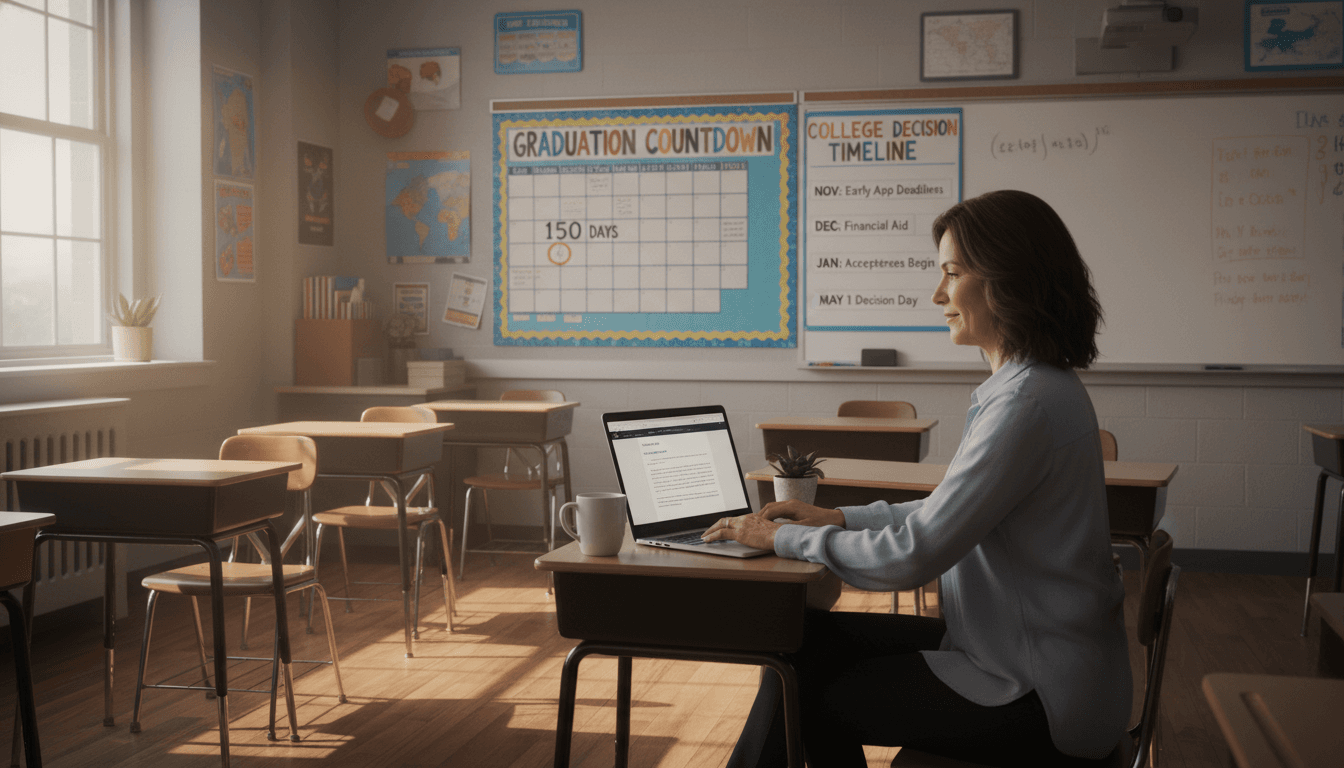
January Newsletter Ideas for 12th Grade Teachers: What to Send This Month

Senior year January is a complicated month. Some students are waiting on regular decision results. Some got early decision and are mentally done with high school before they have graduated. Senioritis is real, and the second semester is when it does the most academic damage. Your newsletter this month can be honest about all of that and still be useful.
The second-semester transcript and what it means
Be clear and direct: colleges receive final transcripts and can rescind acceptances for significant grade drops. This happens more often than families realize. Cover what a meaningful drop looks like in your class, what "significant decline" means to admissions offices, and why finishing strong academically is not optional even after acceptance letters arrive.
Senioritis: naming it honestly
Do not pretend it is not happening. Name it, acknowledge it is real and understandable, and tell families specifically how you handle it in your classroom. What do you do when a student stops doing the reading? When effort drops visibly? Families who know your approach can have a productive conversation at home rather than a defensive one.
What the second semester is actually for
The best counter to senioritis is making the second semester intellectually worth showing up for. Describe your most interesting second-semester work. A capstone project, a seminar-style discussion series, a creative or analytical piece that students actually choose to do. Name what makes this semester worth more than just showing up and waiting for June.
Regular decision results and managing the wait
March and April bring college decisions for most seniors. A brief acknowledgment that this waiting period is emotionally stressful, and one or two ways families can support their student without amplifying the anxiety, is genuinely useful. Checking the portal every hour does not help. Having a plan B conversation early does.
Graduation requirements check
Some seniors discover they are missing something for graduation very late. If your subject area has a graduation requirement component, remind families to confirm their student is on track. January is the right time to catch problems, not April.
January dates
MLK Day, any senior events, regular decision result dates if published, early release days, graduation planning milestones. Give families everything in one place.
Daystage makes it possible to send an honest, useful January newsletter to senior families without spending a weekend on it. It lands directly in the inbox, and the families who most need to read what you have to say about second-semester expectations will see it the moment it arrives.
Get one newsletter idea every week.
Free. For teachers. No spam.
Frequently asked questions
What should a 12th grade teacher include in a January newsletter?
Senior January is emotionally complex. Some students got early decision results in December. Regular decision notifications are coming in March. Senioritis is real and the second semester is when it typically peaks. Your newsletter should address all of this honestly: what the second-semester transcript means for college acceptances, how you handle senioritis in your class, what the most meaningful work of the second semester looks like, and what families can do to help their student finish strong.
When should I send my January teacher newsletter?
Send on the first Tuesday of January. Families open school emails most reliably mid-week, and Tuesday gives you time after any Monday surprises but before the week gets too busy. Set the send date in advance so parents know when to expect it.
How long should a 12th grade January newsletter be?
Aim for 400 to 500 words. Senior families in January are emotionally invested and will read a newsletter that speaks to where they actually are. Avoid both false cheerfulness and unnecessary alarm. Be real.
What makes a January newsletter different from other months?
Twelfth grade January is the beginning of the final semester and the last stretch before college decisions arrive in March and April. Senioritis peaks in this period. A newsletter that names this reality and gives families honest, practical guidance stands out from anything that pretends this is a normal academic month.
What is the easiest way to send a January teacher newsletter?
Daystage lets you duplicate last month's newsletter, update the content, and send in about 15 minutes. It delivers the full newsletter inline in Gmail and Outlook, so parents see everything without clicking a link. Most teachers who switch to Daystage see open rates jump within the first send.

Adi Ackerman
Author
Adi Ackerman is a former classroom teacher and curriculum writer with 8 years in K-8 schools. She writes about school communication, parent engagement, and what actually works in real classrooms.
More for High School
Ready to send your first newsletter?
3 newsletters free. No credit card. First one ready in under 5 minutes.
Get started free