
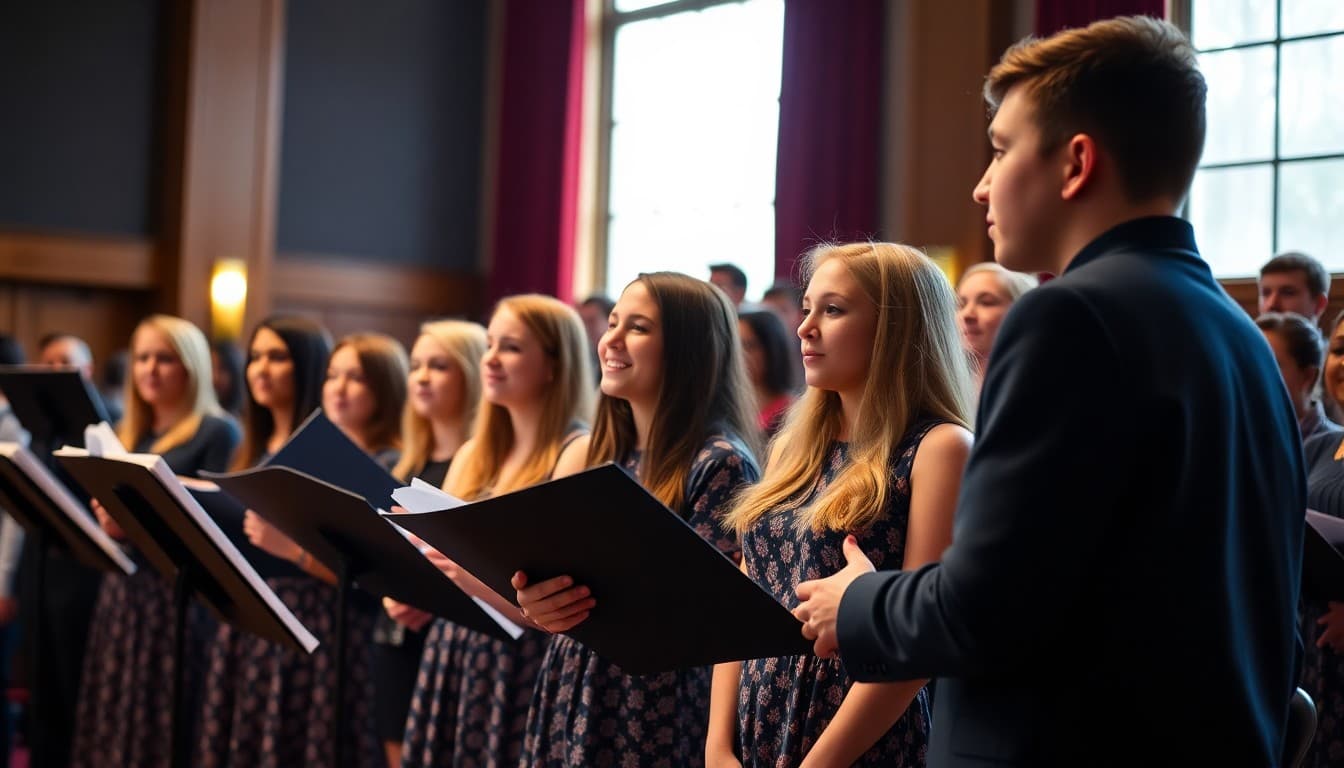
Tri-M Music Honor Society Newsletter: Musical Excellence

Tri-M Music Honor Society recognizes musical achievement and channels it into service. A chapter newsletter communicates what members are doing, who is being recognized, and why music education matters to the school community -- three messages that deserve consistent, clear expression throughout the year.
Introduce the Chapter at the Start of the Year
Many parents of younger students have never heard of Tri-M. Your fall newsletter should explain that Tri-M is the official NAfME music honor society for middle and high school students, what your chapter's name and chapter number are, and what the chapter does throughout the year. Cover membership criteria, typical service activities, induction timeline, and officer roles. A paragraph that distinguishes Tri-M from being simply an honor roll for music students -- emphasizing the service and leadership components -- sets accurate expectations for families who might otherwise see it as a GPA-only recognition.
State Induction Requirements Specifically
In October, send a dedicated induction newsletter. List your chapter's minimum GPA for music courses and overall GPA, the minimum music ensemble participation requirement, and what the character and leadership evaluation involves. Explain whether students self-apply or are nominated, what the timeline looks like, and when notifications will be sent. If there is a service hour requirement prior to or following induction, state it clearly. Families who understand the requirements are more supportive of the process and less likely to question the results.
Cover Community Performance Service
Performance service is Tri-M's most visible activity. When the chapter performs at a retirement community, hospital, elementary school, or community event, announce it in advance and report on it afterward. The pre-performance announcement gives families a chance to attend or share the event with community members. The post-performance recap should name participating members, name the venue and audience, and describe the program performed. If a resident at a retirement home specifically requested a song or if elementary students joined in on a call-and-response piece, that detail makes the recap memorable.
A Community Performance Recap Template
Use this format for any service performance wrap-up:
Performance Recap: [Venue] | [Date]
Participants: [Names] ([Number] members)
Audience: [Description and approximate size]
Program performed: [List of pieces or repertoire description]
Highlight: [One sentence on a memorable moment]
Next service performance: [Date and venue if scheduled]
Advocate for Music Education Through the Newsletter
Tri-M chapters are encouraged to advocate for music education as part of their mission. In each issue, include a brief section on music education research or policy. "A 2023 study found that students in music programs scored an average of 41 points higher on SAT reading compared to non-music students" is the kind of data point that belongs in a music newsletter without needing a full essay. When your district's budget process puts music programs under review, a newsletter that documents Tri-M service hours and student achievement provides concrete evidence for administrators making resource decisions.
Recognize Member Achievements Outside the Chapter
Members who earn seats in district or state honor bands and orchestras, win solo and ensemble ratings, earn music scholarships, or perform in regional youth symphonies deserve recognition in the chapter newsletter. These achievements connect to the chapter's identity even when they happen outside chapter activities. A senior who earns a full music scholarship to a conservatory is a chapter story, not just a guidance office announcement. Recognizing these achievements shows that the chapter is paying attention to what its members accomplish individually, not just collectively.
Build a Record of Chapter Impact
Throughout the year, keep a running total of service hours and performances in each newsletter. "Our chapter has now completed 12 community performances and 340 combined service hours this year" builds collective pride and gives the chapter credible data for program advocacy conversations. By the end of the year, this running total becomes the basis for the chapter's annual report to NAfME and any school or district documentation of program outcomes.
Close the Year by Recognizing Outgoing Seniors
The spring newsletter is the appropriate place to name graduating seniors and summarize their contributions to the chapter. Note how many years each senior was a member, what leadership roles they held, and what music programs they plan to continue in college if applicable. This public recognition matters to families who supported years of lessons, rehearsals, and travel, and it signals to underclassmen that sustained commitment to the chapter is noticed and valued.
Get one newsletter idea every week.
Free. For teachers. No spam.
Frequently asked questions
What are the criteria for Tri-M Music Honor Society membership?
Tri-M chapters set their own criteria within NAfME guidelines, but typical requirements include a minimum GPA (often 3.5 overall and 3.5 in music), completion of at least one year in a school music ensemble, and demonstrated leadership, service, and character in the music program. Your newsletter should state your chapter's specific criteria so families and prospective members know exactly what is required for induction.
What service activities do Tri-M chapters typically organize?
Performance service at retirement communities and hospitals, music enrichment programs for elementary students, instrument donation drives, peer instruction for younger musicians, and music advocacy work with school administrators or the school board. The newsletter should describe what service activities students completed and what impact those activities had on the community served.
How should the newsletter handle music performance events?
Announce upcoming performances well in advance with location, time, and what type of audience members will encounter. After performances, include a brief recap with participant names, the music performed, and any audience feedback worth sharing. If a Tri-M performance is a regular event at a community venue, build that connection into the newsletter as an ongoing program story.
How can Tri-M newsletters support broader music program advocacy?
Include a section that explains the research on music education and academic achievement. When music program funding is discussed in district budget meetings, a newsletter note about Tri-M service and program outcomes provides documentation that administrators and school board members may find useful. Music advocacy is part of Tri-M's national mission, and local documentation matters.
Can Daystage work for Tri-M Music Honor Society communication?
Yes. Daystage lets Tri-M advisors send newsletters with event announcements, member recognition, and community performance updates in a clean, professional format. It is practical for music directors managing multiple ensembles alongside chapter responsibilities.

Adi Ackerman
Author
Adi Ackerman is a former classroom teacher and curriculum writer with 8 years in K-8 schools. She writes about school communication, parent engagement, and what actually works in real classrooms.
More for High School
Ready to send your first newsletter?
3 newsletters free. No credit card. First one ready in under 5 minutes.
Get started free