
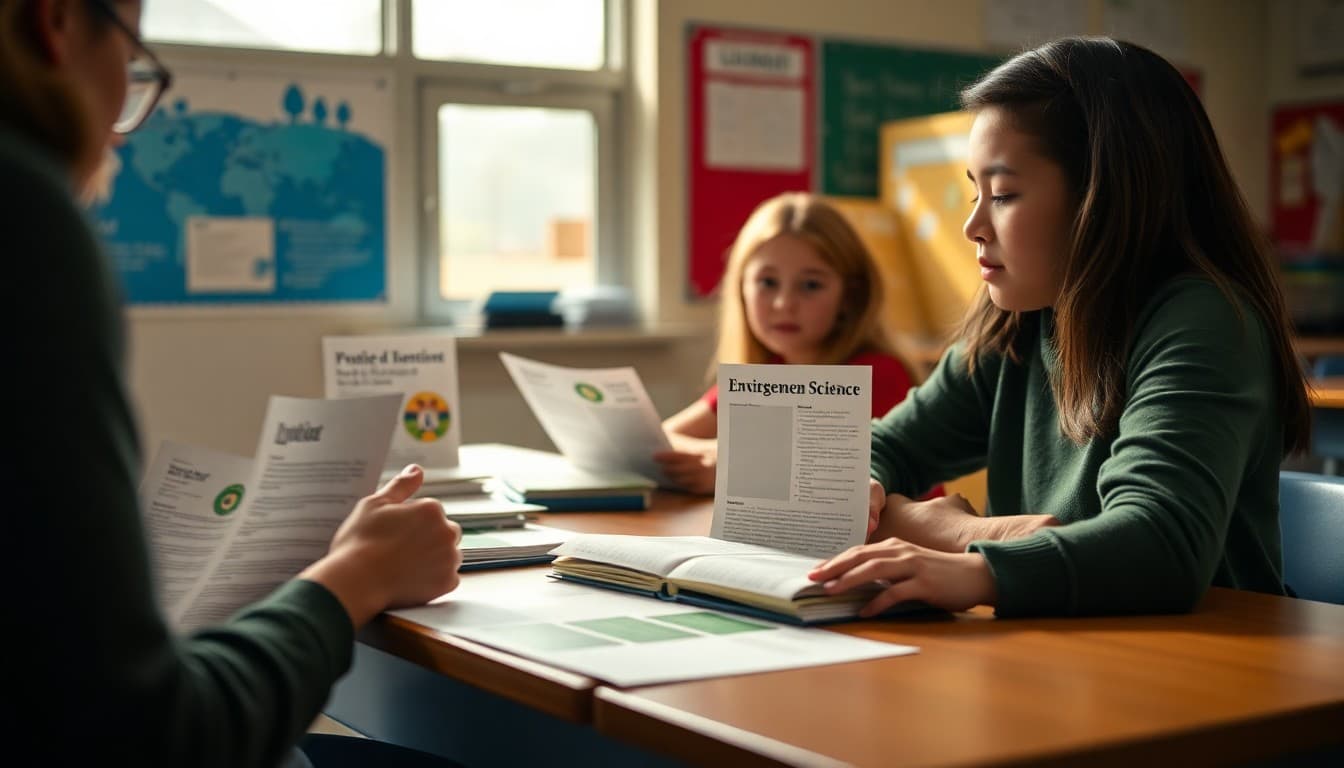
Environmental Science Newsletter Examples That Work: 9th Grade Guide

The best way to improve your 9th grade environmental science communication is to look at what works in practice. This guide covers four newsletter types and gives you a concrete picture of what goes in each one, what parents retain, and what makes them worth sending.
Example 1: The Beginning-of-Year Newsletter
This one sets the tone for everything that follows. For 9th grade environmental science, the most effective beginning-of-year newsletters include three things that most teachers leave out: an honest description of the academic challenge level, a specific outline of the year's units, and a grading breakdown that includes percentages and late work policy.
Parents of 9th graders are calibrating. They want to know whether this course is rigorous, how grades are calculated, and what the pathway looks like for a student who struggles. Answering those questions directly in the first newsletter builds trust that lasts all year.
Example 2: The Unit Kickoff Newsletter
This newsletter goes home the day a new unit begins. Its job is to give families the vocabulary and central questions of the unit so they can support learning through conversation rather than supervision. For a 9th grade climate systems unit, the kickoff newsletter might include: the central question (how do greenhouse gases trap heat and what happens when their concentration increases), the key vocabulary for the first week (radiative forcing, albedo, feedback loop), major assignments (a data analysis lab due in week two, and a final essay due at the end of the unit), and one specific conversation starter (ask your student to explain the greenhouse effect using an analogy of their choosing).
That newsletter takes 12 minutes to write and gives families four weeks of useful context.
Example 3: The Lab Preview Newsletter
When 9th grade environmental science involves a substantial lab or outdoor field study, a preview newsletter prevents logistical surprises and parent questions. For a watershed sampling field study, the newsletter covers: what students will do (collect and analyze water samples from two sites near school), what they will need (closed-toe shoes, a notebook, nothing else), when it happens (date), and what they will learn (how to test for indicators of ecosystem health like pH, turbidity, and dissolved oxygen).
That information in one paragraph is all most parents need. They want to know their student is doing something purposeful, not just going for a walk.
Example 4: The Test Prep Newsletter
The most effective 9th grade test prep newsletters go beyond topic lists. They include the test format, a sample question at the level of rigor students will face, and a four-day study plan. For a climate systems test, the sample question might be: "Explain how a decrease in Arctic sea ice creates a feedback loop that leads to further warming. Name the feedback loop and describe two consequences."
A student who sees that question a week before the test and cannot answer it has a clear target. A parent who sees that question understands why the test requires real preparation, not just a quick review the night before.
What All Four Examples Share
Every strong newsletter for 9th grade environmental science is specific, respects parent intelligence, and treats families as partners in their student's education. They do not ask parents to do the teacher's job. They share information, provide context, and suggest a supportive role that most parents are genuinely willing to play.
The Mistake That Kills Readership
The most common mistake in high school science newsletters is writing them like a course announcement rather than a communication to a person. "Students will be assessed on unit 4 topics" is an announcement. "Your student has a test on matter cycles on October 20. Here is a three-day study plan and one practice question" is communication. The second version is read. The first is skimmed and closed.
Building a Year-Long Communication Plan
For 9th grade environmental science, a complete year-long plan looks like this: one beginning-of-year newsletter, one unit kickoff newsletter for each of your five to seven major units, one test prep newsletter per unit assessment, and project launch newsletters whenever students begin independent research. That totals roughly 15 to 20 newsletters per year, or about one every two weeks. At 10 to 15 minutes per newsletter using a template, the entire year's communication takes three to five hours total to produce.
Get one newsletter idea every week.
Free. For teachers. No spam.
Frequently asked questions
What newsletter types matter most for 9th grade environmental science?
Four types cover the full year: a beginning-of-year introduction that addresses the high school transition, unit kickoff newsletters at the start of each major topic, test prep newsletters one week before major assessments, and a research project launch newsletter whenever students begin independent work. Families of 9th graders are more engaged when they receive regular, predictable communications rather than sporadic updates.
How do I write a newsletter that respects 9th grade student independence while still informing parents?
Write for parents as partners, not supervisors. Frame everything as 'here is what is happening and here is how you can support from a respectful distance' rather than 'make sure your student does X.' Ninth grade families who feel respected by the communication are more likely to read it and pass relevant information to their student rather than creating conflict around it.
What format works best for 9th grade science newsletters?
Short paragraphs, bold text for key information like dates and assignment names, and a vocabulary list in bullet format. A subject line that includes the most important information, like the test date or unit name, increases open rates. The newsletter should be readable in under three minutes and scannable in under 60 seconds for parents who are in a hurry.
Should I include student learning examples or data in newsletters?
Brief anonymized examples add credibility and bring the learning to life. A sentence like 'In last week's lab, students compared dissolved oxygen levels from two different water bodies and were surprised to find that the cleaner-looking water had lower oxygen levels due to algae overgrowth' is the kind of specific detail that makes parents feel genuinely connected to your classroom.
Does Daystage make it practical for a 9th grade science teacher to send newsletters regularly?
Daystage is designed for exactly this situation. You build your templates once at the start of the year, then update the content-specific sections for each send. Most teachers report completing a unit newsletter in 10 to 12 minutes once their template is set up. That time investment is sustainable, which is the key to consistent communication all year.

Adi Ackerman
Author
Adi Ackerman is a former classroom teacher and curriculum writer with 8 years in K-8 schools. She writes about school communication, parent engagement, and what actually works in real classrooms.
More for High School
Ready to send your first newsletter?
3 newsletters free. No credit card. First one ready in under 5 minutes.
Get started free