

Eleventh Grade Supply List Newsletter: What Students Actually Need for Junior Year
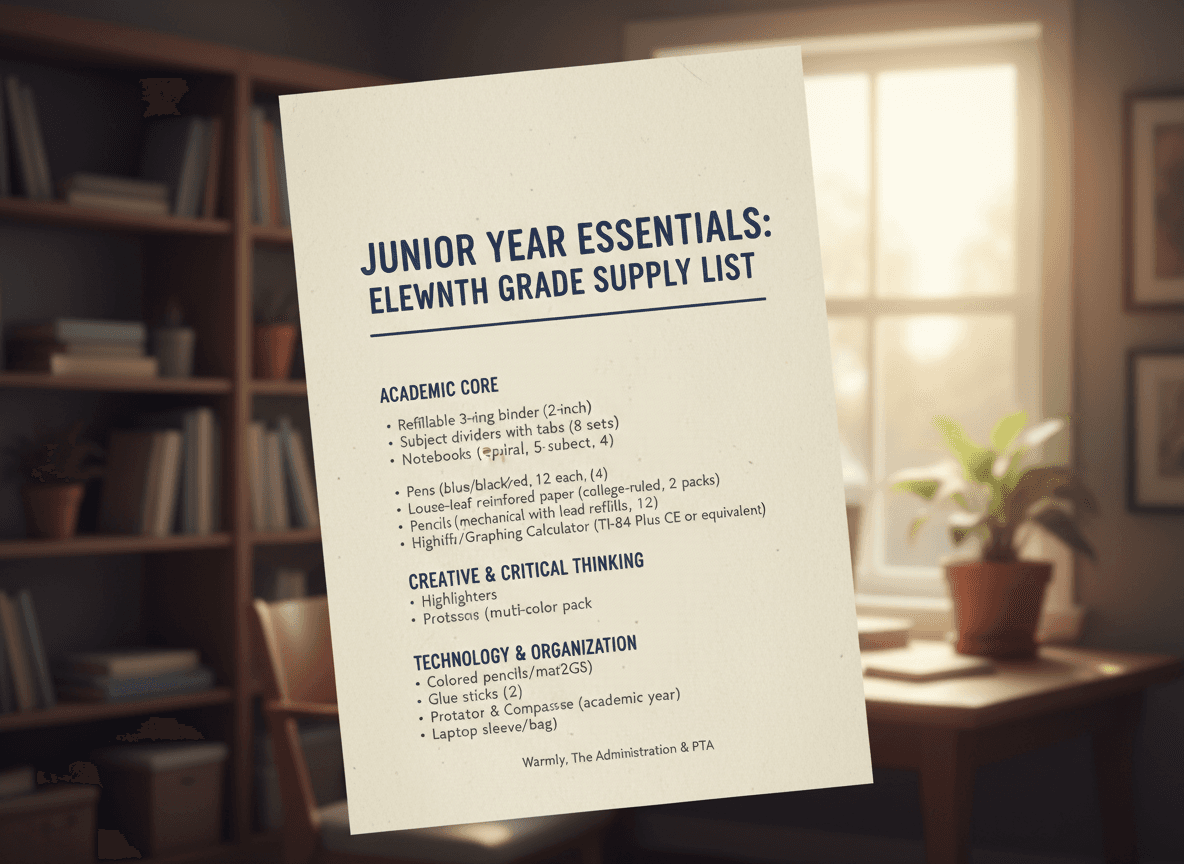
A supply list newsletter sounds like the simplest thing a teacher sends all year. One list, one send, done. But the way that list is communicated makes a real difference in whether families show up prepared, whether students have what they need on day one, and whether you spend the first week of school fielding "do we really need this?" questions.
Junior year supply lists also have their own particular wrinkles. Students are in harder courses. Some are in AP classes with specific material requirements. Some are doing independent research or extended projects. This guide walks through how to write a supply list newsletter for eleventh grade families that is clear, complete, and actually useful.
Separate Required Supplies From Recommended Ones
The fastest way to lose a parent's trust with a supply list is to mark everything as required when half of it is optional. Junior year families are often managing supply requests from four or five different teachers at the same time. If your list has 15 items and all of them look equally mandatory, families either buy everything and resent the cost, or they guess at what is actually necessary and some students show up unprepared.
Use two clear categories. Required means the student will need it in class during the first week. Recommended means it helps but is not essential. That distinction is a small thing that saves a lot of confusion.
Explain Why Each Requirement Exists
A list of items without reasons reads like a bureaucratic form. A list with brief explanations reads like a communication from a teacher who has thought about their class. For each required item, add a single sentence about why it matters in your specific classroom.
"Wide-ruled composition notebook: we take structured notes in this class that students return to all year for test review" tells a parent something a bare bullet point cannot. Same with "graphing calculator TI-84 or equivalent: required for every unit in pre-calculus and for the AP exam." Context is what separates a supply list from a communication.
Include the Digital Setup
Most junior year work has a significant digital component. If students need to access a specific platform for assignments or discussions, say so in the newsletter. Include the site name, whether students use a school-issued login or create their own, and any steps they should complete before the first class.
If you have a recommended note-taking or study app, include it here too. Many families and students do not know about digital tools that could make the year significantly easier. The supply list newsletter is one of the first things they read, which makes it a good place to introduce these tools before students fall into habits that are harder to change later in the semester.
Address the Calculator Question Directly
The graphing calculator question comes up every year in junior math and science courses. Calculators are expensive, the accepted models vary by teacher and by AP exam, and families often do not know whether the calculator their student already owns will work.
If your course requires a graphing calculator, name the specific models that are acceptable. If cheaper alternatives work, say so. If the school has a lending program, mention it. The calculator question generates more follow-up emails than almost anything else on a high school supply list. Answer it in the newsletter so you do not have to answer it 30 times individually.
Note What Students Should NOT Buy
This is optional but genuinely appreciated by families. If there is a type of notebook that does not work for your class, a binder size that causes problems, or a calculator model that looks similar to an accepted one but is not, a brief note about what to avoid saves families a frustrating trip back to the store. It also shows that you have taught this class before and know where the confusion happens.
Tell Families When They Need to Have Supplies
Give a clear date. "Please have all required supplies by the first day of class, August 27" is direct and actionable. Families who know the deadline can plan accordingly. Families who do not know the deadline often assume there is buffer time that does not actually exist.
If there is one item that students will not need until later in the semester, note that too. "You do not need the composition notebook until September 10 when we begin the research unit" saves families from feeling like they are behind if they cannot get everything immediately.

Close With Your Contact Information for Questions
A supply list newsletter is one of the first pieces of communication families receive from you. Make sure it ends with exactly how to reach you and when to expect a response. A family who has a question about the calculator requirement and cannot easily reach you may just not get the right calculator. A family who sends an email and hears back within 24 hours already trusts you before they have met you in person.
That trust carries through the whole year. The supply list newsletter is a small document with an outsized impact on first impressions. Treat it accordingly.
Get one newsletter idea every week.
Free. For teachers. No spam.
Frequently asked questions
What supplies do most eleventh grade students actually need?
It depends on the courses, but across most 11th grade classes, students need a dedicated notebook or binder for each subject, writing tools, index cards for studying, a planner or calendar system, and reliable access to a device for writing and research. AP courses may require a graphing calculator. Keep the list short and specific to what your class actually uses.
Should I list digital tools alongside physical supplies in the newsletter?
Yes. At the junior level, digital organization is as important as physical materials. If your class uses a specific platform for assignments, a study tool you recommend, or any apps students should have installed before the first week, include those alongside the physical supply list. Families appreciate knowing about digital requirements before the semester starts.
How do I handle situations where a family cannot afford all the supplies?
Include a brief note in the newsletter about what is truly required versus what is optional. If your school has a supply assistance program, mention it. Some teachers also keep basic supplies available in the classroom and note that quietly so students who need them do not have to ask in front of peers.
Is a supply list newsletter still necessary if students can find the list on the school website?
Yes, because families do not reliably check school websites before the year starts. A newsletter that lands in their inbox or comes home with the student is more likely to be read and acted on than a website page. Also, a newsletter gives you space to add context, explain why certain items matter, and answer questions before they are asked.
What platform do teachers use to send supply list newsletters to high school families?
Daystage is one teachers use for exactly this. You can write a clean supply list newsletter, format it so it is easy to scan, and send it to your class roster before the year starts. The benefit over a plain email is that it looks organized, which signals to families that the class is organized. First impressions set a tone.

Adi Ackerman
Author
Adi Ackerman is a former classroom teacher and curriculum writer with 8 years in K-8 schools. She writes about school communication, parent engagement, and what actually works in real classrooms.
More for High School
Eleventh Grade Back to School Newsletter: Starting Junior Year With Purposeful Family Communication
High School · 7 min read
Eleventh Grade Classroom Rules Newsletter: How to Communicate Expectations to Junior Families
High School · 6 min read
Eleventh Grade Curriculum Overview Newsletter: What Junior Year Families Need to Know About the Coursework
High School · 7 min read
Ready to send your first newsletter?
3 newsletters free. No credit card. First one ready in under 5 minutes.
Get started free