

Eleventh Grade Curriculum Overview Newsletter: What Junior Year Families Need to Know About the Coursework
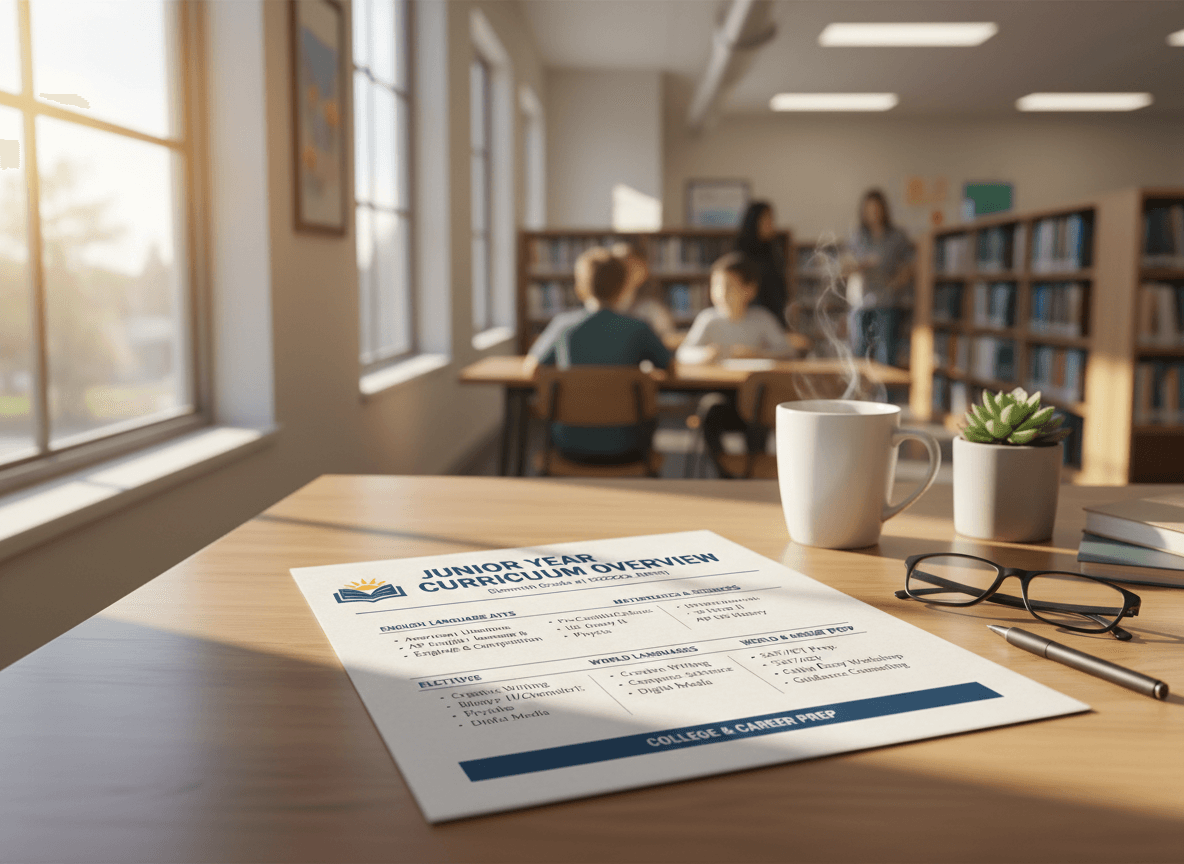
Junior year families often feel like they are watching the academic pace accelerate without a map. They see their student working harder, they hear words like "AP," "college credit," and "independent research," but they do not have a clear sense of what the year actually covers or what it is building toward. A curriculum overview newsletter gives them that map.
Done well, this newsletter reduces the number of anxious emails you get mid-year. It gives parents context for the grades they are seeing. And it lets you be a proactive communicator rather than someone who only reaches out when there is a problem. Here is how to write one that works.
Open With What Makes Junior Year Different
You do not need to write a long preamble. A short paragraph acknowledging that eleventh grade sits in a specific place in a student's academic trajectory is enough. Junior year is often when students are taking their most academically rigorous courses, when performance starts to shape college options, and when the habits built in earlier years either support or hinder them.
Starting with that context tells families that you understand what year they are in. It also positions everything that follows as purposeful rather than arbitrary. You are not just covering a list of topics. You are preparing students for something specific.
Give a Unit-by-Unit Overview
Break the year into major units and give each one a brief description. The name of the unit, a one-sentence summary of what it covers, and the skills students will practice during it is all you need for each section. If major assessments fall within a unit, name them and give approximate timing.
For example, in an 11th grade English course, a section might read: "Unit 2, American Voices: Students will analyze works by American authors across different historical periods, practice extended argumentative writing, and complete a research-based essay. Major assessment: a 1,500-word argumentative essay due late October." That is everything a parent needs to know about that unit. Nothing more is required.
Explain the Skills, Not Just the Topics
Topics tell families what students will study. Skills tell them what students will be able to do as a result. Both matter, but skills are often what parents care about more when they are thinking about long-term readiness.
Include a short section in the overview that describes the transferable skills your course builds. If you are teaching AP US History, students are not just learning historical content. They are building document analysis skills, learning to construct evidence-based arguments, and developing the kind of reading stamina that matters in college. Name those explicitly. Families who understand the purpose behind the content are more engaged supporters.
Map the Major Assessments
Give families a rough timeline of major assessments across the year. You do not need exact dates in August because schedules shift. What you need is enough information that families can see the overall rhythm. When do tests cluster? When are major papers or projects due? Is there a particularly heavy stretch in February that students should be preparing for now?
For AP courses especially, include the exam date and work backward to show families roughly when exam prep formally begins in your course. Parents who can see the full arc of the year plan better than parents who are reacting to each deadline as it appears.
Address How the Course Connects to What Comes Next
Junior year students are actively thinking about the future. Their parents are too. A curriculum overview newsletter that explains how the skills and content in your course connect to college-level work, professional fields, or future coursework gives families a reason to invest in the material beyond just the grade.
This does not have to be long or dramatic. A sentence or two per unit about what the skill transfers to is enough. "The statistical reasoning practiced in this unit is directly applicable to AP Statistics, college introductory research courses, and data interpretation in virtually every professional field." That is specific, true, and useful for a family trying to understand why a unit matters.
Describe How You Will Communicate Through the Year
Tell families upfront what to expect from you in terms of communication. How often will you send newsletters? What will they cover? How do you prefer to be reached for questions about the curriculum? What is your typical response time?
Families who know your communication patterns are less likely to feel anxious about gaps between updates. Setting expectations about your own communication is a small part of the curriculum overview newsletter but it prevents a lot of unnecessary follow-up questions later in the year.

End With What Families Can Do to Help at Home
A curriculum overview newsletter that ends with "here is what we will be doing" leaves families as spectators. Close instead with something concrete that families can do to support the learning. Ask them to talk with their student about what they are most interested in exploring this year. Recommend that they watch a documentary, read an article, or visit a place that connects to the first unit. Give them a role.
Families who feel like they have something to contribute are more engaged. And in junior year especially, when the academic pace is high and the stakes feel significant, a family that is oriented toward the year and knows how to help is one of the best resources a student can have.
Get one newsletter idea every week.
Free. For teachers. No spam.
Frequently asked questions
What should an eleventh grade curriculum overview newsletter include?
Cover the units you plan to teach across the year, the major assessments tied to each unit, the skills students will develop rather than just the topics they will cover, any AP or advanced exam context that affects pacing, and where families can go with questions. A one-page overview at the start of the year saves a hundred individual conversations later.
How much detail is appropriate in a curriculum newsletter for parents?
More than most teachers give, but less than a full syllabus. Parents do not need week-by-week lesson plans. They do need to know what the year covers, what the big assessments are and roughly when they fall, and what skills students are expected to build. Think of it as an orientation document for someone who will be supporting a student through the year.
Should I explain how my subject connects to college readiness in the newsletter?
Yes, and it is especially valuable in junior year. Families are thinking about college applications and what academic rigor looks like on a transcript. Connecting your curriculum to real skills that matter beyond the course, whether that is analytical writing, quantitative reasoning, or something else specific to your subject, gives families a reason to take the content seriously beyond just the grade.
How do I handle curriculum changes mid-year in my newsletters?
Briefly. When you shift from what the overview described, send a short update explaining the change and why you made it. Did a unit take longer than expected? Did current events create a better teaching moment that shifted the sequence? A one-paragraph note keeps families oriented without requiring them to track every classroom decision in real time.
Which newsletter tool makes it easy to share a curriculum overview with junior families?
Daystage works well for this. You can build a curriculum overview newsletter with sections for each major unit, embed key dates, and send it to your entire class list in one step. Teachers use it at the start of the year to set expectations, and then send brief update newsletters as the year progresses to keep families oriented.

Adi Ackerman
Author
Adi Ackerman is a former classroom teacher and curriculum writer with 8 years in K-8 schools. She writes about school communication, parent engagement, and what actually works in real classrooms.
More for High School
11th Grade Math Progress Newsletter: What to Tell Parents About Junior Year Math
High School · 6 min read
Eleventh Grade Science Unit Newsletter: How to Keep Junior Families Engaged in What Students Are Learning
High School · 6 min read
Eleventh Grade Social Studies Newsletter: Keeping Junior Families Connected to What History and Civics Teach
High School · 6 min read
Ready to send your first newsletter?
3 newsletters free. No credit card. First one ready in under 5 minutes.
Get started free