
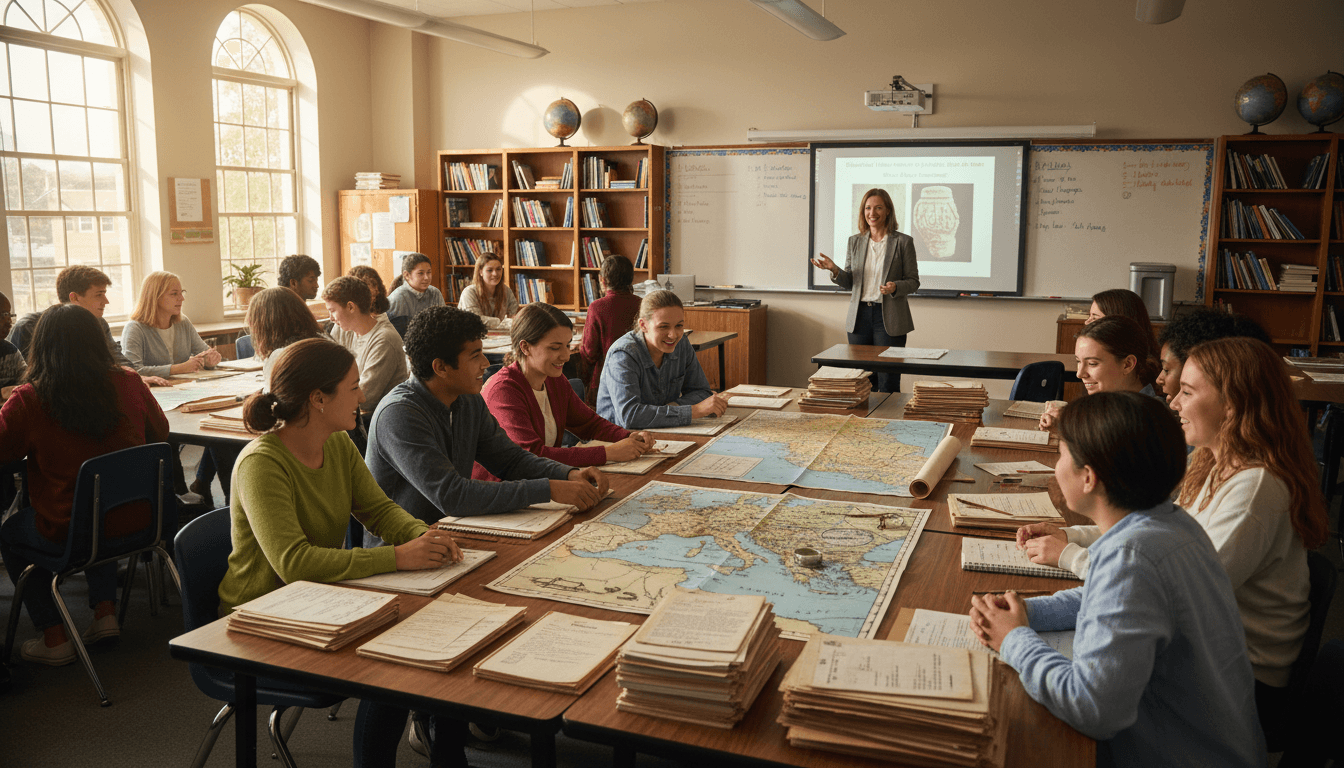
Eleventh Grade Social Studies Newsletter: Keeping Junior Families Connected to What History and Civics Teach

Social studies in junior year is often where students do the most academically demanding analytical writing of their high school career. They are reading primary sources, constructing historical arguments, evaluating evidence, and connecting past events to ongoing patterns. For families who took history classes built around memorizing dates and names, this kind of work looks unfamiliar. A newsletter that explains what students are actually doing and why changes the conversation at home.
This guide walks through how to write a social studies newsletter for eleventh grade families that builds understanding, reduces confusion, and makes families real partners in a content area that often sparks questions at the dinner table.
Start With the Central Question of the Unit
Good social studies units are organized around a question worth debating. "How did the United States' role in the world change after World War II?" "What made Reconstruction fail, and what would have been required for it to succeed?" These questions are more engaging to families than unit titles and they signal immediately that your course is about thinking, not just memorizing.
Opening the newsletter with the central question also gives families something concrete to bring up with their student. A parent who asks "what do you think about why Reconstruction failed?" is having a much better conversation than one who asks "how is history going?" The newsletter is a tool for making those better conversations possible.
Name the Primary Sources and Texts
Junior year social studies often involves working with original documents, historical accounts, and multiple perspectives on contested events. Tell families what students are reading and analyzing. A sentence describing each major primary source or text, including what it is and why it is worth studying, gives families context for what their student might bring home or talk about.
This also helps with the occasional parent concern about a challenging document. A parent who has read in the newsletter that the class is analyzing a specific speech or account because of what it reveals about the conditions of the time is much less likely to question the choice than a parent who encounters it cold without context.
Explain the Historical Thinking Skills
AP US History and AP World History both emphasize specific thinking skills: contextualization, comparison, causation, continuity and change over time, and argumentation. Even in non-AP courses, historical thinking skills are central to what 11th grade social studies is building.
Take two or three sentences in the newsletter to describe what skill students are working on in the current unit and what it looks like in practice. "In this unit, students are practicing argumentation by writing a thesis statement that goes beyond restating facts to make a defensible interpretive claim about why a historical change occurred. This is one of the most heavily weighted skills on standardized tests and in college writing courses." That explanation changes how families respond when their student complains that the essay assignment is hard.
Connect the Content to Current Events Thoughtfully
One of the great advantages of teaching social studies is that the past is always in conversation with the present. When you are making those connections in class, say so in the newsletter. Families who know you are drawing those lines are more receptive to students who come home talking about political or social topics in historical context.
Keep the framing focused on the historical thinking skill rather than on any contemporary political position. "We are examining how propaganda shaped public opinion during wartime and comparing those techniques to modern media literacy concepts" is a framing that most families across the political spectrum can accept. The skill is teachable and defensible. The application lets students think for themselves.
Address the AP Exam Context
For AP social studies courses, the exam is a significant motivator for families and students alike. Include a brief section on how the current unit maps to exam content. Which periods or themes does it cover? What essay types does it prepare students for? How many weeks remain before the exam?
Also name what kind of support you are providing for exam prep. Practice document-based questions, past exam prompts, timed writing practice, and review sessions all belong in the newsletter when they are happening. Families who know what exam prep looks like in your class understand the workload and take the time investment more seriously.
Offer Discussion Starters for Home
Social studies content lends itself to home conversations in a way that few other subjects do. Give families two or three questions they can bring up at home that connect to what students are currently studying. Keep them open-ended. "Ask your student what evidence they find most convincing about why the event happened the way it did" is more useful than a quiz question with a right answer.
Families who have a conversation about the content are doing something genuinely educational for their student. Background knowledge and discussion partners make a measurable difference in comprehension, particularly for history and civics topics that connect to lived experience. The newsletter can activate that resource.

End With the Assessment and What It Is Measuring
Close the newsletter with a description of the major assessment for the unit and what it is designed to measure. If it is a document-based essay, describe what students will do and what skills it tests. If it is a Socratic seminar, explain the format and how preparation works. If it is a timed writing prompt similar to the AP exam, say that directly.
Families who understand what an assessment is measuring are more effective at helping students prepare for it. A parent who knows their student needs to construct a thesis and support it with evidence from multiple documents can have a useful conversation about the assignment. A parent who just knows there is a "big test this week" cannot. The newsletter is how you close that gap.
Get one newsletter idea every week.
Free. For teachers. No spam.
Frequently asked questions
What should an 11th grade social studies newsletter include?
Cover the current unit topic and time period, the primary sources or texts students are working with, the analytical and writing skills being developed, major assessments and their timeline, and how the unit connects to AP exam content if applicable. Also include any current events connections you are drawing on in class, since families appreciate knowing when classroom content touches on what they are seeing in the news.
How do I communicate about politically sensitive historical topics in the newsletter?
Focus on the skills and the historical evidence rather than on contemporary political framing. Describe what students are doing: analyzing primary sources, constructing evidence-based arguments, examining multiple perspectives on a historical event. The method is defensible across most viewpoints. Parents who trust the process are more willing to let complex historical content do its work.
How can families support social studies learning at home without becoming homework helpers?
The best support families can offer in social studies is conversation, not coaching. If a student is studying the civil rights movement, a family conversation about what that period looked like from a personal or family history perspective adds context that no textbook can. Ask families to share their own knowledge and connections to the content rather than asking them to review document analysis techniques.
Should the social studies newsletter include current events connections?
Yes, when you are making those connections in class. Families who know you are connecting historical content to current events understand why the learning is relevant. They are also less likely to be caught off guard if their student comes home discussing something that sounds like it is about today's news. Naming the connection in the newsletter gives that conversation a framework.
Which newsletter platform do social studies teachers use for communicating with 11th grade families?
Daystage is one option teachers use for history and social studies newsletters. You can include images of primary source documents, organize units clearly, and send updates to the full class list. Social studies newsletters often benefit from a more structured format that mirrors the discipline's attention to evidence and context, which Daystage's layout supports.

Adi Ackerman
Author
Adi Ackerman is a former classroom teacher and curriculum writer with 8 years in K-8 schools. She writes about school communication, parent engagement, and what actually works in real classrooms.
More for High School
Eleventh Grade Curriculum Overview Newsletter: What Junior Year Families Need to Know About the Coursework
High School · 7 min read
Eleventh Grade Science Unit Newsletter: How to Keep Junior Families Engaged in What Students Are Learning
High School · 6 min read
11th Grade Math Progress Newsletter: What to Tell Parents About Junior Year Math
High School · 6 min read
Ready to send your first newsletter?
3 newsletters free. No credit card. First one ready in under 5 minutes.
Get started free