
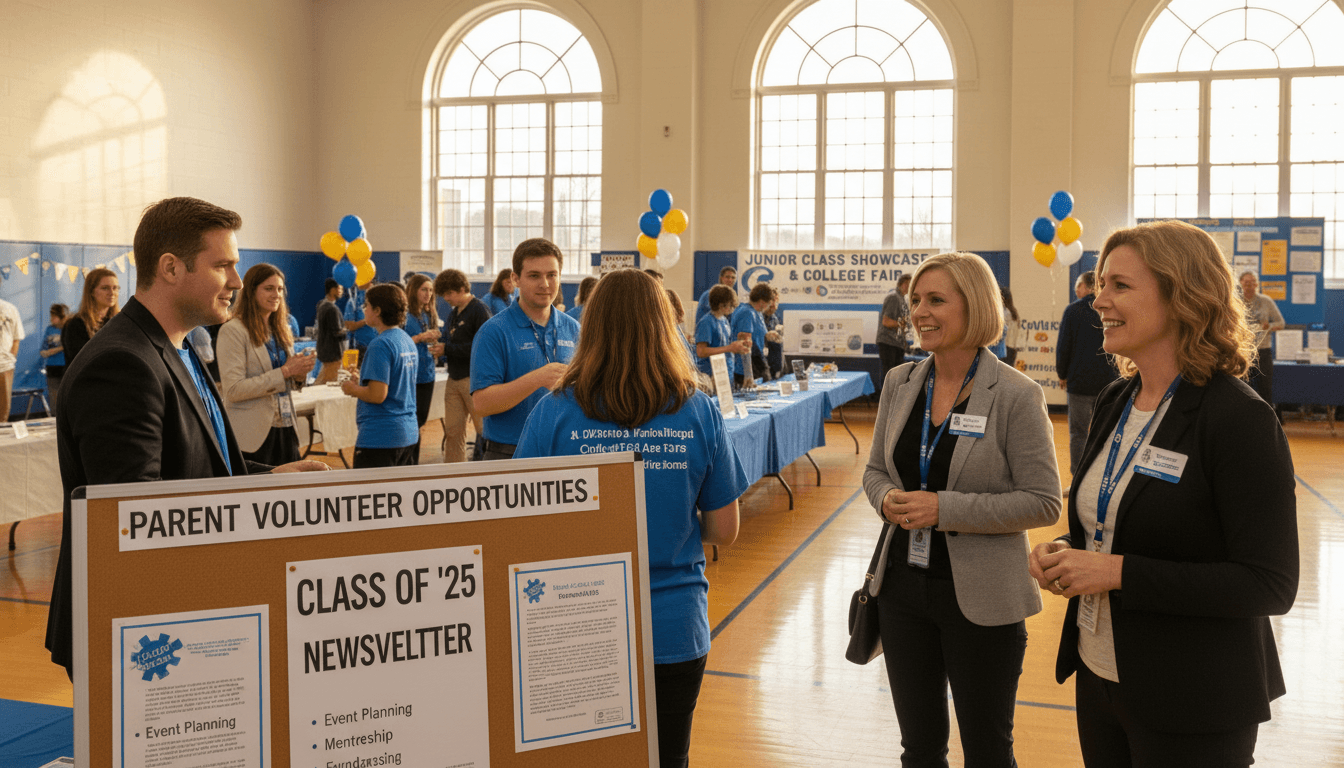
Eleventh Grade Parent Volunteer Newsletter: How to Recruit and Engage Junior Year Families
Parent involvement in high school looks different than it did in fifth grade. The bake sales and classroom read-alouds are behind everyone. But families still want to contribute. They just need to know where they fit and why it matters. Junior year teachers who figure out how to tap that energy end up with a much richer classroom experience than those who write off parent involvement as something that belongs in elementary school.
A good parent volunteer newsletter for eleventh grade does the work of matching willing families to meaningful roles. This guide walks through how to write one that gets real results.
Start by Reframing What Volunteering Means at This Level
Most parents of juniors have a mental image of volunteering that involves sitting in a classroom or chaperoning a field trip. That image often does not appeal to them at this stage, and honestly, it often does not serve your students either. The first job of a volunteer newsletter at the 11th grade level is to redefine what contributing looks like.
Career speakers, college application workshop helpers, event logistics coordinators, and mock interview panelists are all volunteer roles that fit naturally into junior year. These are roles where parents' professional experience makes them genuinely useful. Lead with those opportunities, not with requests for generic "classroom help."
Name Every Role With Precision
Parents cannot sign up for something they cannot picture. For every opportunity you are offering, include the role name, a one-sentence description of what it involves, the time commitment, the date or timeframe, and any special skills or background that would be helpful. Nothing more than that is required.
A section that reads "Career Panel Speaker: Share your professional background with 25 juniors exploring post-high-school options. 45-minute panel, November 8 at 6 PM. Any career welcome" tells a parent everything they need to decide. That level of specificity dramatically increases sign-up rates compared to a general request for "career speakers."
Respect the Independence Students Need at This Age
One reason parents pull back in junior year is that their students are asking for more independence, and parents who are still very present in school life sometimes hear about it from their kids. A thoughtful volunteer newsletter acknowledges this directly.
Note that the volunteer roles you are offering are designed so that families can contribute without being in the room while their student is trying to show independence. Behind-the-scenes logistics, evening events, and professional panels all give parents a way to stay involved without creating the awkwardness that comes from being too visible in your teenager's daily school life.
Make the Sign-Up Process Frictionless
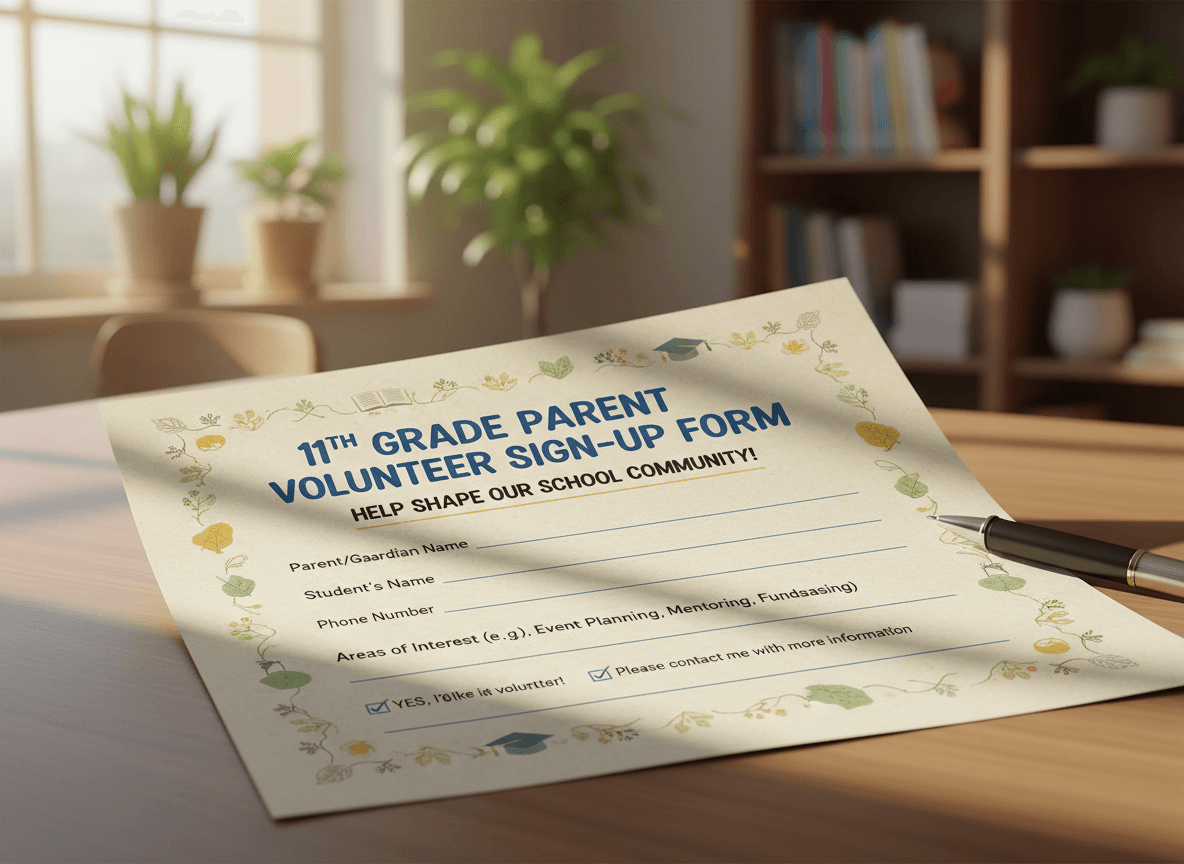
If families have to email you, call the school office, or navigate a complicated form to volunteer, many of them will not. Reduce the friction as much as possible. Include a direct link to a sign-up form. If you are using paper, include a tear-off slip at the bottom with check boxes for each opportunity and a space for name and contact information.
Deadlines matter too. Give a specific date by which you need sign-ups. "Please sign up by Friday, September 19" is actionable. "Sign up at your convenience" gets added to a mental to-do list and forgotten.
Segment Opportunities by Time Commitment
Not all families have the same availability, and a newsletter that only offers time-intensive volunteering roles will lose the families who want to help but cannot commit to multiple events. Include at least one option that requires minimal time. A parent who can show up for a single two-hour evening panel is just as valuable as one who can commit to three events, and they deserve an entry point too.
Organize the opportunities by time commitment so parents can scan quickly and find what fits their schedule. Short-term options at the top, larger commitments further down.
Tell Families What Happened After They Volunteered
A follow-up note after each volunteer event is one of the most effective ways to keep families engaged across the whole year. A short paragraph in your next newsletter describing what happened at the career panel, how many students attended the workshop, or what the class accomplished at the event tells volunteers that their contribution made a real difference.
Parents who feel seen come back. Parents who volunteer and never hear anything again tend to assume their contribution did not matter much. The follow-up is not optional if you want a consistent group of engaged families throughout junior year.

Close With a Personal Note of Appreciation
Junior year parents are often in a complicated emotional space. Their children are growing up fast. The college process is starting. Some families feel like they are running out of time to be involved before their student leaves for whatever comes next. A volunteer newsletter that closes with a genuine note of appreciation for how families show up, even in the small ways, lands very differently than one that reads like a staffing request.
Acknowledge that you could not run a good classroom without community behind it. Mean it when you write it. Families who feel genuinely valued are the ones who stay engaged through the hard parts of the year, and junior year has hard parts.
Get one newsletter idea every week.
Free. For teachers. No spam.
Frequently asked questions
Why is it harder to get parent volunteers in 11th grade?
Junior year is when many parents start pulling back from direct school involvement, partly because their students are asking for more independence, and partly because the volunteering culture at the high school level is just less visible than in elementary and middle school. The roles are less obvious, and families often assume they are not needed or not welcome.
What kinds of volunteer opportunities actually work for junior year parents?
Behind-the-scenes logistics work best. Event setup and breakdown, career panel participation, college prep resource sharing, and classroom presentation on professional topics all fit the stage well. These roles let parents contribute without hovering, which respects the independence students need at this age.
How specific should I be in the newsletter about what each role involves?
Very specific. Do not ask parents to 'get involved' or 'support the class.' Name the role, describe what it requires, say how much time it takes, and give a deadline to sign up. Vague asks get vague responses. A parent who sees 'help at the college application workshop from 6 to 8 PM on October 14, no prep required' can decide immediately.
How do I frame volunteer asks so they do not feel like pressure?
Lead with appreciation for what families are already doing. Acknowledge that junior year is demanding for students and parents alike. Then present volunteering as an option that makes the classroom better, not as a requirement. Families who feel invited rather than obligated are more likely to follow through.
What is a good tool for distributing a parent volunteer newsletter in 11th grade?
Daystage lets teachers build a clean, organized volunteer newsletter with embedded sign-up links and send it directly to the class roster. For something like a parent volunteer call, the format matters. A polished newsletter gets more responses than a forwarded email because it signals that you put thought into the ask.

Adi Ackerman
Author
Adi Ackerman is a former classroom teacher and curriculum writer with 8 years in K-8 schools. She writes about school communication, parent engagement, and what actually works in real classrooms.
More for High School
Eleventh Grade Back to School Newsletter: Starting Junior Year With Purposeful Family Communication
High School · 7 min read
Eleventh Grade Curriculum Overview Newsletter: What Junior Year Families Need to Know About the Coursework
High School · 7 min read
Eleventh Grade Field Trip Newsletter: How to Communicate Everything Families Need to Know
High School · 6 min read
Ready to send your first newsletter?
3 newsletters free. No credit card. First one ready in under 5 minutes.
Get started free