

Eleventh Grade Homework Policy Newsletter: Setting Clear Expectations for Junior Year Families
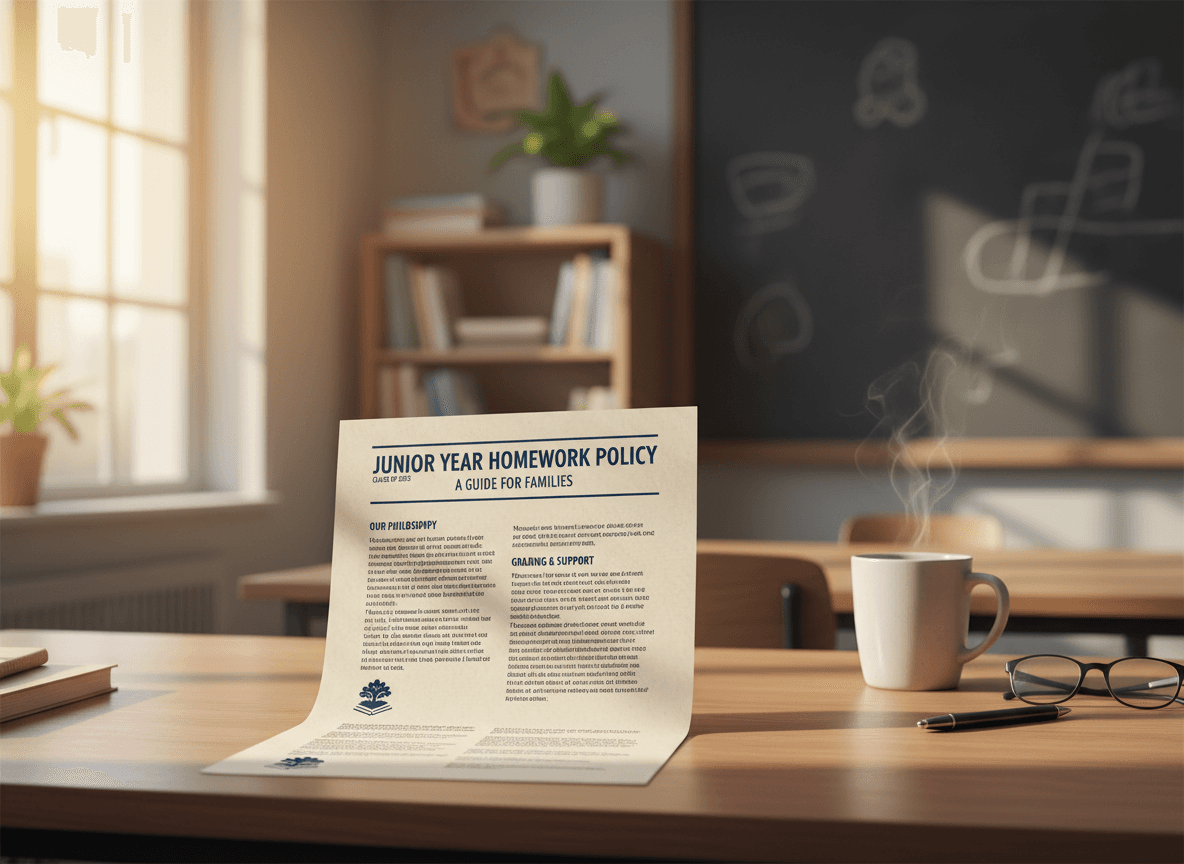
Homework policy conflicts are predictable and preventable. They almost always happen because the policy was never clearly communicated in writing before the first assignment was due. A student turns in something late, a grade drops, a parent calls wondering why, and everyone is working from a different understanding of what the rules were.
A homework policy newsletter sent before the first major assignment solves most of this. It tells families exactly what to expect, what the consequences are, and what support at home should and should not look like. Here is how to write one for an eleventh grade class.
Start With the Purpose of Homework in Your Course
Before outlining any policies, give families a brief answer to the question they are often thinking but rarely ask: why does this class have homework and what is it supposed to accomplish? At the junior level, a meaningful answer here builds buy-in for everything that follows.
If homework in your class is deliberate practice to reinforce skills from the day's lesson, say so. If it is reading that prepares students to participate in discussion, say that. If there are weeks with no homework because everything can be completed in class, acknowledge that too. Families who understand the purpose behind assignments treat homework differently than families who see it as an arbitrary obligation.
Define What Counts as Homework
Junior year students often take multiple classes with different definitions of "homework." Some teachers count everything assigned outside of class. Some count only graded submissions. Some treat study time as a form of homework. Make yours explicit.
Name the types of assignments that fall under your homework category. Reading with annotation. Problem sets. Short written responses. Study guide completion. Knowing what belongs in the category helps families understand what they are looking at when they check the assignment tracker and helps students manage their time accordingly.
Explain How Homework Affects the Grade
Give families the exact weight. If homework counts for 20 percent of the final grade, say 20 percent. If it is graded for completion rather than accuracy, explain that. If late homework gets partial credit and you have a specific formula for how much, include the formula.
Families who know that homework is 20 percent of the grade respond very differently to a student who is not completing assignments than families who assume homework is just extra practice with no grade consequences. The grade weight is not an administrative detail. It is essential context for understanding what is at stake.
Lay Out the Late Work Policy in Full
This is the section that prevents the most parent-teacher conflicts when it is written clearly. Include the penalty for each day of lateness. Define whether there is a cutoff after which late work is not accepted. Explain whether a student can turn in late work for any reason or only with prior communication and approval.
For example: "Assignments turned in one day late receive a maximum score of 85 percent. Two days late, 70 percent. After three days, assignments are no longer accepted and receive a zero. If circumstances require an extension, students must contact me before the due date to discuss options." That policy is completely clear. There is no room for misunderstanding, and there is also no room for "but I did not know."
Describe the Absence and Make-Up Process
Juniors miss school. Sports travel, college visits, illness, and other factors mean that attendance is rarely perfect. Your make-up work policy should be in the newsletter before the first absence happens.
Include how many days students have to make up work after an absence, whether that timeline differs for excused versus unexcused absences, and what the student is responsible for doing when they return. "After an excused absence, students have one additional day for each day missed to complete and submit work without penalty. Students are responsible for checking the class portal for missed assignments on the day they return" is clear and complete.
Address the Role of Parents in Supporting Homework
This is a section that junior year specifically needs. Students are 16 and 17 years old. They are developing the independence and self-management skills that will carry them through college. Parental involvement in homework at this stage should be supportive but not directive.
Tell families directly what helpful support looks like. Asking how the homework went, making sure the study environment is set up well, and checking that assignments are submitted are all appropriate. Writing or correcting work for their student, working through problems step by step until the student just copies the answer, and emailing you to ask for an extension the student should have requested themselves are not. This distinction is worth stating clearly. Most parents appreciate the explicit guidance about what is appropriate.

Tell Families What to Do When Their Student Is Overwhelmed
Junior year workload is real. There will be weeks when the homework load from multiple classes stacks up badly. Give families a clear path when that happens. Who should the student contact? What should they say? Is there a process for requesting a short extension versus just not turning in the work on time?
Families who have a concrete process to follow when their student is overwhelmed are less likely to step in and do the work themselves. Give them the process, and most of them will use it.
Get one newsletter idea every week.
Free. For teachers. No spam.
Frequently asked questions
What should an 11th grade homework policy newsletter cover?
The newsletter should explain how much homework students should expect, what types of assignments count as homework, how homework is graded, the late work policy with specific penalties, the process for making up work after an absence, and what kind of support from home is appropriate versus doing too much for the student.
How do I communicate a strict late work policy without alienating junior families?
Explain the reasoning clearly. Late work penalties exist because timeliness is part of the professional and academic skill set students are developing. Most parents understand and accept firm policies when they understand the educational purpose. The families who push back hardest on late work penalties are usually the ones who were not told about them until after their student incurred one.
How much homework should eleventh graders have per night?
A common guideline is 30 to 60 minutes per core class per night, though this varies significantly by course rigor. AP and advanced courses often require more. The more useful thing to communicate in the newsletter is the range a student should expect and what to do if homework is consistently taking much longer than that range.
How should I handle the conversation about AI tools in the homework policy?
Address it directly and specifically. Name what uses of AI are acceptable for your assignments. Distinguish between using AI as a reference tool versus using it to generate submitted work. Be specific about what constitutes a violation and what the consequence is. Vague AI policies create ambiguity that students will test.
What tool works well for distributing a homework policy newsletter to 11th grade families?
Daystage is good for this. You can write a clean, formatted homework policy newsletter with clear sections and send it to your class list before the first assignment is due. Getting the policy in front of families before any late work happens is much more effective than sending it after the first conflict.

Adi Ackerman
Author
Adi Ackerman is a former classroom teacher and curriculum writer with 8 years in K-8 schools. She writes about school communication, parent engagement, and what actually works in real classrooms.
More for High School
Eleventh Grade Classroom Rules Newsletter: How to Communicate Expectations to Junior Families
High School · 6 min read
Eleventh Grade Behavior Newsletter to Parents: How to Communicate Classroom Expectations Clearly
High School · 6 min read
11th Grade Math Progress Newsletter: What to Tell Parents About Junior Year Math
High School · 6 min read
Ready to send your first newsletter?
3 newsletters free. No credit card. First one ready in under 5 minutes.
Get started free