

11th Grade ELL Support Newsletter: Keeping English Language Learner Families Informed During Junior Year
Junior year is one of the highest-stakes years in high school for any student. For English language learners, it layers those stakes on top of the ongoing demands of language acquisition, content-area literacy development, and in many cases, navigating a family and community context where the US education system is still unfamiliar territory.
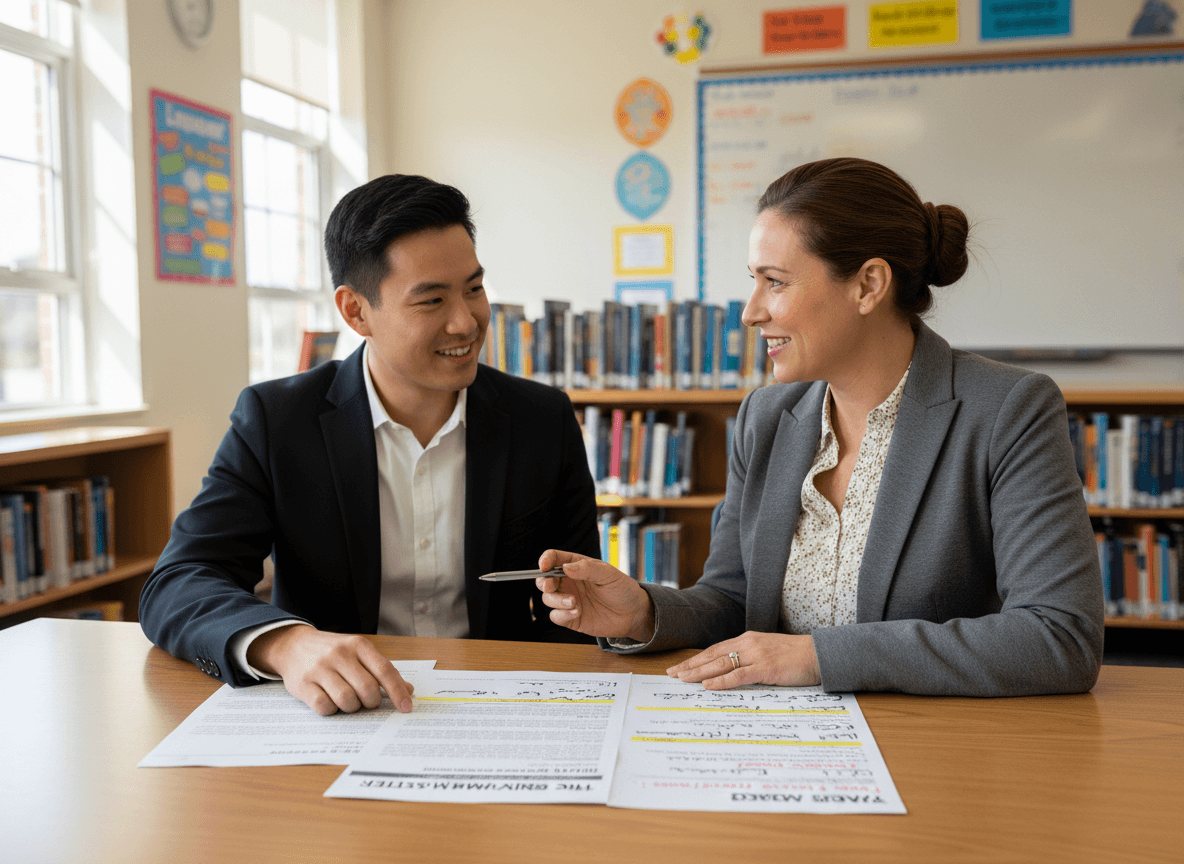
When teachers and ELL specialists communicate effectively with ELL families during 11th grade, the impact is real and measurable. Families who understand what is happening in school advocate more effectively for their students, connect them to available supports, and make better-informed decisions about post-secondary planning. A consistent, accessible newsletter is one of the most practical tools for making that happen.
The access problem that a newsletter can solve
Many ELL families have significant barriers to school communication that go beyond language. Work schedules that prevent attendance at school events, unfamiliarity with the school system's structure, distrust built from negative past experiences, and the feeling that school communication is not meant for them all contribute to disengagement that is often mistaken for lack of interest.
A newsletter sent directly to a parent's phone or email, in a language they can read, at a predictable time each month, removes several of those barriers at once. It signals that the school is reaching toward the family, not waiting for the family to come in.
Language access is not optional: what teachers need to know
Under federal civil rights law, schools are required to provide meaningful access to important information for families with limited English proficiency. This applies to newsletters, report cards, meeting notices, and other communications about a student's academic progress.
This does not mean every informal classroom message needs a formal translation. It does mean that communications about grades, course placement, testing, graduation requirements, and post-secondary planning should be available in the primary languages of the families you serve. If your school has a language access coordinator or multilingual family liaison, they are a resource for this. If you are on your own, free translation tools like Google Translate can provide a draft that a bilingual staff member or family volunteer can review for accuracy.
English proficiency assessments and what to tell families
Most states administer an annual English language proficiency assessment to ELL students, such as the ACCESS for ELLs. Families deserve a clear explanation of what this test measures, what the results mean for their student's language program placement, and what reclassification as English proficient would mean for their student's schedule and supports.
Reclassification is particularly worth addressing in 11th grade. Students who are close to the exit threshold may wonder whether being reclassified is a good thing or a loss of support. Help families understand that reclassification is a milestone, not an abandonment, and that monitoring services are typically available for one to three years after exit.
Academic progress and grade-level expectations
ELL students in 11th grade are often working simultaneously on language development and grade-level content standards. The newsletter should help families understand what grade-level expectations look like in 11th grade English, history, science, and math, and where their student is relative to those expectations.
Be specific about the supports in place. If a student has access to sheltered instruction, bilingual materials, extended time on assessments, or a bilingual paraprofessional, name those supports. Families often do not know exactly what accommodations their student receives or how to reinforce the related skills at home.
Standardized testing considerations for ELL students
The SAT, ACT, and state assessments each have different policies around language accommodations. Some accommodations are available to ELL students, including extended time and translated test directions in some contexts. Families of ELL students should know what accommodations are available, how to request them, and what the testing calendar looks like for junior year.
For recent arrivals or newcomer students, the conversation about standardized testing should include honest information about readiness timelines. A student who arrived in the US two years ago has a different profile than a student who has been in US schools since kindergarten, and the testing strategy should reflect that.
Post-secondary planning for ELL families
Post-secondary planning communication for ELL families requires a different starting point than the same communication for families who grew up navigating the US education system. Concepts like the Common App, the FAFSA, community college transfer pathways, and scholarship searches are not intuitive to families unfamiliar with the US system.
Your newsletter can build that foundation over the course of junior year. Start in fall with a basic explanation of how the US post-secondary landscape is structured. Move to application timelines in winter. Cover financial aid in spring. By the time senior year starts, the family will have enough context to engage meaningfully in the process rather than feeling lost.
Resources worth sharing with ELL families
ELL families benefit from knowing about organizations and resources specifically designed to support their community. College access organizations serving first-generation and multilingual students, local immigrant resource centers that offer college counseling, community-based financial aid workshops, and bilingual college fairs are all worth including in a newsletter over the course of the year.
Do not assume families already know about these resources. Many families navigating the US school system for the first time do not know what they do not know. A newsletter that consistently points them toward useful resources earns trust and generates engagement over time.
Get one newsletter idea every week.
Free. For teachers. No spam.
Frequently asked questions
Are schools required to translate communications for ELL families?
Yes. Under Title VI of the Civil Rights Act and the Every Student Succeeds Act, schools must take reasonable steps to provide meaningful access to school communications for families with limited English proficiency. For newsletters and other important informational materials, this means providing translations into the primary languages of ELL families in the school. The standard is meaningful access, not just technical availability.
What ELL-specific academic milestones should appear in an 11th grade newsletter?
Key milestones to communicate include English proficiency assessment results and what they mean for reclassification eligibility, ACCESS or state ELD test dates and preparation, progress toward grade-level academic standards with scaffolded supports, and any decisions about course placement that may affect graduation timeline or post-secondary options. Junior year is also when reclassification conversations are worth having for students who are near the exit threshold.
How do you address college access in an ELL newsletter for families who may be unfamiliar with the US system?
Start from the assumption that the family may have no prior experience with how US college admissions works. Explain the basic structure: community colleges, four-year universities, trade programs, and how each differs. Cover financial aid at a basic level, including that FAFSA is available regardless of citizenship status in some states and that undocumented students may qualify for state aid in certain states. Never assume a family's immigration status limits what their student can pursue without knowing the specifics.
How can an ELL newsletter support students who are navigating both language development and junior year pressures?
Acknowledge the dual load explicitly. A student who is building academic English while managing the same coursework demands as native speakers is working harder than most of their peers. The newsletter can help families understand what that looks like, validate the effort, and provide specific guidance on available supports like sheltered instruction, peer tutoring, after-school language support, or homework help programs. Families who understand what supports exist are far more likely to help their student access them.
What newsletter tool works well for ELL family communication?
Daystage is a good fit for ELL teachers who need to send consistent, professional newsletters to families. You can write your core content once and work with a translator or bilingual staff member to adapt it into the necessary languages before sending. The result is a newsletter that reaches every family in a language they can read, with a consistent structure that helps families learn what to expect each month.

Adi Ackerman
Author
Adi Ackerman is a former classroom teacher and curriculum writer with 8 years in K-8 schools. She writes about school communication, parent engagement, and what actually works in real classrooms.
More for High School
11th Grade Classroom Newsletter Ideas: What to Send Junior Parents All Year
High School · 7 min read
11th Grade Special Education Newsletter: Communicating IEP Progress and Transition Planning to Families
High School · 7 min read
12th Grade Parent Communication Guide: What Senior Year Families Need to Hear All Year
High School · 8 min read
Ready to send your first newsletter?
3 newsletters free. No credit card. First one ready in under 5 minutes.
Get started free