

Civics Unit Newsletter for Parents: 9th Grade Guide
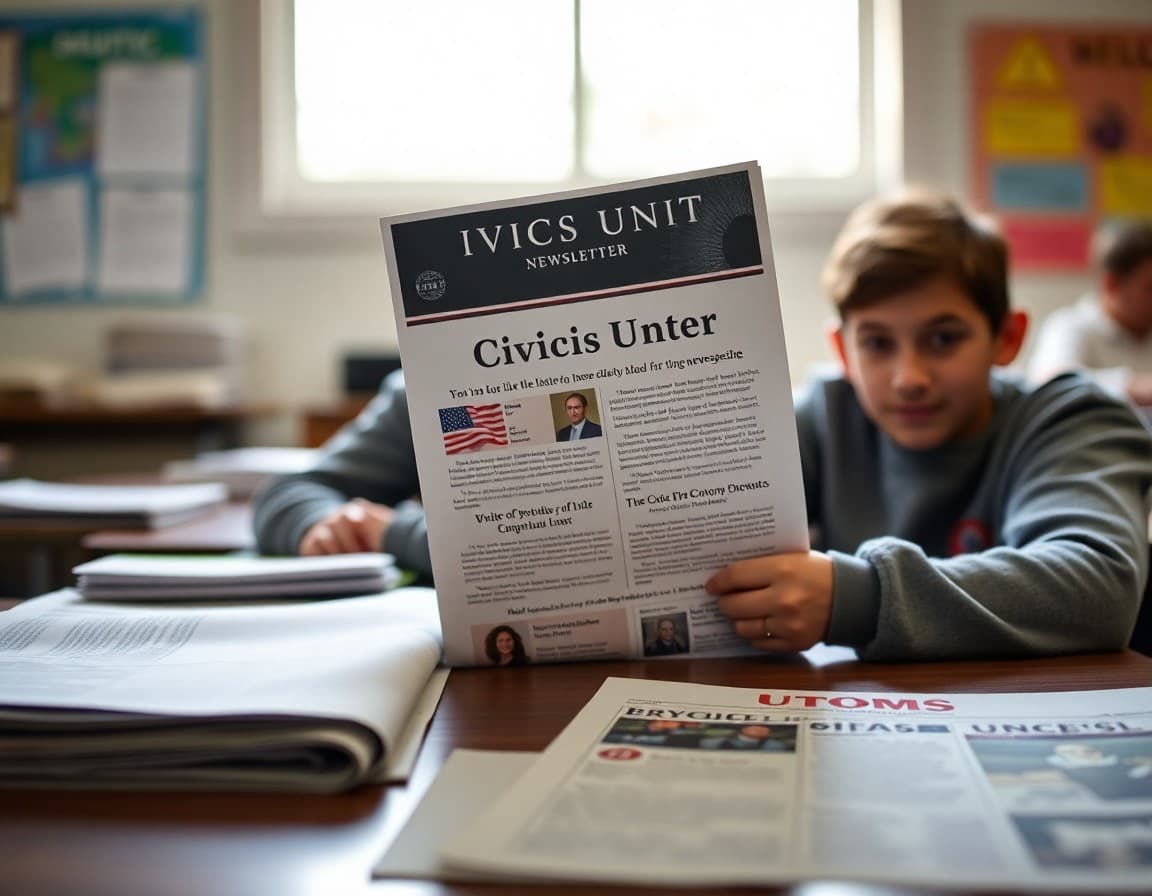
Ninth grade civics is where students first encounter a systematic look at how their government actually works. For freshmen, many of whom are just becoming aware of current events and politics, the curriculum arrives at exactly the right moment. A unit newsletter helps parents understand what you're building and gives them tools to extend that learning at home.
The 9th Grade Civic Moment
Freshmen are in an interesting civic position. They're old enough to follow the news, young enough that civic habits formed now will shape decades of participation, and legally at least 3 years from voting. That window is exactly where a good civics course fits. Students who understand how government works at 14 or 15 are dramatically better prepared for the civic decisions they'll make at 18, 25, and throughout their lives.
Your newsletter can name that timeline directly: "Your student is roughly 3 to 4 years from their first vote. This unit is one of the most direct preparations for that moment they'll receive in school."
What to Include in a 9th Grade Unit Newsletter
Cover the unit focus in one paragraph, three to five key concepts in plain language, one current event that illustrates the unit content, and two conversation prompts that practice applied thinking rather than factual recall. A brief vocabulary list of three to five terms gives parents the language to ask precise questions.
Template Excerpt: Constitutional Structure Unit
"We're starting our Constitutional Structure unit this week. Students will study the organization of the federal government, why power is divided among three branches, and how those branches check each other in practice.
Core concepts: separation of powers, checks and balances, federal vs. state authority, enumerated vs. implied powers, the supremacy clause.
At home: ask your student to name the three branches and give one example of how each checks the others. Then ask: 'Why do you think the founders split power this way instead of giving it all to one group?' The second question moves from recall to analysis, which is what we're practicing in class.
Current connection: if anything involving Congress, the president, or the courts is in the news this week, ask your student which branch is acting and what the constitutional basis for that action might be."
Connecting to Civil Liberties Students Already Exercise
Ninth graders are actively exercising civil liberties in their daily lives, often without realizing it. Their speech on social media, their protection from unreasonable school searches, their right to assemble and protest: these are all constitutionally grounded. A unit newsletter that points out this connection makes the curriculum feel immediately relevant.
"Ask your student which constitutional rights they exercise most in their daily life. First Amendment speech and press? Assembly? The exercise of naming the rights they use is more powerful than any additional review."
Keeping the Current Events Connection Non-Partisan
Civics newsletters that reference current events need careful framing to avoid appearing partisan. Always describe the event in terms of the civic structure it illustrates: "A recent court decision provides a good example of judicial review, which is what we're studying this week." That framing is informative and educational rather than evaluative, and it works regardless of what the specific decision was.
What Comes After This Unit
Close the newsletter with a brief preview of the next unit. Parents who understand the course arc can keep the conversation going between units: "Coming up next: we'll move from constitutional structure into civil rights and liberties, including how the courts have defined the limits of First Amendment protections over time." That preview builds continuity and keeps parents oriented as the course progresses.
Get one newsletter idea every week.
Free. For teachers. No spam.
Frequently asked questions
What civics topics are typically covered in 9th grade?
Ninth grade civics usually covers the foundations of American government: constitutional structure, the three branches, separation of powers, and checks and balances. Many 9th grade courses also introduce civil liberties, the Bill of Rights, and civic participation. Some states sequence 9th grade civics to include state and local government alongside the federal level. By the end of 9th grade, students should have a working understanding of how government is organized and what citizens' rights and responsibilities are.
How do I make a 9th grade civics unit newsletter feel urgent and relevant?
Name what's at stake specifically for a 14 or 15 year old. Freshmen are 3 to 4 years from voting age, are increasingly navigating situations where their civil liberties are directly relevant (online speech, encounters with school authority, public gatherings), and are forming the civic identities that will shape their adult engagement with democracy. A newsletter that names those connections feels urgent because they are.
How do I balance current events with curriculum content in a 9th grade newsletter?
Use current events as examples, not as the main content. 'We're studying separation of powers this week, and the executive action in the news is a clear example' puts the curriculum first and the current event in service of it. That framing also keeps the newsletter non-partisan, because you're using the event to illustrate a structural concept rather than evaluating the event itself.
What's the ideal length for a 9th grade civics unit newsletter?
250 to 350 words. Cover the unit focus, key concepts, one current event connection, and two conversation prompts. A vocabulary list of three to five terms rounds out the newsletter. High school parents don't need comprehensive information; they need enough to engage their student in a relevant conversation.
How does Daystage support consistent civics communication for high school teachers?
Daystage lets you build a newsletter template that stays consistent across all your unit newsletters, with only the content updating each time. For civics specifically, where the current events connection changes throughout the year, having a template that handles the structure lets you focus on finding the right current example and writing the most useful home activities.

Adi Ackerman
Author
Adi Ackerman is a former classroom teacher and curriculum writer with 8 years in K-8 schools. She writes about school communication, parent engagement, and what actually works in real classrooms.
More for High School
Ready to send your first newsletter?
3 newsletters free. No credit card. First one ready in under 5 minutes.
Get started free