
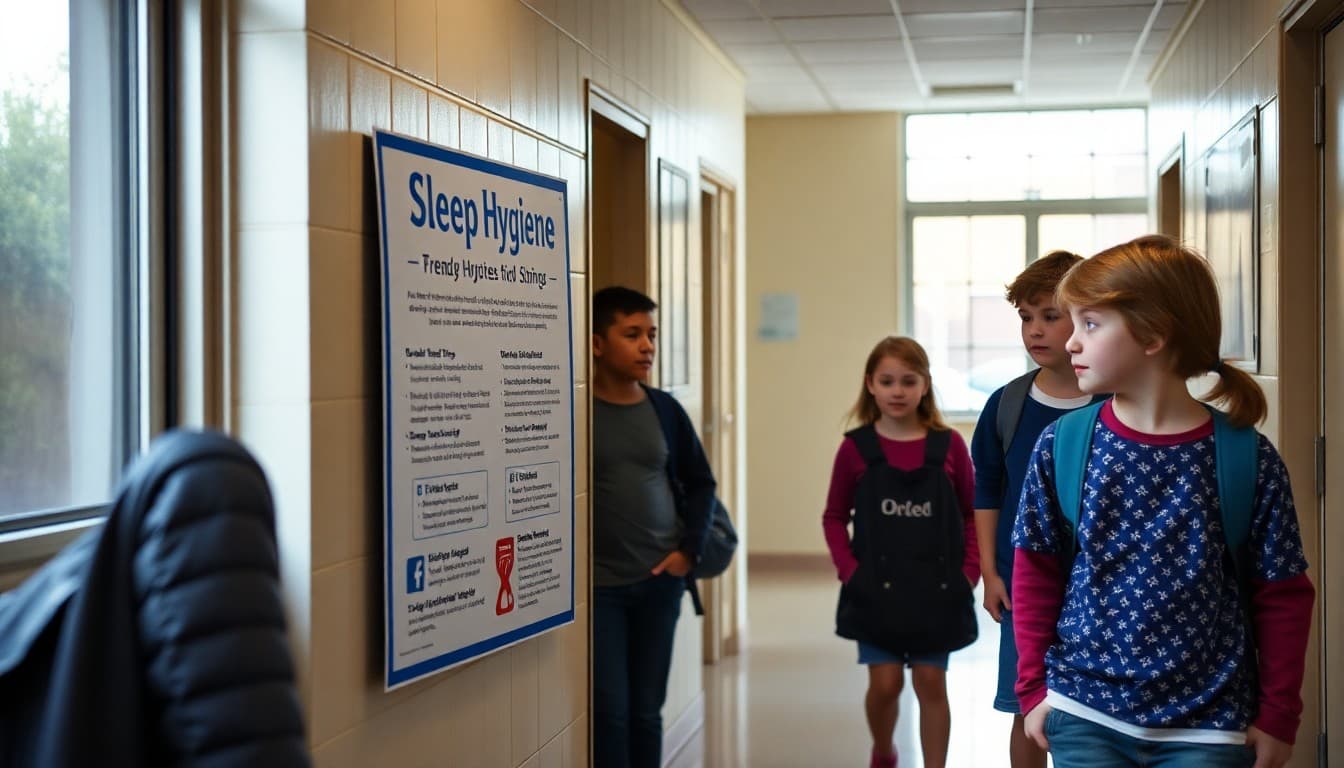
Sleep Health Newsletter: Why Rest Matters for Learning

Sleep is one of the most under-discussed factors affecting student performance, and it is one of the most actionable. Unlike many health topics where schools can only influence behavior at school, sleep is a home behavior. That means your newsletter can directly shift what happens at bedtime tonight. This guide covers what to put in a sleep health newsletter, how to write it so families actually read it, and a template you can send as soon as this week.
Why Schools Should Send Sleep Newsletters
A 2020 survey by the National Sleep Foundation found that 73 percent of high school students and 44 percent of middle school students are not getting enough sleep on school nights. Elementary-age students fare better, but not by much. The same survey found that fewer than half of parents had received information about their child's sleep needs from the school. That is a significant gap. Sleep affects memory consolidation, attention span, emotional regulation, and physical growth. When students show up tired, every teacher in the building feels the consequences.
Age-Specific Sleep Recommendations to Include
Families often underestimate how much sleep their child needs. Include a simple table in your newsletter. Ages 6 to 12 need 9 to 12 hours per night. Ages 13 to 18 need 8 to 10 hours. Teenagers are biologically wired to fall asleep and wake later than younger children, which is why many sleep researchers advocate for later high school start times. Sharing this research helps families understand that a teenager who struggles to fall asleep before 11 pm may be experiencing a normal developmental shift, not defiance.
Connecting Sleep to Academic Performance
Parents pay attention when sleep is framed as a school performance issue rather than just a health issue. A study from Brown University found that students who averaged 30 more minutes of sleep per night showed measurable improvements in grades, mood, and reported well-being within three weeks. Share one or two specific data points like this, then explain the mechanism in plain language: during sleep, the brain transfers information from short-term to long-term memory. A student who stays up to study may actually retain less than one who studied less but slept more.
Practical Tips Families Can Use Tonight
Keep recommendations concrete and low-cost. Three tips that work: set a consistent wake time and hold it on weekends, because irregular wake times disrupt the body's circadian rhythm more than late bedtimes; turn off all screens 30 minutes before bed, since the blue light from phones and tablets signals the brain to stay alert; and keep the bedroom at around 65 to 68 degrees Fahrenheit, which research identifies as the optimal sleep temperature for most people. Each of these can be implemented without buying anything or reorganizing the household dramatically.
Sample Template Excerpt
Here is a section you can adapt for your own newsletter:
A Note From Our School Nurse: Sleep and Your Child's School Day
Every week I see students who are struggling to focus, managing big emotions, or falling asleep during class. In many cases, the primary factor is not stress or learning challenges. It is sleep. Children ages 8 to 12 need 9 to 11 hours per night. Teens need 8 to 10. Most are getting 6 to 7.
One change that makes the biggest difference: a consistent wake time every day, including weekends. This single adjustment does more to regulate your child's internal clock than almost any other habit. Try it for two weeks and notice the difference on Monday mornings.
Handling Barriers to Sleep in Your Community
Many families face real obstacles to healthy sleep schedules. Cramped apartments with shared bedrooms, parents working night shifts, siblings with different schedules, or neighborhood noise at night all make consistent sleep harder. Acknowledge these realities in your newsletter. Do not frame healthy sleep as a simple choice. Instead, offer the one change that has the highest return with the lowest barrier. For most families, a consistent morning alarm is more achievable than a complete bedtime routine overhaul.
When to Send a Sleep Newsletter
Three natural moments during the school year align well with sleep content. September is ideal because families are resetting routines after summer. November, when clocks fall back and early darkness disrupts sleep patterns, is another strong window. And the weeks before standardized testing in spring, when students are tempted to study late into the night, is the third. Sending focused content at these moments means your newsletter arrives when families are most receptive to the topic.
Partnering With Teachers and Counselors
Your school counselor and classroom teachers can reinforce sleep messaging in ways that go beyond what a newsletter alone can do. Ask a few teachers to mention the sleep newsletter to their students directly. Ask counselors to check in with students who are frequently tired in the morning. When the newsletter connects to what students hear in school, it gets more traction at home. The newsletter starts the conversation. The relationships carry it.
Get one newsletter idea every week.
Free. For teachers. No spam.
Frequently asked questions
How much sleep do school-age children need?
The American Academy of Pediatrics recommends 9 to 12 hours per night for children ages 6 to 12, and 8 to 10 hours for teenagers ages 13 to 18. Many students get significantly less than this, which affects attention, memory consolidation, mood regulation, and physical growth. Including these numbers in your newsletter gives families a clear benchmark to aim for.
What sleep hygiene tips should schools share with families?
Focus on consistency and environment. The same bedtime and wake time every day, including weekends, helps regulate the body's internal clock. Screens off at least 30 minutes before bed reduces blue light exposure that delays melatonin production. A cool, dark, and quiet room supports deeper sleep. These are practical changes families can make without purchasing anything.
How does poor sleep affect student behavior and learning?
Students who sleep fewer than the recommended hours show measurably worse performance on attention tasks, reading comprehension, and math problem-solving. They are also more likely to be referred to the office for behavioral issues. Teachers often report that they can identify under-slept students by mid-morning. Sharing this with families frames bedtime as directly connected to school success, not just health.
How should schools handle families in challenging sleep situations?
Some families face real barriers to consistent sleep schedules, including cramped housing, shift-work parents, infants in the home, or neighborhood noise. Acknowledge these realities without minimizing them. Offer the most impactful single change they can make rather than a comprehensive list. One consistent intervention, like a stable wake time, is more achievable than overhauling the entire bedtime routine at once.
Can a school newsletter actually change family sleep habits?
A single newsletter will not transform a household's routine overnight. But repeated, specific communication does shift family behavior over a school year. Daystage makes it easy to send a sleep-focused newsletter at the start of school in September, revisit the topic after daylight saving time in November, and send a final reminder before standardized testing season. Layered messaging over time is what moves the needle.

Adi Ackerman
Author
Adi Ackerman is a former classroom teacher and curriculum writer with 8 years in K-8 schools. She writes about school communication, parent engagement, and what actually works in real classrooms.
More for Health & Wellness
Ready to send your first newsletter?
3 newsletters free. No credit card. First one ready in under 5 minutes.
Get started free