
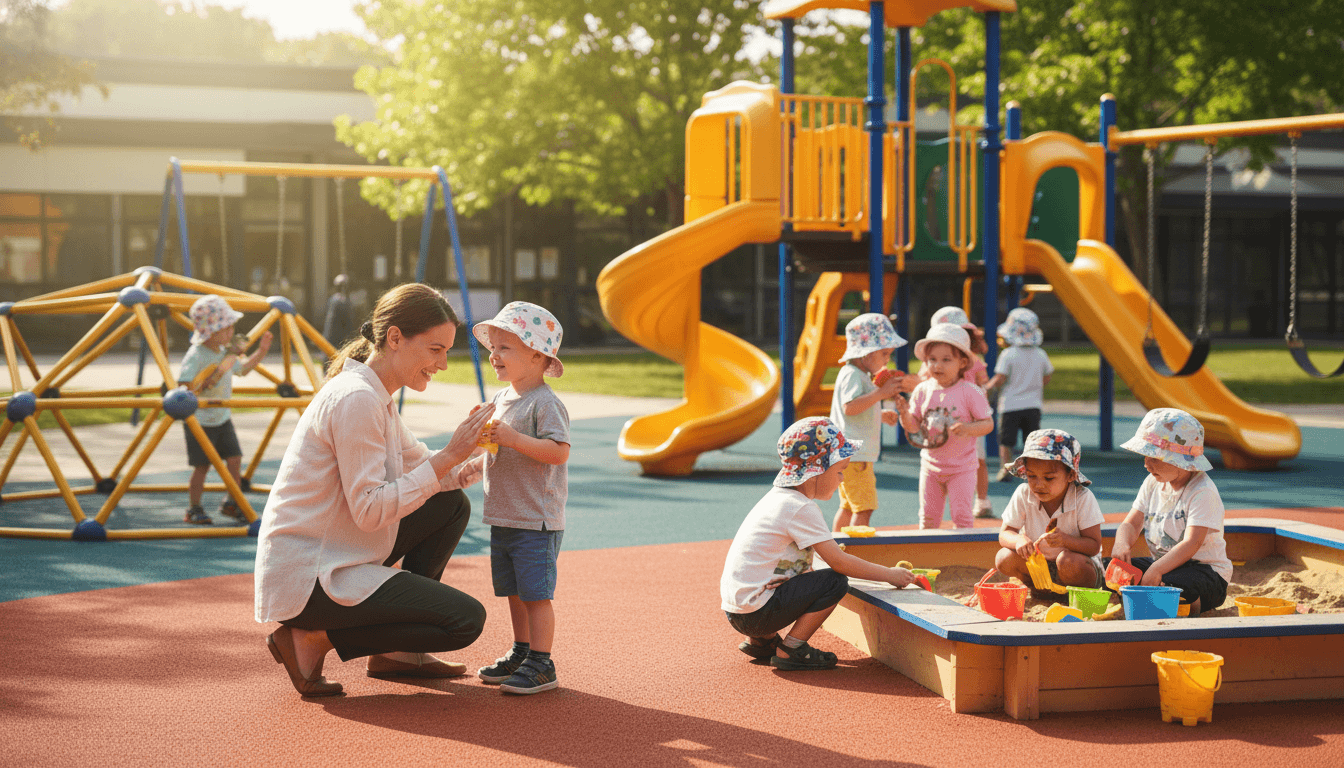
Sun Safety School Newsletter: Communicating Outdoor Protection Policies to Families

Sun safety policies get complicated in school settings because they intersect with state medication administration rules, parent consent requirements, and staff liability concerns. A school that wants to protect students from UV exposure during outdoor activities faces a web of policy questions before it can even tell parents to pack sunscreen.
Communicating those policies clearly prevents the confusion that leads to sunburned students at field day and families who had no idea their child would be outside for three hours. This guide covers what to communicate, when to communicate it, and how to handle the sunscreen administration question schools navigate differently.
The sunscreen administration question
Many states classify sunscreen as an over-the-counter drug, which means school staff may not apply it to students without a medication administration authorization form on file. This creates a policy gap: the school wants students protected, but staff cannot legally apply sunscreen without paperwork.
The most common solution is self-application with parent consent. Families are informed that their child may bring sunscreen to school and apply it independently, typically before going outdoors. The newsletter communication should explain this policy specifically, including the type of sunscreen that is permitted (spray vs. lotion, SPF requirements), where students store it during the day, and whether staff will remind students to apply it.
Some schools have parents apply sunscreen at drop-off on high-UV days. If yours does, communicate that proactively before spring and summer outdoor activities rather than the morning of.
Hat and shade policies
A school with a hat policy needs to communicate it before families send children to school on hot days without one. The newsletter should state the policy clearly (hats are required during outdoor recess when the UV index is above a certain threshold, or during all outdoor activities from April through September), where students keep hats during the school day, and what happens when a student forgets one.
If the school has shade structures, mention them. Families who know the school has covered outdoor areas feel differently about extended outdoor activities than families who imagine children standing in direct sun.
If the school does not have adequate shade, especially for schools in high-UV regions, this is worth mentioning honestly in combination with what the school does to protect students: rotating students through shaded areas, scheduling outdoor activities before 10 AM or after 2 PM, and monitoring for heat symptoms.
Heat advisory communication
Families want to know what happens on days when outdoor activity is unsafe due to heat. Many will not assume the school has a protocol unless told explicitly.
A heat advisory section in your spring newsletter should cover: what heat index threshold triggers an indoor recess or activity modification, how families will be notified when outdoor activities are changed (newsletter, school app, text), and whether outdoor events like field day are modified or postponed in heat conditions.
Also cover hydration. "Students should arrive with a full water bottle" is useful. "Our school has water refill stations outside the gym and near the playground" is more useful. Concrete information about water access reduces the anxiety families have about children overheating.
Outdoor activity modifications for high-heat days
When temperatures or UV index levels exceed safe thresholds, schools modify outdoor programming. Communicating how this works prevents families from assuming that high-heat days automatically become full indoor days, which can change plans and schedules.
Explain the modification approach: activity shortened, moved to early morning, held in shaded areas, replaced with indoor alternatives. Give families specific information about the activities most likely to be affected (PE, recess, physical events) and the ones that will not change (arrival, dismissal logistics).
What to pack for field day and outdoor events
Field day and outdoor school events deserve their own sun safety communication in addition to general policy notices. Send a specific packing reminder in the newsletter preceding the event.
The list should include: sunscreen applied before school with enough to reapply (or a container for the student to self-apply during the event), a hat with a brim, a full water bottle (specify size if you want students bringing larger bottles), clothing appropriate for physical activity and sun exposure, and any other event-specific items.
Include a note about what the school provides at the event (water station, shade tent, additional sunscreen if self-apply is available) so families understand the baseline and add to it rather than assuming the school covers everything.
Building sun safety into your spring communication calendar
Sun safety newsletters are most useful when they arrive before families need to act on them. A late March or early April communication, before outdoor activities ramp up, reaches families when they have time to buy hats, locate sunscreen, and update medication authorization forms.
Daystage makes it easy to build sun safety as a recurring spring section of your school newsletter, with the policy information already written and only the specific dates and activities updated each year. Families who see it annually start to anticipate it and act on it. First-time readers have everything they need in one place.
Get one newsletter idea every week.
Free. For teachers. No spam.
Frequently asked questions
When should schools communicate sun safety policies to families?
Sun safety communication should go out in late March or early April, before outdoor activities ramp up, giving families time to buy hats, locate sunscreen, and return medication authorization forms if required. Sending it the week of field day gives families no time to act and signals that the school treats outdoor safety as an afterthought.
What should a school sun safety newsletter include?
The newsletter needs the sunscreen policy (self-application with parent consent, SPF requirements, storage location), the hat policy with the threshold that triggers it, heat advisory protocols including what temperature or UV index triggers indoor alternatives, and a specific packing list for outdoor events. Include what the school provides at outdoor events so families know what to add rather than assuming the school covers everything.
How should schools communicate outdoor heat safety protocols to parents?
State specifically what threshold triggers a modification (heat index above a number, UV index above a number), how families will be notified when outdoor activities change, and whether major events like field day are postponed or modified in high-heat conditions. Include concrete hydration information: whether the school has water refill stations, where they are located, and what size water bottle to send.
What are common mistakes in school sun safety communication?
Sending sunscreen policy communication the morning of a hot outdoor event is the most common failure. Another is omitting the legal constraint: many families do not know that states classify sunscreen as a medication and are confused when staff cannot apply it. Leaving out shade and water access information means families imagine worst-case scenarios about outdoor supervision that a single sentence could correct.
How can schools build sun safety communication into their annual calendar?
Daystage makes it easy to build sun safety as a recurring spring section of your school newsletter, with the policy information already written and only the specific event dates updated each year. Families who see it annually start to anticipate and act on it. First-time readers have everything they need in one place without requiring a new communication to be written each season.

Adi Ackerman
Author
Adi Ackerman is a former classroom teacher and curriculum writer with 8 years in K-8 schools. She writes about school communication, parent engagement, and what actually works in real classrooms.
More for Health & Wellness
Self-Harm Awareness Newsletter: A Guide for Schools Communicating With Families
Health & Wellness · 6 min read
School Cold Weather Health Newsletter: Keeping Students Healthy and Safe During Winter
Health & Wellness · 5 min read
School Health Equity Newsletter: Communicating Inclusive Health Support to All Families
Health & Wellness · 6 min read
Ready to send your first newsletter?
3 newsletters free. No credit card. First one ready in under 5 minutes.
Get started free