

School Nutrition Newsletter: Communicating Healthy Eating Programs to Families
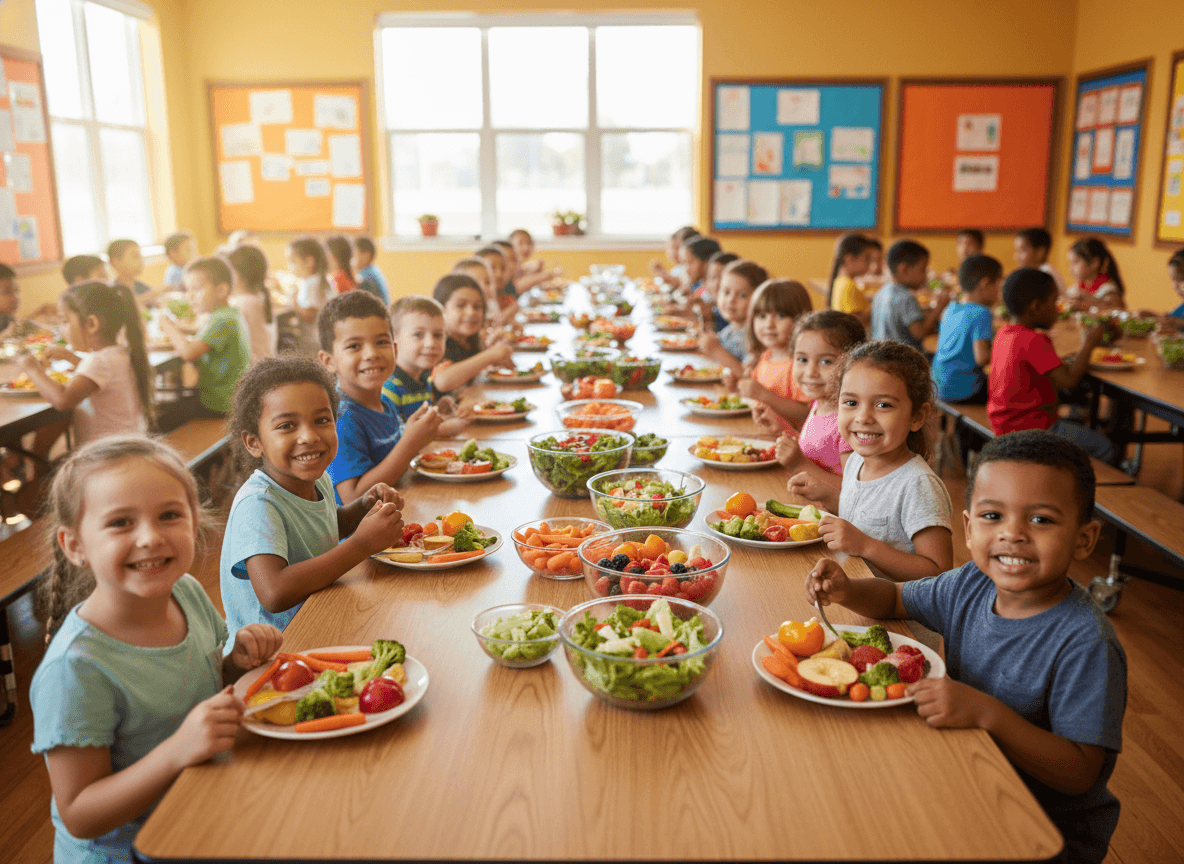
School nutrition communication covers more ground than most newsletters address. The school lunch program, breakfast availability, free and reduced meal eligibility, after-school snacks, food insecurity resources, nutrition curriculum, and healthy snack policies for celebrations are all distinct topics that affect different families in different ways.
Getting this communication right means reaching the families who need specific information while not overwhelming families who do not. It means being clear about free and reduced lunch without stigmatizing the families who qualify. And it means connecting school nutrition to what families do at home without assuming what those homes look like.
Communicating school meal programs: what families need to know
Many families do not have a complete picture of the school meal programs available to their child. Breakfast programs in particular are underutilized because families assume school breakfast is only for students who cannot eat at home, rather than a program available to all enrolled students.
A nutrition newsletter should state clearly what programs are available (breakfast, lunch, after-school snacks if applicable), the schedule, the location, and the cost for full-pay families. If your district serves free meals to all students through the Community Eligibility Provision, state that plainly: all students eat breakfast and lunch at no cost.
If meals are not universally free, cover both the standard cost and the eligibility process for reduced or free meals. Link the application directly rather than describing the district's website navigation.
Free and reduced lunch enrollment: communicating without stigma
Free and reduced lunch eligibility is based on household income, and many families who qualify do not apply because they are not sure they qualify, they find the application process confusing, or they feel that applying carries a social judgment.
The communication that reduces these barriers is specific and neutral. "Families with a household income below [amount] for a family of four may qualify for free or reduced-price meals. The application takes about ten minutes. Submitting an application does not affect other benefits or services." That sentence addresses the most common fear associated with applying without calling attention to it as a fear.
Include enrollment deadlines and renewal information. Many families who enrolled in a prior year do not realize they need to reapply annually. Losing benefits mid-year because of a missed renewal is a stressful situation that a single newsletter mention can prevent.
Food insecurity resources without stigma
School newsletters are one of the few communication channels that reliably reach families experiencing food insecurity. A brief resource section in the nutrition newsletter, framed as general community information rather than targeted outreach, ensures the information is available to anyone who needs it without singling out any family.
Resources worth including: local food banks with specific address and hours, school backpack programs that send weekend food home with students who need it, summer meal program locations for when school is not in session, and local community organizations that distribute food. State each as a neutral community resource, the same way you would list a public library program.
The school counselor or social worker can be listed as a private point of contact for families who want to discuss resources. This gives families who are not ready to walk into a food bank a lower-threshold first step.
Nutrition curriculum connection
When nutrition is taught in health class or integrated into science and social studies, the newsletter can connect what students are learning in school to conversations at home. This matters because nutrition knowledge that lands only in school does not change eating habits.
A brief monthly note on what students are learning about nutrition, and one specific dinner-table question families can use, turns a curriculum update into a family engagement tool. "This month students are learning about reading food labels. Ask your child to find a food label at home and read it together" is simple, takes one minute, and reinforces the lesson.
Healthy snack policy for celebrations
Many schools have moved away from food-based birthday celebrations, either because of allergy concerns, nutrition policies, or both. The transition creates friction with families who grew up with classroom birthday cupcakes and see the change as an overreach.
Communication about healthy snack policies for celebrations works best when it explains the reasoning behind the policy and gives families clear alternatives. "We ask that birthday celebrations use non-food items or pre-approved snacks because several students in our class have food allergies that prevent them from participating when food is shared. Non-food celebrations like pencils, bookmarks, or small games mean every student can join in."
Framing the policy in terms of inclusion rather than nutrition rules generally generates less pushback. Parents who might resist a nutrition lecture are usually willing to support inclusion.
Building a consistent nutrition communication calendar
Nutrition communication works best when it is structured across the year: enrollment reminders in August, a program overview in September, food insecurity resources before holiday breaks, and nutrition curriculum connections throughout. Daystage makes it straightforward to plan this calendar and send each piece on schedule without the communication falling through the cracks when other priorities compete for attention.
Get one newsletter idea every week.
Free. For teachers. No spam.
Frequently asked questions
When should schools communicate nutrition programs to families?
Nutrition communication should follow an annual calendar: free and reduced meal enrollment reminders in August before the school year starts, a full program overview in September, food insecurity resource information before holiday breaks when school meals are unavailable, and brief curriculum connections throughout the year. Waiting until families ask means some who need the information never get it.
What should a school nutrition newsletter include?
A complete nutrition newsletter covers what meal programs are available and at what cost, how to apply for free or reduced meals with a direct link to the form, food insecurity community resources framed as general information, and a brief connection to what students are learning in the nutrition curriculum. If your district serves all students free meals through the Community Eligibility Provision, that should be stated plainly every year.
How should schools communicate healthy eating programs to parents?
Connect what students are learning in school to something families can do at home. 'This month students are learning about reading food labels. Ask your child to find a food label at home and read it together' is more effective than a general nutrition tip. Families who see a link between the classroom and the dinner table engage with the curriculum rather than receiving it as a newsletter filler section.
What are common mistakes in school nutrition communication?
Sending free and reduced meal enrollment information only once, in the back-to-school packet, means families who miss that item never apply. A second mistake is framing food insecurity resources in a way that signals they are for specific struggling families rather than general community information, which stigmatizes the families who most need the resources. Omitting renewal reminders means families who enrolled in a prior year lose benefits mid-year.
How can schools build a consistent nutrition communication calendar?
Daystage makes it straightforward to plan nutrition communications across the school year and send each piece on schedule. The enrollment reminder, program overview, holiday resource section, and curriculum connections can all be set up in advance so none fall through the cracks when other priorities compete for attention.

Adi Ackerman
Author
Adi Ackerman is a former classroom teacher and curriculum writer with 8 years in K-8 schools. She writes about school communication, parent engagement, and what actually works in real classrooms.
More for Health & Wellness
School Substance Use Disorder Resources Newsletter: Supporting Families Navigating a Difficult Topic
Health & Wellness · 5 min read
Chronic Illness Accommodation Newsletter: Communicating Support for Students with Health Conditions
Health & Wellness · 6 min read
Type 1 Diabetes at School Newsletter: What Families and Educators Need to Know
Health & Wellness · 6 min read
Ready to send your first newsletter?
3 newsletters free. No credit card. First one ready in under 5 minutes.
Get started free