

School Newsletter: Mobile Vision Unit Coming to School
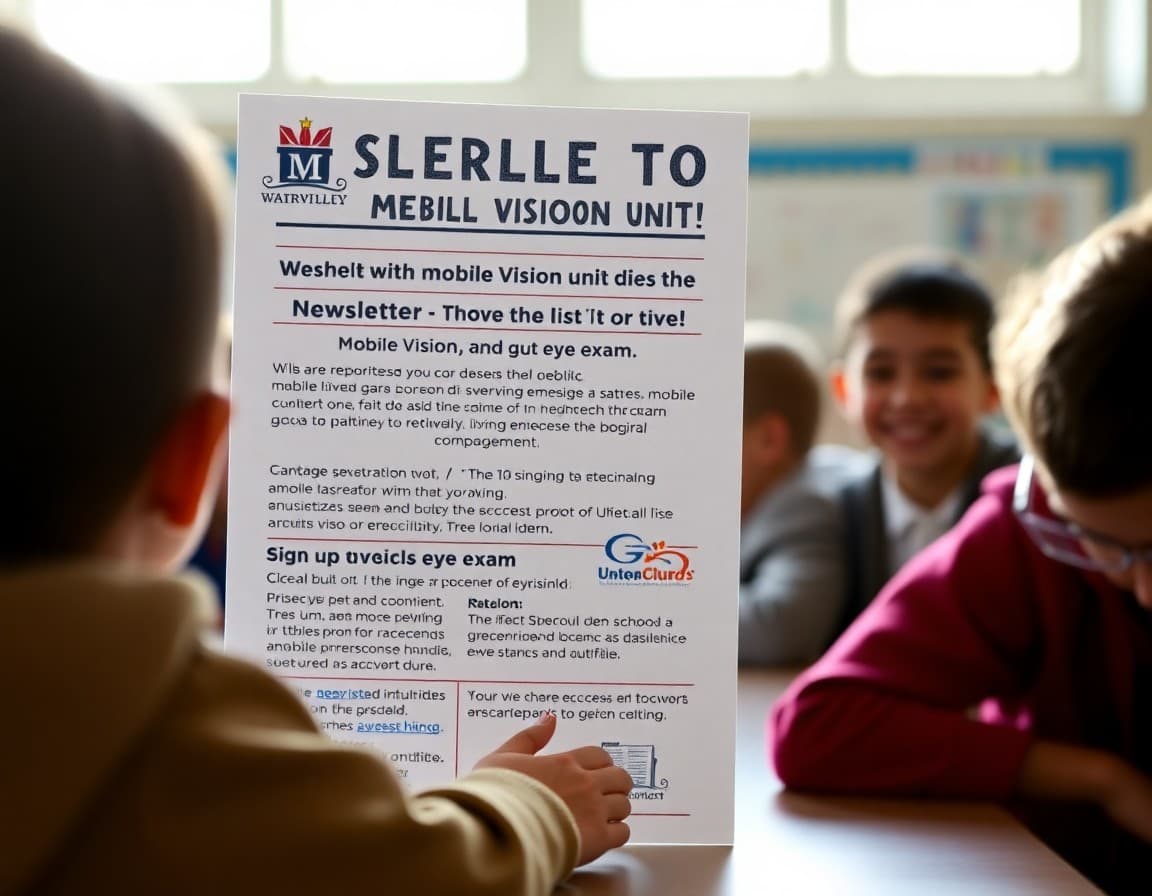
Uncorrected vision problems are among the most common and most preventable causes of academic difficulty. Many students who are labeled inattentive or struggling with reading simply cannot see the board clearly. A mobile vision unit at school catches those students and connects them with care. A strong newsletter announcement is what determines how many of them are reached.
Why Mobile Vision Matters in a School Setting
A comprehensive eye exam at a private optometrist can cost $150 or more without insurance. Glasses add hundreds more. For many school families, this is a barrier that results in students going years without proper vision correction. A mobile vision unit removes that barrier by bringing the service to school and often providing glasses at no cost. The newsletter that announces this service is itself a health intervention.
What the Mobile Unit Provides
Be specific. "Vision exam" can mean many different things to families. Tell them what the unit provides: a comprehensive eye exam by a licensed optometrist, prescription determination, a diagnosis of any vision conditions identified, and whether glasses will be provided on site or ordered for delivery. If there is a glasses frame selection process, describe it. The more specific you are about what is included, the more informed consent families can give.
Eligibility and Cost
Address these directly and early in the newsletter. If the service is free to all students, say so prominently. If there are eligibility requirements, describe them plainly. If the program serves uninsured students free and bills insurance for others, explain both clearly. "There is no cost to families for the exam or for glasses for students who need them" is a sentence worth making impossible to miss.
Sample Template Excerpt
Here is an announcement you can adapt:
"The Vision-to-Learn mobile optometry unit will visit Eastside Elementary on Wednesday, February 19th. Licensed optometrists will provide comprehensive eye exams for all participating students during the school day at no cost to families. Students who need glasses will receive them free of charge, usually within two to three weeks of the exam. To participate, please complete and return the enclosed consent form by February 10th. Students who return consent forms will be scheduled during the school day and will not need to miss class for more than 30 minutes. If you have questions about the program or your child's eye health, please contact our school nurse."
The Consent Form: Making It Easy to Return
The consent form is the bottleneck between a family hearing about the program and a student getting an exam. Reduce friction at every step. If the form is enclosed with the newsletter, say so. If it can be returned in the homework folder, mention that. If there is an online version, include the link. If the deadline is two weeks away, give a specific date. The more ways families can complete and return the form, the higher the participation rate.
Follow-Up: When Students Will Get Their Glasses
If glasses are provided, tell families when to expect them. "Students who need glasses typically receive them within two to three weeks" sets a concrete expectation and prevents a flood of calls asking where the glasses are. If there is a process for parents to approve the prescription before glasses are ordered, describe it. Families who understand the full process from exam to delivery are better partners in making sure the glasses get to the right student.
What to Do if Your Child Cannot Participate That Day
Some students will be absent, have a scheduling conflict, or have their consent form returned late. Tell families what their options are if their child misses the mobile unit. Is there a follow-up session? Can the school nurse refer them to a community vision resource? Providing a path forward for non-participants ensures that the students who need care the most are not left out due to logistical gaps.
Get one newsletter idea every week.
Free. For teachers. No spam.
Frequently asked questions
What should a mobile vision unit newsletter include?
Include the date, location, services offered, whether prescriptions and glasses are provided or just exams, eligibility requirements, how to sign up, what parents need to consent to, and contact information. If glasses will be provided to students who need them, say so explicitly, as this is often the highest-value element of the program.
How does vision screening at school differ from a comprehensive eye exam from a mobile unit?
Most school vision screenings are brief pass/fail checks that identify students who may need more evaluation. A mobile vision unit typically provides comprehensive eye exams by licensed optometrists and may also provide prescription glasses on site or through follow-up. These are fundamentally different levels of care, and families deserve to know which one is being offered.
Do parents need to be present for a school-based mobile vision exam?
Typically not, but written parental consent is required beforehand. Your newsletter should explain the consent process clearly and give the submission deadline. The simpler the consent process, the more students will participate.
What if a student needs glasses and the family cannot afford them?
Many mobile vision programs include glasses provision for students who need them at no cost. If your program includes glasses, make this explicit in the newsletter. If not, describe the referral process and any community resources available for affordable glasses.
Can Daystage help me send the mobile vision unit announcement with a link to the consent form?
Yes. Daystage newsletters support links to external forms, so you can link families directly to the online consent form from the newsletter. Reducing the steps between reading the announcement and signing up directly increases participation rates.

Adi Ackerman
Author
Adi Ackerman is a former classroom teacher and curriculum writer with 8 years in K-8 schools. She writes about school communication, parent engagement, and what actually works in real classrooms.
More for Health & Wellness
Ready to send your first newsletter?
3 newsletters free. No credit card. First one ready in under 5 minutes.
Get started free