
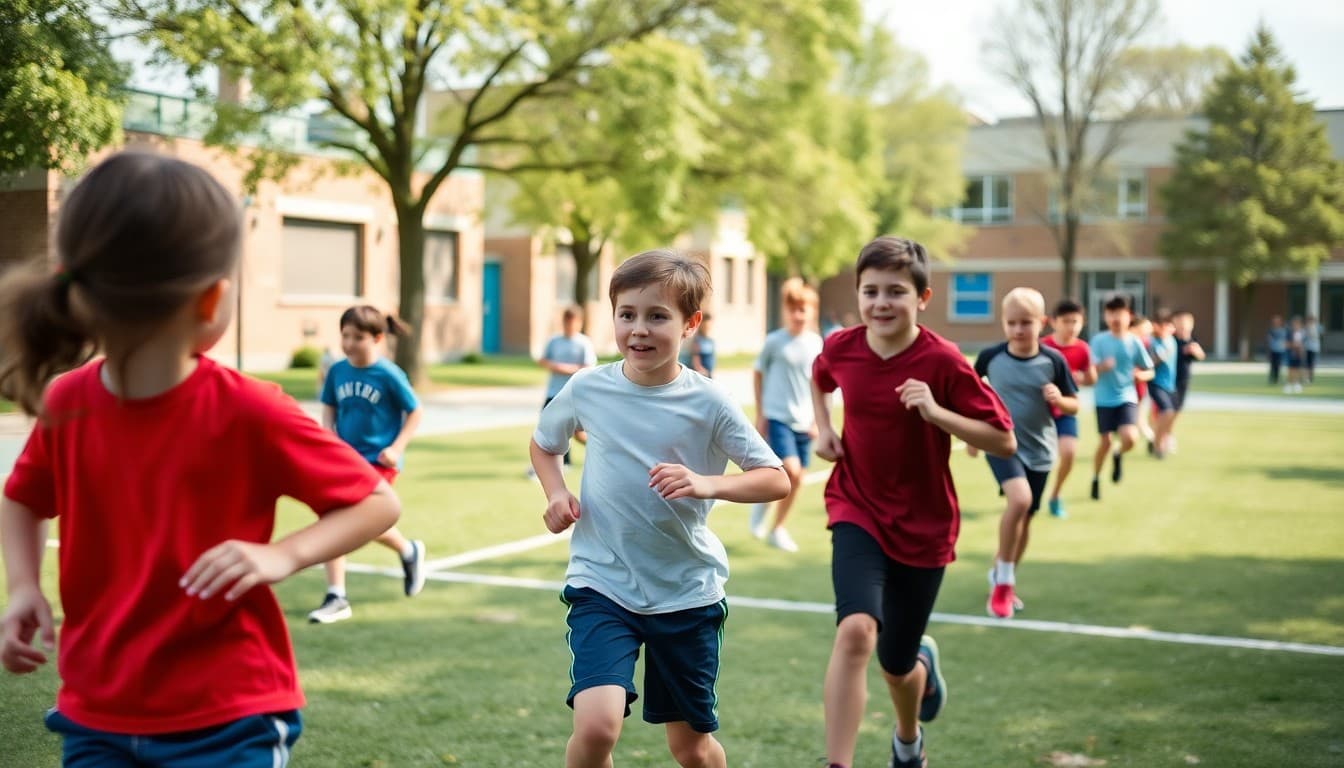
School Newsletter for National Physical Fitness Month: Ideas and Template
May is National Physical Fitness and Sports Month. For schools, it lands during spring sports season, field day planning, and the final push toward summer. A physical fitness newsletter in May serves both as an informational tool -- what is happening in PE this month? -- and as a public health communication that gives families specific guidance on building physical activity habits that carry through the summer.
The Physical Activity Gap
The CDC recommends at least 60 minutes of moderate-to-vigorous physical activity every day for children ages 6-17. Most schools provide 20 to 30 minutes of recess per day and PE class two to three times per week -- a total of roughly 90 to 120 minutes of school-based physical activity per week against a recommendation of 420 minutes per week. That gap is not a criticism of schools; it reflects the reality of the school day. But it means families who want their students to meet the recommended activity levels need to add physical activity outside of school. The newsletter can frame this as actionable guidance rather than alarm: "Here is what we provide at school and here is how families can fill in the rest."
What Students Are Doing in PE This Month
Tell families specifically what the PE curriculum covers in May. "This month in PE we are finishing our volleyball unit and transitioning to the FitnessGram assessment in the third week of May. The FitnessGram measures aerobic capacity, muscular strength, flexibility, and body composition. All students take it -- results are shared privately with families in June." That level of specificity prepares families for what is coming and removes the mystery from assessments that some students find stressful.
Field Day Logistics
If your school holds a spring Field Day, the Physical Fitness Month newsletter is the right place to cover it in full. Include the date, time, what students should wear and bring (water bottle, sunscreen, athletic shoes), whether families are invited to attend, and what the event involves. Field Day is one of the highest-engagement school events of the year -- families who know about it in advance can plan to attend or at least prepare their student properly. Families who find out about Field Day the morning of often send their child in wrong shoes or without sunscreen.
Template Section: Field Day and Fitness Month
Here is a combined Field Day and Physical Fitness Month section:
"May is National Physical Fitness and Sports Month -- a good reminder that the CDC recommends 60 minutes of daily physical activity for students ages 6-17. In PE this month we are running our spring FitnessGram assessments and wrapping up our volleyball unit. Field Day is Friday, May 21. Students should wear athletic clothes, bring a labeled water bottle and sunscreen, and wear closed-toe shoes. Families are welcome to cheer from the field perimeter starting at 9:00 AM. We'll be outside all morning -- it should be a great day."
Family Fitness Challenges
Give families a specific May fitness challenge they can do as a household. Options that work across ages and fitness levels: a "30-day walk" challenge where the family walks 10 minutes after dinner every evening in May. A "try one new sport or activity" challenge for the month -- pickleball, disc golf, swimming, cycling, or rock climbing at a local gym. A step-count challenge using a free phone app where each family member tracks their daily steps and shares the number at dinner. Frame the challenge as fun and optional -- families who feel coerced into fitness activities are less likely to build lasting habits than families who choose them freely.
Screen Time and Physical Activity: A Brief Parent Guide
For many students, physical activity competes directly with screen time. The newsletter can briefly address this without being preachy: "Research shows that students who replace 30 minutes of sedentary screen time with physical activity sleep better, concentrate better at school, and report higher overall wellbeing. This is not about eliminating screens -- it is about ensuring that active time gets protected in the daily schedule the way screen time often is." That framing gives parents a rationale without lecturing them about their family's habits.
Summer Activity Ideas to Share Early
May is the right moment to share summer physical activity ideas so families can plan before summer begins. Local parks and recreation departments open summer sports registrations in April and May -- include a link or phone number. Many YMCAs and recreation centers offer sliding-scale summer membership or swim programs. Community walking and biking maps are often available free from the city or county. A brief summer activity resources section in the May newsletter is a community service that families genuinely appreciate.
Get one newsletter idea every week.
Free. For teachers. No spam.
Frequently asked questions
When is National Physical Fitness Month?
May is National Physical Fitness and Sports Month, designated by the President's Council on Sports, Fitness, and Nutrition. It aligns well with warmer weather, spring sports seasons, and end-of-year energy. A physical fitness newsletter in early May can preview spring PE units, sports days, and fitness assessments while giving families practical tips for summer activity.
What should a Physical Fitness Month newsletter include?
Cover the current PE curriculum, any fitness assessments or tests like the FitnessGram, upcoming sports days or field day events, the recommended amount of daily physical activity for your grade level (60 minutes for children), and three family fitness activities families can do together. Include information about any school sports teams or extracurricular physical activities students can join.
How much daily physical activity do children need?
The CDC recommends that children and adolescents ages 6-17 get at least 60 minutes of moderate-to-vigorous physical activity every day. Most schools provide 20-30 minutes of recess plus PE classes two to three times per week -- well below the daily recommendation. The newsletter can help families understand the gap and suggest specific ways to add physical activity to the daily home routine.
How do I promote physical fitness without making students who struggle with fitness feel singled out?
Focus on the enjoyment and habit of movement rather than performance metrics. Use language about finding activities you love rather than hitting benchmarks. Emphasize that physical activity looks different for everyone -- walking, dancing, swimming, cycling, and yoga all count. Avoid referencing weight or body composition in the newsletter entirely.
Can Daystage help PE teachers or health teachers send their own newsletters?
Yes. PE and health teachers use Daystage to send monthly newsletters separate from homeroom teachers. A physical fitness-focused newsletter from the PE teacher has more credibility than a general health reminder buried in the classroom newsletter, and families are more likely to act on specific recommendations from the person who runs PE.

Adi Ackerman
Author
Adi Ackerman is a former classroom teacher and curriculum writer with 8 years in K-8 schools. She writes about school communication, parent engagement, and what actually works in real classrooms.
More for Health & Wellness
Ready to send your first newsletter?
3 newsletters free. No credit card. First one ready in under 5 minutes.
Get started free