

How to Include Student Voice in Your School Newsletter
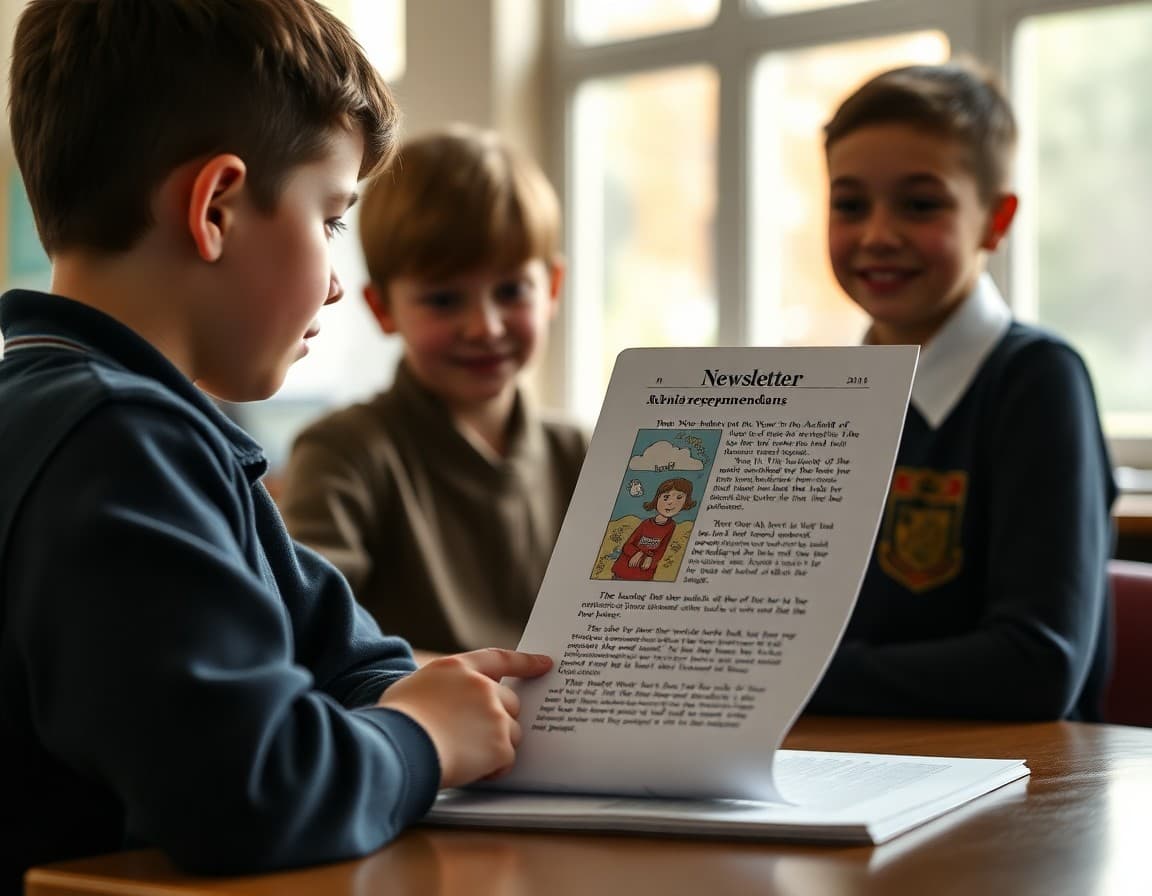
A parent reads a newsletter in which their child's classmate recommends a book and explains in two sentences why it is worth reading. The parent shows it to their child at dinner. The conversation that follows is longer than anything the newsletter prompted in months. Student voice creates that kind of engagement. It also gives students something most school assignments do not: a real audience.
The Case for Student Contributions
Newsletters written entirely by adults describe school from the outside. Student contributions let parents see it from the inside, through the perspective of someone who was actually there in the moment. That perspective is different from a teacher's summary of the same event, and parents can feel the difference. Student voice signals that this is a school where students' thoughts and words are taken seriously.
Structured Prompts Produce Usable Contributions
Open-ended asks rarely produce concise, publishable responses from students. A structured prompt with a specific scope works much better. Instead of "write something for the newsletter," try: "Describe one thing you learned this week in two sentences." Or: "Recommend a book to a student you have never met. Tell them one thing about it that made you want to keep reading." The constraint is the gift. Students write more precisely when the boundary is clear.
Collecting Contributions During Class Time
Optional contributions outside of class time generate low participation and skew toward the most engaged students. Class time prompts reach everyone. Give students 10 minutes to respond to a structured prompt at the end of a relevant lesson or on Thursday morning. Collect all responses. Select one or two that represent the range of voices in the class. Over the year, every student should have had at least one contribution in the newsletter.
Editing Student Writing for Publication
Preserve the student's voice when editing. The point of student contributions is that they sound like students, not like adults who have cleaned up student writing. Fix clear errors that would embarrass the student, but leave the phrasing, sentence structure, and vocabulary choices intact. A contribution that says "I didn't know bugs had feelings until we read Charlotte's Web" is better than a corrected version that says "Reading Charlotte's Web helped me develop empathy for insects."
Privacy and Consent for Student Writing
Confirm consent before publishing any student-authored content that identifies the student by name. Most schools collect a general media release at enrollment that covers student writing in school publications. If your school's release is unclear, get explicit written confirmation from the family the first time you publish their child's work. Use first name and grade level only: not full name. Never include a student's photo alongside their writing without explicit photo consent.
Creating a Student Spotlight Section
A recurring student spotlight section signals to families that this is a standing feature of the newsletter, not an occasional addition. Parents start looking for it. Students start hoping their contribution will be selected. The section can be as short as two to three sentences under a heading like "From the Class" or "A Student Perspective." Consistency matters more than the size of the section.
Handling the Student Who Does Not Want to Participate
Always make contribution optional within the class time prompt. Give students who do not want to participate an alternative activity for the same 10 minutes. Never pressure a student to contribute, and never publish a contribution from a student who later asks for it to be removed. The goal is to create a positive experience with authentic writing for an audience. That experience requires genuine willingness.
Get one newsletter idea every week.
Free. For teachers. No spam.
Frequently asked questions
Why include student voices in a school newsletter?
Student voices do several things at once. They make the newsletter feel like a living document of a real school community rather than an administrative broadcast. They give students a sense of ownership and audience for their writing. And they give parents a window into how their child and classmates think and communicate. Parents consistently rate newsletters with student contributions as more engaging and more worth reading than those written entirely by adults.
What types of student contributions work well in newsletters?
Short first-person reflections on something they learned or read, book recommendations, a few sentences answering a structured prompt, drawings or artwork with a caption, and student-written event recaps all work well. Longer student essays rarely work because the newsletter format rewards brevity. The most effective student contributions are 50 to 100 words and focus on something specific.
How do I get students to contribute to the newsletter?
The most reliable method is a brief structured writing prompt as a class activity, not an optional ask. Give students a question and 10 minutes to respond: 'What is something you learned this week that surprised you?' or 'Recommend a book you have read recently and say why you liked it in two sentences.' Collect the responses, select one or two, and get parent consent before publishing. Making it part of class time removes the participation barrier.
Do you need parental consent to publish a student's writing in the newsletter?
Yes. Before publishing any student-authored content with identifying information, confirm that the family has given consent for the student's writing to appear in school communications. Many schools collect this consent at enrollment as part of a general media release. If your school's consent forms are unclear about student writing specifically, get explicit confirmation from the family before the first time you publish their child's work.
How does Daystage support including student contributions in newsletters?
Daystage's paragraph blocks make it easy to create a dedicated student spotlight or student writing section in your newsletter. Use the section title for the student's first name and grade, and the body for their contribution. This section can be included as a recurring part of your newsletter template so families start looking forward to it each week.

Adi Ackerman
Author
Adi Ackerman is a former classroom teacher and curriculum writer with 8 years in K-8 schools. She writes about school communication, parent engagement, and what actually works in real classrooms.
More for Guides
Ready to send your first newsletter?
3 newsletters free. No credit card. First one ready in under 5 minutes.
Get started free