

Staff Spotlight in School Newsletter: Celebrating Your Team Right
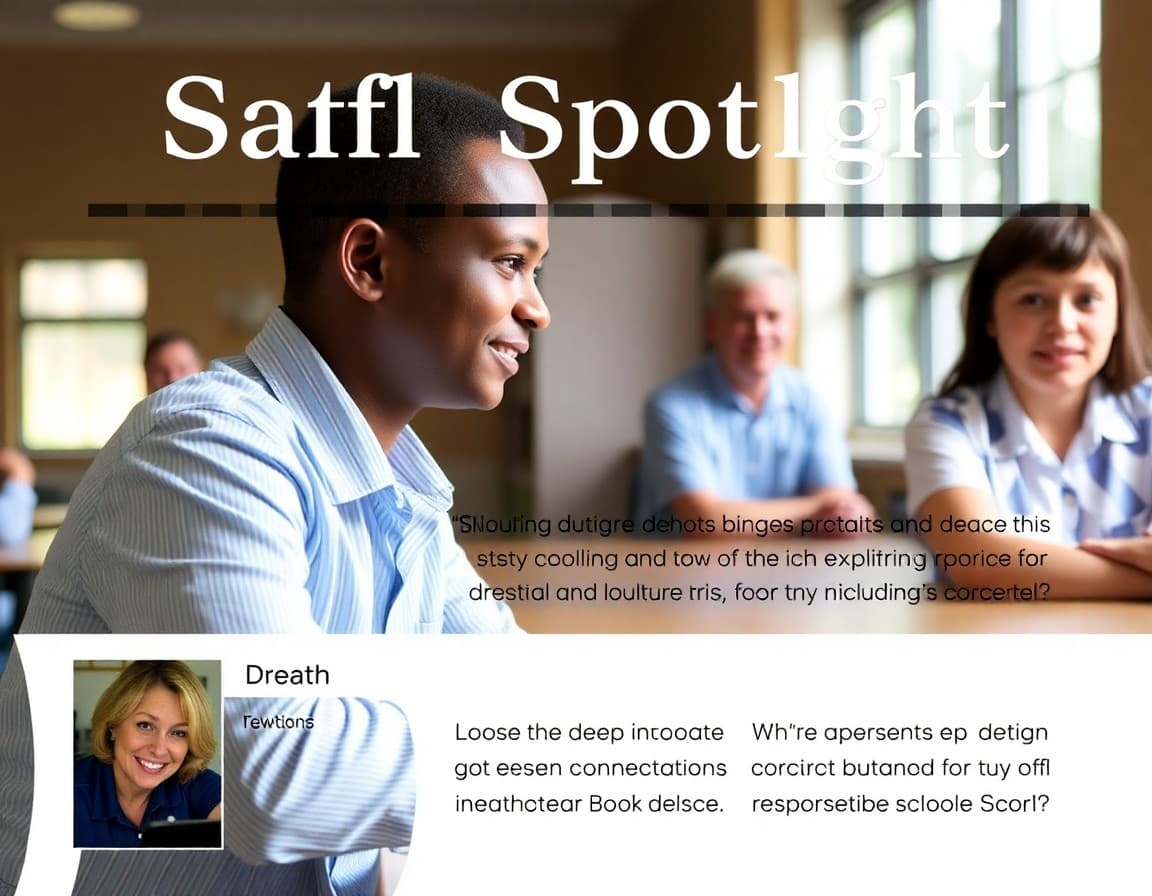
A staff spotlight is one of the most consistently well-received sections in any school newsletter. Families want to know who is in the building with their child. Staff want to feel seen by the community they serve. A well-executed spotlight section delivers both. Here is how to run one that actually works.
Why Staff Spotlights Perform Well
Families open newsletters to understand what is happening in their child's life at school. A staff spotlight connects a name they hear at home to a real person with a story. When a parent reads that the art teacher grew up wanting to be a marine biologist and still draws sea creatures in her spare time, they have a piece of information their child does not yet know, and that becomes a dinner table conversation. That kind of human connection is what makes newsletters feel worth opening week after week.
Build a Format and Use It Every Time
Consistency makes a recurring section feel like a feature rather than an occasional insert. Create a three-question format and use the same structure every time. The structure can be: a brief introduction including name, role, and how long they have been at the school, followed by three questions and answers. A photo of the staff member in the school setting works better than a formal headshot. Keeping the format consistent means families know what to expect and new staff know what to prepare for.
Ask Questions That Produce Interesting Answers
The quality of a staff spotlight depends entirely on the quality of the questions. Avoid questions that produce expected, generic answers: "What do you like best about teaching?" almost always produces "the students." Instead, ask questions that require the person to say something specific and personal. Here are questions that consistently produce good answers: What would you be doing if you were not in education? What is something students would be surprised to know about you? What is one rule in your classroom that families might not expect? What do you wish families understood about your subject area? Choose two or three and adapt them to the specific staff member.
Get Consent Before Publishing
Never feature a staff member without their explicit consent and their review of the final text before it publishes. Most staff will agree and appreciate the recognition, but some have privacy concerns, some are in their first year and feel uncomfortable with public attention, and some have personal situations that make being featured in a public communication complicated. A brief email explaining the format and asking for permission takes 30 seconds and prevents an uncomfortable situation after the fact.
Include Support Staff, Not Just Teachers
Custodians, cafeteria staff, paraeducators, bus drivers, and administrative staff are often invisible in school communications despite being people that students interact with daily. A spotlight on the custodian who has worked at the school for 18 years and knows every student by name, or the lunch aide who started a card game club during bad weather recesses, generates genuine warmth and reminds families of the full team that makes the school work. Those spotlights often produce more replies than teacher features because they reveal people families do not already know.
Run It Consistently, Not Just When You Have Time
A staff spotlight that appears every three weeks builds an expectation. One that appears whenever someone remembers to do it feels afterthought-ish. Plan your spotlights at the start of each semester alongside your content calendar. Identify who you want to feature in which issue and collect responses in advance rather than scrambling to fill the section on newsletter day. Daystage makes it easy to draft sections ahead of time and drop them into the relevant issue when ready, which supports the kind of advance preparation that keeps a recurring feature consistent.
Get one newsletter idea every week.
Free. For teachers. No spam.
Frequently asked questions
How long should a staff spotlight in a school newsletter be?
150 to 250 words with a photo is the right range for a newsletter spotlight. Long enough to feel personal and specific, short enough to fit comfortably in a newsletter alongside other content. A three-question format with two or three sentences per answer typically hits that length naturally.
What questions make the best staff spotlight interview?
Questions that reveal something families do not already know: what you were doing before teaching, what surprised you most about working at this school, what you want students to remember about your class ten years from now, or what you do on a weekend that has nothing to do with education. Avoid questions that produce generic answers about loving students and making a difference.
How do I get staff to agree to be featured in the newsletter?
Ask directly and let them know what the format involves. Most staff are flattered to be featured and will agree if they know the questions in advance and trust that the result will be respectful. Sharing a previous example of the feature helps them understand what they are agreeing to. Never feature someone without their explicit consent.
Should I spotlight new staff or veteran staff first?
Both deserve recognition, but new staff spotlights serve a practical purpose: they help families and students feel connected to someone they do not yet know. A spotlight early in the year on a new teacher helps families recognize them at school events and gives students a personal connection before they encounter that teacher in an official capacity.
How does Daystage make it easy to format staff spotlights in a newsletter?
Daystage includes image blocks that display staff photos cleanly alongside text content. You can format the spotlight as a pull quote plus brief bio or as a simple photo-text layout without needing design work. The consistent formatting across issues makes the staff spotlight feel like an established feature rather than an ad-hoc insert.

Adi Ackerman
Author
Adi Ackerman is a former classroom teacher and curriculum writer with 8 years in K-8 schools. She writes about school communication, parent engagement, and what actually works in real classrooms.
More for Guides
Ready to send your first newsletter?
3 newsletters free. No credit card. First one ready in under 5 minutes.
Get started free