
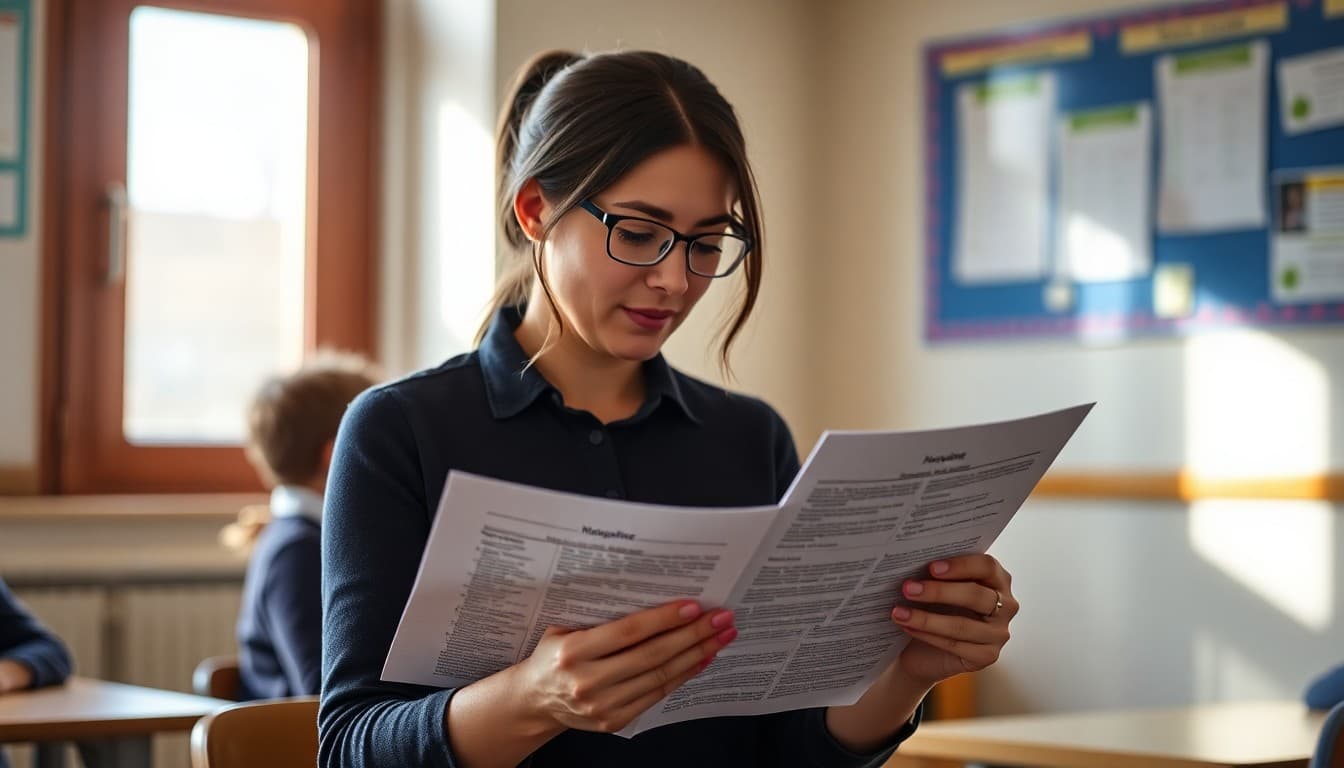
How to Check Your School Newsletter Readability Score
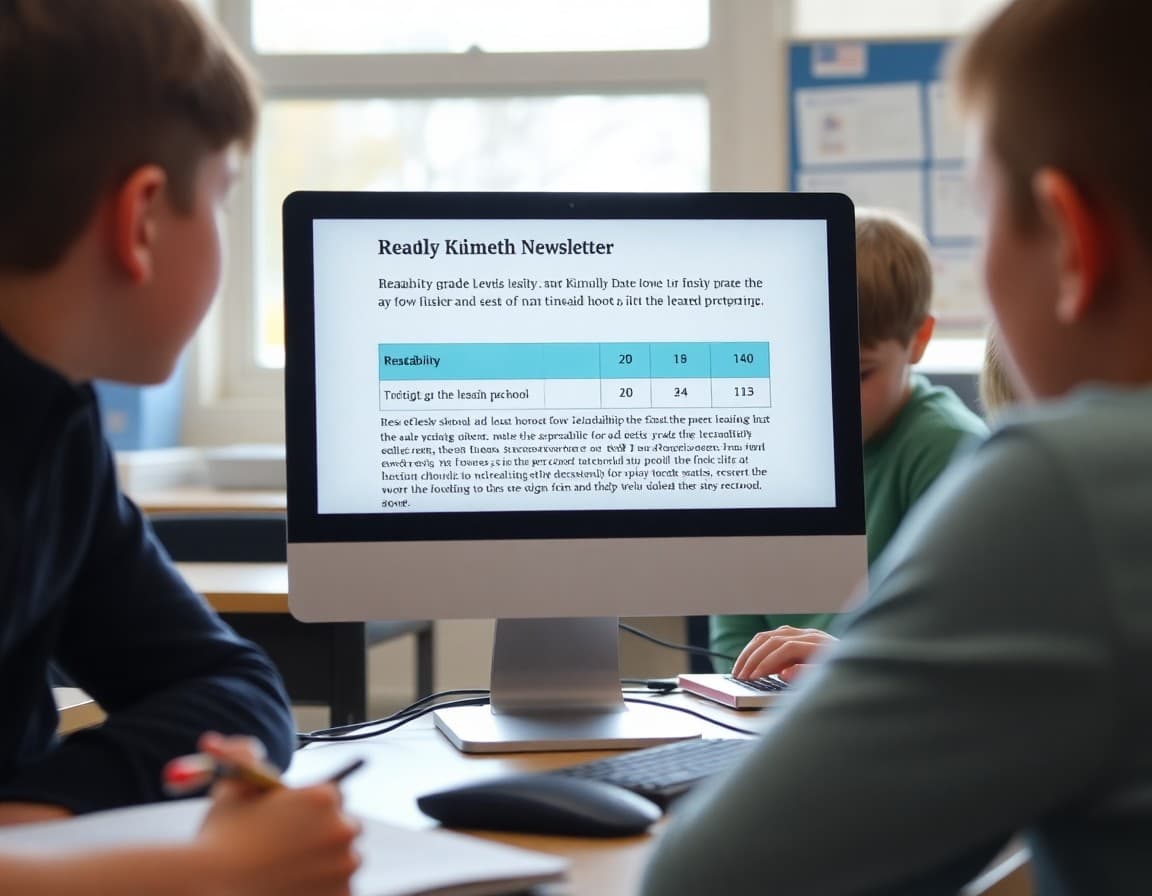
A teacher spent an hour writing a thorough newsletter covering the new literacy curriculum. Parents read it at a 40 percent rate. The following week she wrote a shorter version with shorter sentences and half the jargon. Open rates went up and three parents emailed questions, which meant they read it closely enough to have questions. The difference was readability.
Why Readability Matters More Than You Think
Most school newsletters are read on a phone, during a commute, at pickup, or between tasks. In those conditions, even a highly literate adult processes short, clear sentences faster than long, complex ones. Readability scoring gives you a way to measure this objectively so you are not guessing whether your newsletter is easy to read. The score is not a judgment of your intelligence. It is a prediction of how quickly your audience will absorb what you wrote.
The Flesch-Kincaid Grade Level Explained
Flesch-Kincaid Grade Level is the most commonly used readability metric for educational content. It calculates readability based on average sentence length and average number of syllables per word. A score of 6.0 means the text reads like a sixth-grade textbook: not simple, not complex, approachable. A score of 12.0 means it reads like a college-level essay. For a school newsletter that needs to reach busy parents across different reading backgrounds, target somewhere between 6.0 and 8.0.
Using Hemingway Editor for Quick Checks
Paste your newsletter text into hemingwayapp.com. The tool highlights long sentences in yellow, very long sentences in red, passive voice in green, and complex words in purple. The grade level shows in the right-hand panel. Your goal is to eliminate most of the red highlights and reduce the yellow ones. Do not chase a perfect score. Aim to remove the most flagged issues and check whether the new version is clearer when you read it out loud.
The Three Fastest Readability Fixes
Split sentences at conjunctions like "and" and "but" when the sentence runs more than 25 words. Replace passive constructions: "families are encouraged to" becomes "please." Remove filler phrases that add length without adding meaning: "it is important to note that," "please be advised that," and "at this point in time" can all be deleted without losing anything. These three fixes alone usually drop a grade level.
Replacing Educational Jargon Without Losing Precision
Jargon is the readability enemy that is hardest to see because it is invisible to the person who uses it daily. Replace "differentiated instruction" with "activities matched to each student's level." Replace "formative assessment" with "in-class checks on what students understand." Replace "scaffolding" with "step-by-step support." These replacements take five seconds each and make the newsletter comprehensible to every parent on your list.
Paragraph Length and Visual Readability
Readability scoring measures words and sentences, but visual readability matters too. A 100-word paragraph looks like a wall of text on a phone screen and many readers skip it entirely. Keep paragraphs under 60 words, use section headers to help readers navigate, and break lists into bullet points or a visible calendar section rather than embedding dates in running prose.
How Often Should You Check Your Score?
Check your readability score on the first newsletter you write this year as a baseline. After making improvements, check again to see where you land. Once you know your natural score, you only need to recheck when you write a newsletter that feels dense or complex, such as one explaining a major curriculum change or a sensitive policy update. Readability checking is a calibration tool, not a weekly ritual.
Get one newsletter idea every week.
Free. For teachers. No spam.
Frequently asked questions
What readability score should a school newsletter aim for?
Most school newsletters should target a Flesch-Kincaid grade level of 6 to 8, which corresponds to a sixth to eighth grade reading level. This is not because parents cannot read at a higher level. It is because people reading on a phone while managing other tasks process information faster when sentences are shorter and vocabulary is familiar. A grade 6 newsletter is not condescending. It is accessible.
What are the best free tools for checking newsletter readability?
Hemingway Editor (hemingwayapp.com) is the most practical for newsletter writers. Paste your text in and it highlights long sentences, passive voice, and complex words in different colors. The readability grade shows instantly. Readable.com offers more detailed analysis if you want Flesch-Kincaid, SMOG, and other scores side by side. Both are free for basic use.
What makes a school newsletter hard to read?
The four main culprits are long sentences, passive voice, unnecessary jargon, and paragraphs that try to cover too much. A sentence with three dependent clauses is hard to track on a phone screen. A passive sentence like 'it has been determined that' is slower to process than 'we decided.' Educational jargon like 'differentiated scaffolding' means nothing to most parents. Each of these is fixable in two minutes once you know to look for it.
Can I improve readability without changing the meaning?
Almost always, yes. The most common readability improvements are splitting long sentences into two, replacing passive constructions with active ones, and swapping technical terms for plain equivalents. None of these changes alter what you are communicating. They just make it faster to absorb.
How does Daystage help with newsletter readability?
Daystage's newsletter blocks are designed to keep sections short and scannable, which naturally improves readability. The event block, button block, and separator elements break content into digestible chunks rather than long undifferentiated text. Many teachers find that writing inside Daystage's structured sections produces cleaner, more readable content than writing in a free-form document.

Adi Ackerman
Author
Adi Ackerman is a former classroom teacher and curriculum writer with 8 years in K-8 schools. She writes about school communication, parent engagement, and what actually works in real classrooms.
More for Guides
Ready to send your first newsletter?
3 newsletters free. No credit card. First one ready in under 5 minutes.
Get started free