
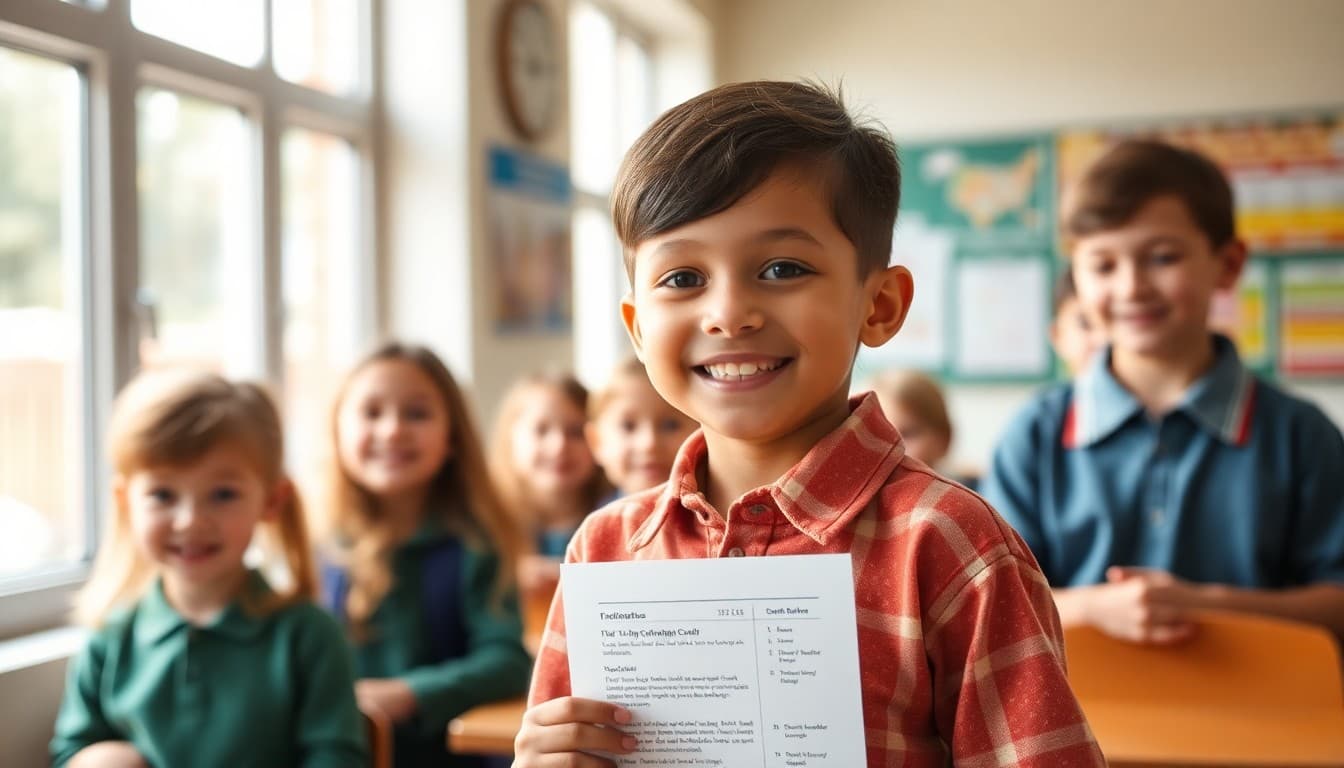
School Newsletter: Sharing a Positive Student Success Story
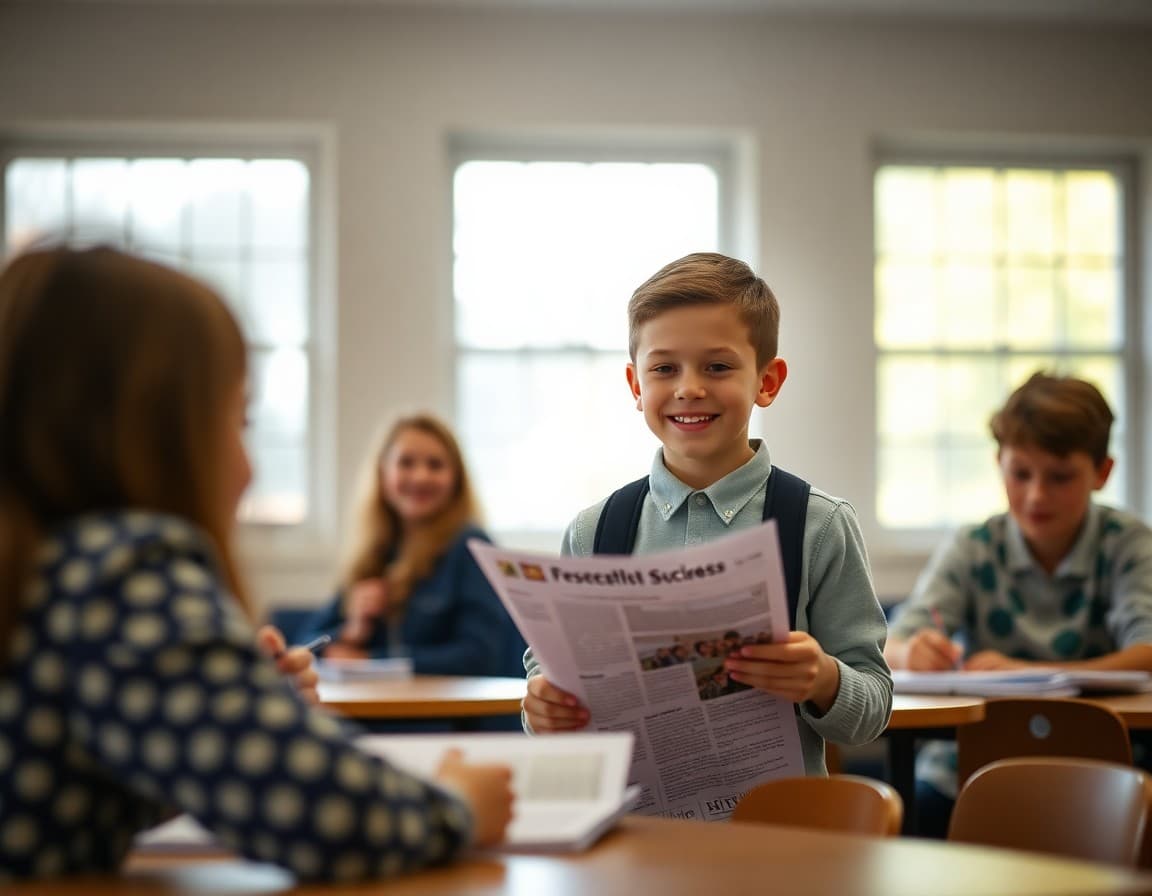
School newsletters are often full of logistics: dates, reminders, policy updates. That information is necessary. But the newsletters families actually remember, the ones they forward to grandparents and save on the refrigerator, are the ones that feature a real student story. A positive student success story done well is one of the most powerful tools in your school communication toolkit.
What Makes a Student Story Worth Sharing
The best student stories in school newsletters are not about grades or test scores. They are about character, growth, and community. A student who trained for two years to compete in a state skills competition. A fifth grader who started a food collection drive because she noticed a classmate skipping lunch. A student who failed his reading benchmark three times and passed on the fourth attempt after months of before-school tutoring. These stories are specific, they involve a journey, and they connect to values the whole community holds.
Getting Permission the Right Way
Obtain written permission from both the student and a parent or guardian before publishing any story. A one-paragraph permission slip that explains what will be published, where it will be distributed, and whether a photo will be included is sufficient. Keep a copy on file. If a family declines or a student is uncomfortable with the attention, respect that immediately. There will always be another story to tell. Never pressure a student or family to participate in a newsletter feature.
The Structure of a Good Student Story
A newsletter student story works best in three parts: the challenge or context, the student's response or effort, and the outcome. Start with something concrete that draws the reader in. Then describe the action the student took. Then share the result, which does not always need to be a trophy. The most compelling outcomes are often unexpected: the student whose project inspired a classmate to try something new, or the teacher who has kept a student's essay in their desk for three years.
Sample Template Excerpt
Here is a student success story section you can adapt:
"Student Spotlight: This month we want to celebrate 6th grader Marcus Chen. When Marcus moved to Roosevelt Middle School in September, he spoke very little English and did not know anyone. By November, he had taught himself 15 minutes of extra English vocabulary every night using free apps on his phone. By January, he was helping other newcomer students navigate the school building during passing periods. His teacher, Ms. Reyes, nominated him for this month's spotlight. 'Marcus decided he was going to figure it out,' she said. 'That kind of determination is something every student in this building can learn from.' Congratulations, Marcus."
Using a Student Quote
A direct quote from the student transforms a profile from a school announcement into a human story. Ask the student one or two specific questions: "What made you decide to do this?" or "What was the hardest part?" Use their actual words, not a cleaned-up version that sounds like an adult wrote it. A student saying "I just didn't want to give up" is more compelling than a paraphrase that says "the student was motivated by resilience and persistence."
How Often to Feature Student Stories
Once per month is a natural frequency. It is regular enough to create a community expectation and to recognize many students over a year, but not so frequent that the stories lose their impact. Some schools rotate the feature across grade levels to ensure representation across the school. Others let staff nominations drive the selection. Either approach works as long as the stories are genuinely compelling and permission has been obtained.
The Ripple Effect of Student Recognition
When a student is featured in the school newsletter, the impact extends well beyond the individual. Their family feels seen. Other students in the building learn that the school notices what they do, not just what they score. Teachers who nominated the student feel their observations matter. And the community develops a shared story about who belongs here and what this school values. That ripple effect is worth the effort it takes to find and tell the story well.
Get one newsletter idea every week.
Free. For teachers. No spam.
Frequently asked questions
What types of student success stories work best in a school newsletter?
Stories about growth, persistence, and community impact tend to resonate more broadly than academic honor roll lists. A student who overcame a challenge, started a school initiative, showed extraordinary kindness, or achieved something unexpected is a more compelling story than a straight achievement announcement. Look for the narrative, not just the outcome.
How do I get permission to feature a student in the newsletter?
Always get written permission from the student and at least one parent or guardian before including their name, image, or story in any school communication. A simple permission form that describes how the story will be used is sufficient. Verbal permission is not enough for a published communication.
Should I include a student's photo in a success story?
Photos significantly increase engagement with newsletter stories. If you have permission, include a photo. If not, the story can stand without one. Never publish a student photo without explicit written permission, regardless of how positive the context.
How do I write a student success story that does not feel like a press release?
Write it like a brief profile, not an announcement. Include a quote from the student if possible. Describe a specific moment or decision, not just the outcome. 'When Jaylen decided to start the book donation drive, he did not expect to collect more than 1,000 books in three weeks' is more compelling than 'Student Jaylen Washington collected 1,000 books for local libraries.'
Can Daystage help me create a visually appealing student success story section in my newsletter?
Yes. Daystage supports images alongside text, so you can include a photo, a brief story, and a quote from the student in a clean, readable format. The newsletter looks professional without requiring design skills.

Adi Ackerman
Author
Adi Ackerman is a former classroom teacher and curriculum writer with 8 years in K-8 schools. She writes about school communication, parent engagement, and what actually works in real classrooms.
More for Guides
Ready to send your first newsletter?
3 newsletters free. No credit card. First one ready in under 5 minutes.
Get started free