

School Newsletter: Responding to Journalist Requests
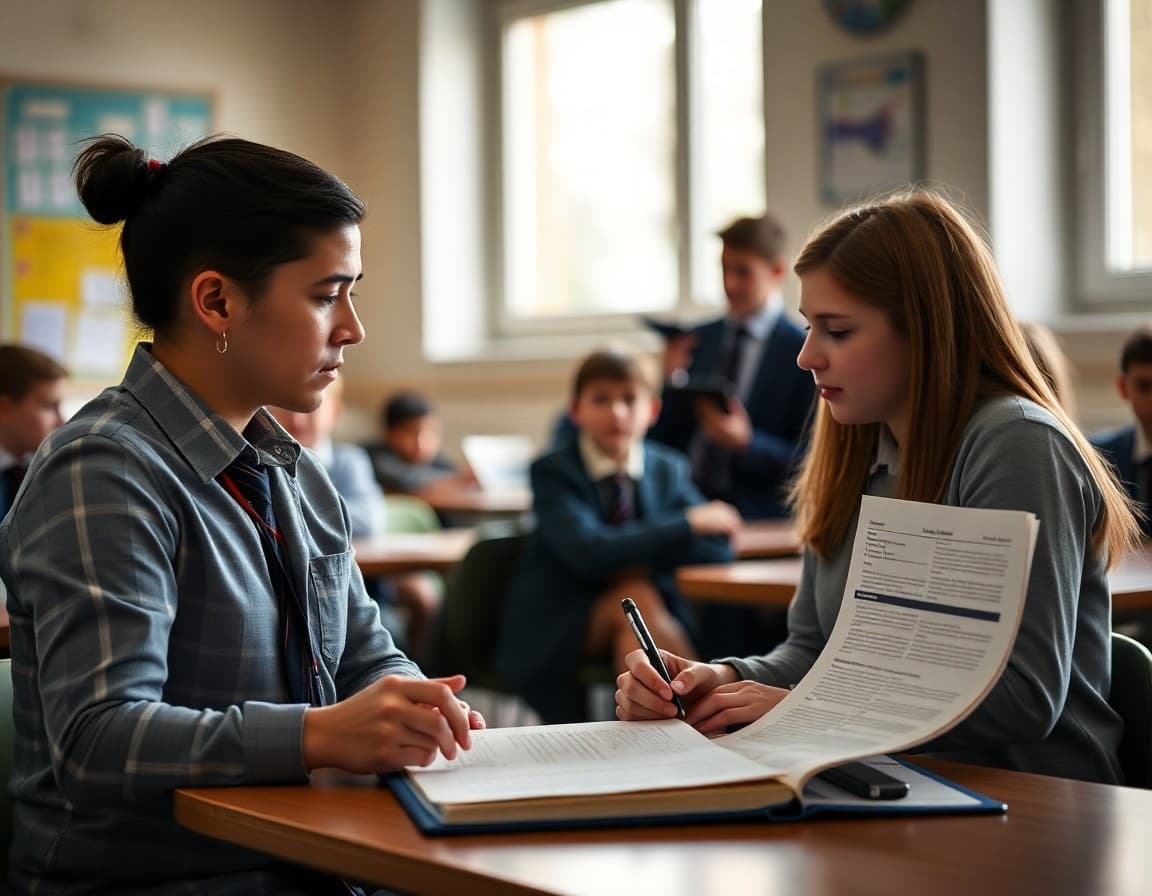
Most school newsletters never attract journalist attention. But when a newsletter covers a sensitive topic, announces a significant change, or describes a situation that has community implications, the chance of a media inquiry increases. Knowing in advance how to handle those inquiries protects the school, the district, and the families the newsletter is meant to serve.
Why School Newsletters Can Attract Media Interest
Journalists monitor school newsletters for the same reason researchers do: they are official communications that reveal what a school is doing and saying. A newsletter announcing budget cuts, describing a safety incident, explaining a controversial new policy, or addressing a community complaint becomes newsworthy content that a reporter may want to follow up on. The school newsletter is not private communication. Any email distributed to hundreds of families can be screenshotted and forwarded to a journalist within minutes of landing in inboxes. Write every section with the awareness that it may be read by someone outside the school community.
The First Rule: Communications Office First
When a journalist contacts the school, whether by email, phone, or in person at a school event, the first response is always the same: "I will need to connect you with our district communications office." Do not answer questions in the moment, even if you believe the answer is safe. Even accurate, helpful answers given without district coordination can become part of a story in ways the principal did not anticipate. The district communications office is trained to manage media interactions; principals and newsletter editors are not. Use that resource every time.
Public Records Requests for Newsletter Content
In most states, school newsletters sent to all families qualify as public records under open records or Freedom of Information laws. A journalist who submits a formal public records request for newsletters is entitled to receive them, typically within a specific number of business days set by state law. The newsletter content itself is public. The subscriber list, which contains family email addresses, is protected under FERPA and state privacy laws and must not be included in any public records response. When you receive a public records request, route it to the district's records officer immediately; do not try to process it independently.
How to Write Newsletter Content That Holds Up to Scrutiny
The best protection against problematic media coverage is writing newsletter content that is accurate, measured, and consistent with your district's official position. Every sentence in a newsletter should be something you would be comfortable seeing quoted in a news article. This does not mean sanitizing newsletter content into bureaucratic language that says nothing; it means being specific and factual rather than speculative, avoiding characterizations of other people or organizations that could be taken out of context, and not promising outcomes you cannot guarantee. A newsletter section that says "we are investigating and will share updates as we have them" is safer than one that says "we are confident this will not happen again."
Template: Response to a Journalist's Initial Inquiry
Here is an appropriate initial response when a journalist contacts the school about newsletter content:
"Thank you for reaching out. All media inquiries are handled through [District Name]'s communications office. I am forwarding your inquiry to [District Communications Director Name] at [email] so they can respond to you directly. They will be in touch within [timeframe]. I am not in a position to comment further at this time."
Send this response in writing, keep a copy, and immediately notify the district communications office that you forwarded the inquiry and what the journalist asked about.
When a Journalist Approaches at a School Event
Journalists sometimes approach school administrators at public events (school board meetings, open houses, community events) and ask about newsletter content or school situations. The in-person version of the response above is: "I would prefer to handle that through our district communications office rather than in an informal setting. Let me get you their contact information." Then follow up by notifying communications of the conversation. Do not answer any substantive question on the spot, even one that seems easy. A quote given at a school board meeting in response to a casual question can appear in print out of context the next morning.
After Coverage Appears: Using the Newsletter to Respond
If media coverage of your school contains inaccuracies that families are likely to encounter, the newsletter is an appropriate place to provide accurate information. Keep the response factual: "Recent media coverage described [situation]. The accurate information is [correct information]." Do not attack the journalist or the publication. Stick to correcting specific factual errors with documented facts. A newsletter that gets into an argument with media coverage puts the school in a defensive posture that damages community trust more than the original coverage did. Correct inaccuracies once, clearly, and move on.
Get one newsletter idea every week.
Free. For teachers. No spam.
Frequently asked questions
Can a journalist request copies of school newsletters?
School newsletters distributed to all families are generally public documents accessible under state public records laws. If a journalist submits a public records request for school newsletters, the school or district typically must provide them, subject to redaction of any student-specific information protected by FERPA. The newsletter itself is public communication; the contact list used to distribute it is protected. Never provide the family email list in response to a journalist request.
What should the principal do when a journalist contacts them directly about newsletter content?
Do not respond to the journalist directly without consulting the district communications office. The first call should be to the district communications director, not the reporter. This is true even when the journalist seems friendly, the question seems benign, and the newsletter content seems uncontroversial. Any quote given to a journalist can end up in a story with context you did not anticipate. District communications staff exist precisely to manage these interactions.
What if a journalist asks about a specific statement in a past newsletter?
Request that the journalist submit the inquiry in writing so you have a record of exactly what was asked. Forward the written inquiry to the district communications office before responding. If you respond, confirm only what the newsletter actually said and avoid adding context, interpretation, or off-the-record commentary. Statements like 'the newsletter said that, but what we really meant was' often become the actual story.
How should the newsletter handle a topic that is likely to attract media interest?
If you are publishing newsletter content that you believe may attract media attention (a significant school change, a community partnership announcement, a response to a community controversy), contact the district communications office before the newsletter goes out. They may want to coordinate a press statement alongside the newsletter, or they may want to review your newsletter language to ensure it is consistent with what the district is prepared to say publicly. Publishing first and informing communications second creates coordination problems.
Does Daystage help schools document what was published and when?
Yes. Daystage archives every newsletter with the exact send date and delivery data. If a journalist requests documentation of when a newsletter was distributed, or if there is a dispute about what was communicated and when, the Daystage archive provides a timestamped record. This documentation is valuable not just for media relations but for any situation where communication timing matters, including legal matters and parent complaints.

Adi Ackerman
Author
Adi Ackerman is a former classroom teacher and curriculum writer with 8 years in K-8 schools. She writes about school communication, parent engagement, and what actually works in real classrooms.
More for Guides
Ready to send your first newsletter?
3 newsletters free. No credit card. First one ready in under 5 minutes.
Get started free