

School Newsletter: Hazmat Incident Near School Communication Template
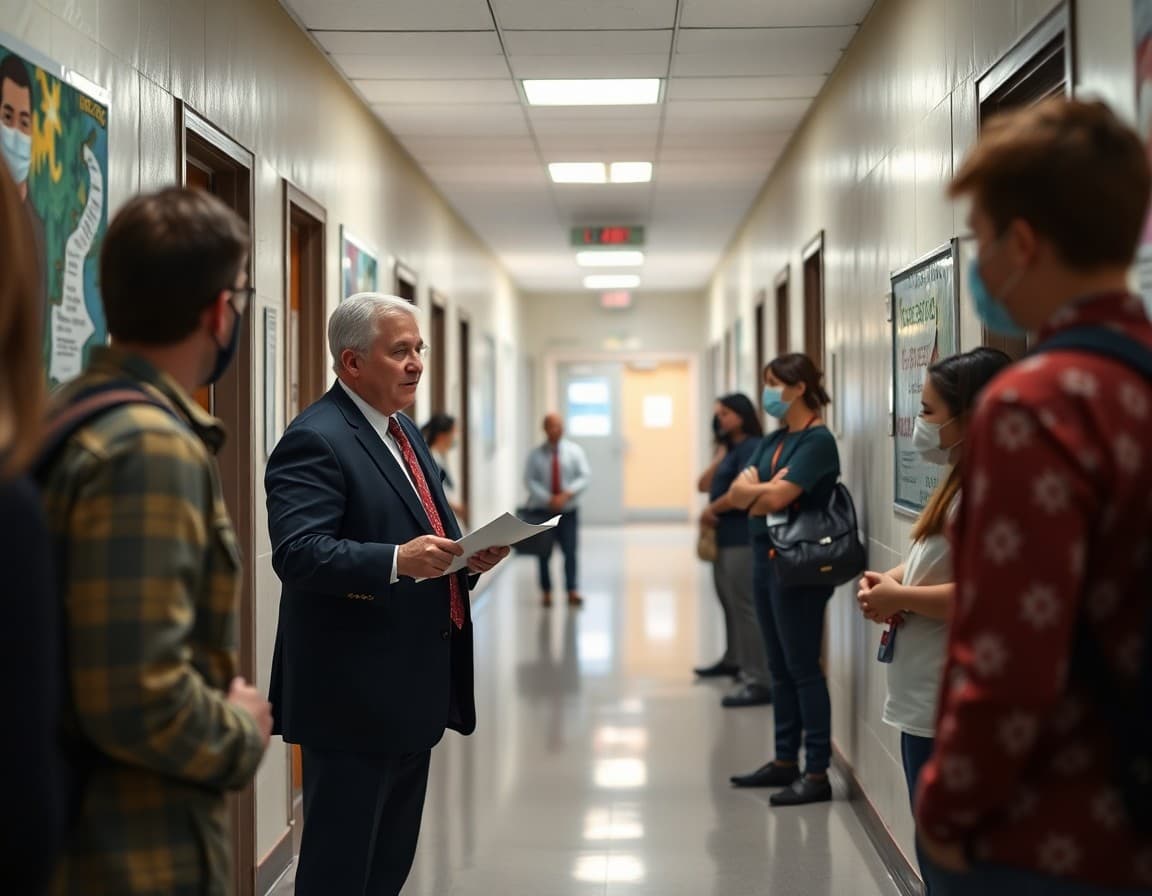
A hazmat incident near school is a scenario where the quality of communication determines whether families respond safely or whether they create additional risk by driving to the school during an active shelter-in-place. The communication has to be fast, clear about the safety status, and specific about why families should not come to the school. Vague or delayed communication produces exactly the crowded parking lot situation that emergency managers and principals most want to prevent.
This template covers the initial alert, the shelter-in-place communication, and the all-clear.
Initial alert: send within 10 minutes of the shelter-in-place order
"IMPORTANT: [School Name] is currently under a shelter-in-place order issued by [local authority] in response to a hazardous materials incident near the school. All students and staff are safe and secured inside the building. Please DO NOT come to the school for student pickup at this time. Student release during an active shelter-in-place creates danger for your family and interferes with emergency response. I will send an update within [30 minutes / 1 hour]. More information to follow. [Principal Name]"
That message is short by design. Parents in crisis read short messages. They stop reading long ones after the first sentence if the first sentence does not immediately confirm safety. Lead with safety, then give the instruction, then commit to a follow-up time.
Follow-up communication: what the school is doing
"Update as of [time]: We are still under shelter-in-place. Here is what is happening at school: All HVAC systems pulling in outside air have been shut off. All exterior doors and windows are sealed. Students are in their classrooms continuing supervised activities. No outdoor activities are in progress. We are in direct contact with [police / fire / emergency management] and are following their guidance. Local authorities have not yet provided a timeline for the all-clear."
This update answers the parent question that always follows the initial alert: "But what are the kids actually doing right now?" Families who know students are in classrooms with teachers doing supervised activities are less anxious than families who know nothing except that there is a shelter-in-place.
Explain what a shelter-in-place means for dismissal
"If the shelter-in-place extends beyond normal dismissal time, we will hold all students in the building under supervision. No student will be released to the pickup line or to buses while the shelter-in-place is in effect. We will provide food and water for students if we are held past the lunch or snack period. After-school staff are on standby to manage extended care if needed. I will send a direct update to families of after-school students if the situation extends significantly."

The all-clear communication
"IMPORTANT UPDATE: The shelter-in-place order for [School Name] has been lifted as of [time]. Local authorities have determined that the immediate hazard has passed and that normal outdoor activity may resume. All students are safe. Normal dismissal will proceed as follows: [bus riders / car riders / walkers]. If you are planning to pick up your student outside of normal dismissal time, please call [number] before arriving so we can prepare. Thank you for your patience and for trusting our team to keep your students safe today."
Post-incident newsletter: the day after
Send a follow-up newsletter the next school day with the full picture. Describe what the incident was, what the school did at each stage, how students responded, and whether any follow-up actions are planned (counselor availability for students who felt anxious, a review of the shelter-in-place procedures with students). A post-incident newsletter closes the loop for families who are still processing what happened and confirms that the school handled the situation competently.
Note for students who experience anxiety after the event
Include a brief note about support availability. "Some students may feel anxious or unsettled after today's events. Our school counselor, [name], is available tomorrow for any student who wants to talk. Teachers have been asked to check in with their classes in the first period tomorrow. If your child expresses significant distress about today's event, please reach out to the counselor directly at [email]."
Get one newsletter idea every week.
Free. For teachers. No spam.
Frequently asked questions
What is a school shelter-in-place procedure?
A shelter-in-place is a protective action used when it is safer for students and staff to remain inside the building than to evacuate. In the context of a nearby hazmat incident, shelter-in-place involves keeping all exterior doors and windows closed, turning off HVAC systems that pull in outside air, keeping students away from exterior windows, and holding all outdoor activities including recess, PE, and dismissal until the threat passes and authorities give the all-clear. Shelter-in-place is ordered by local emergency management, law enforcement, or the school district in response to external threats. Schools do not initiate it unilaterally.
What should a school communicate to families during a hazmat shelter-in-place?
The first communication should confirm that students are safe, explain that the school is under a shelter-in-place ordered by local authorities, describe what that means for students (staying inside, HVAC off, outdoor activities suspended), give families a specific update time, and tell families explicitly not to come to the school for pickup because student release during a shelter-in-place creates dangerous exposure. Families who understand why they cannot come to the school are more likely to cooperate than families who receive only an instruction to stay away.
How do you communicate when you do not have complete information about the hazmat incident?
Be honest about what you know and what you do not. 'Local authorities have issued a shelter-in-place order for our area in response to a hazardous materials incident at [general location]. We do not yet have specific information about the nature of the material involved or the expected duration of the shelter-in-place. Our students and staff are safe inside the building. We are monitoring communications from [police department / fire department / emergency management] and will update you as information becomes available.' Communicating with incomplete information is far better than silence.
When can families pick up students during a hazmat shelter-in-place?
Students should not be released during an active hazmat shelter-in-place. The shelter-in-place exists precisely because the outdoor environment is unsafe. Student release happens only after authorities lift the shelter-in-place order. When the all-clear is given, the school will move through a controlled release process that may differ from normal dismissal depending on timing. Your all-clear communication should include the specific pickup time and location, and confirm that students will not be released to anyone without a verified ID.
Does Daystage help schools send hazmat incident communications?
The initial hazmat alert should go through your school's emergency notification system for maximum speed. Daystage is better suited for the follow-up communication after the situation is resolved: explaining what happened, what the school did, the all-clear process, and any next steps for families. That type of post-incident newsletter benefits from a structured format that gives families the complete picture.

Adi Ackerman
Author
Adi Ackerman is a former classroom teacher and curriculum writer with 8 years in K-8 schools. She writes about school communication, parent engagement, and what actually works in real classrooms.
More for Guides
Ready to send your first newsletter?
3 newsletters free. No credit card. First one ready in under 5 minutes.
Get started free