
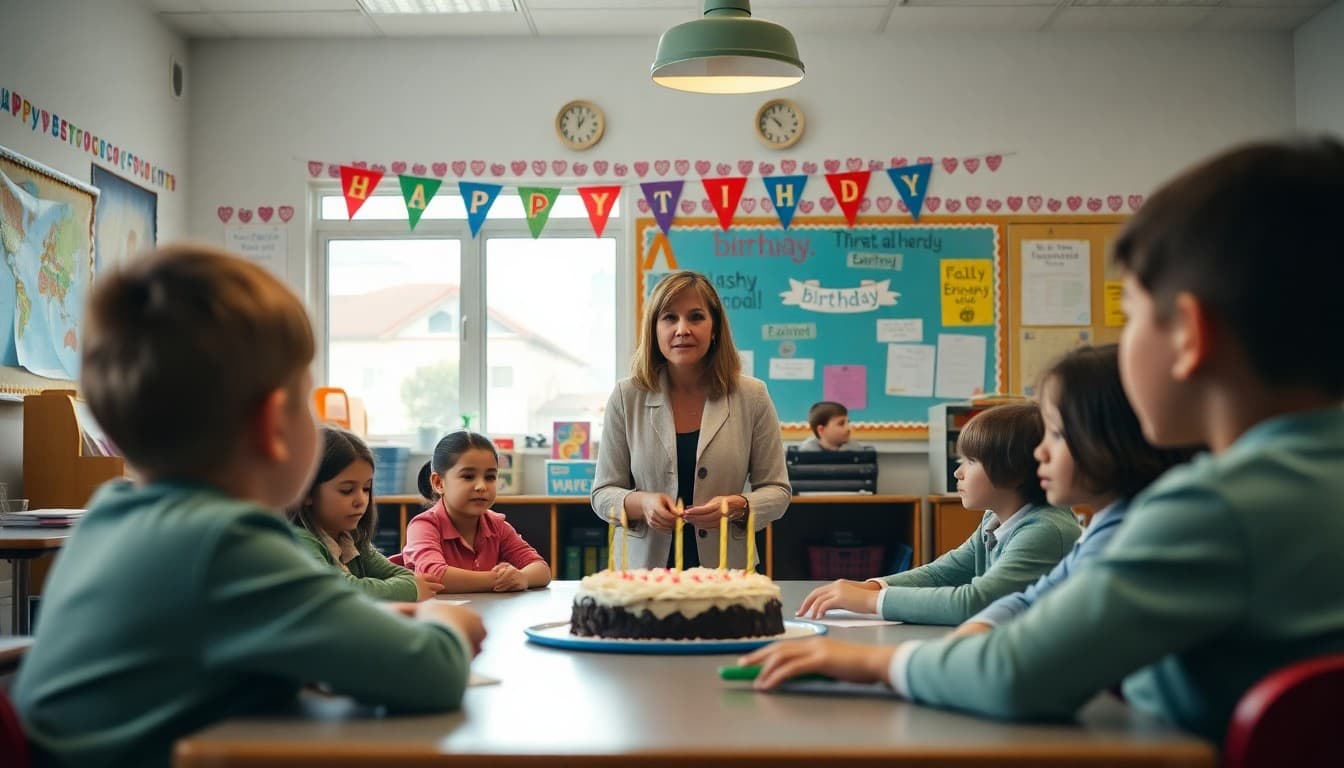
School Newsletter: Birthday Treat and Celebration Policy Update
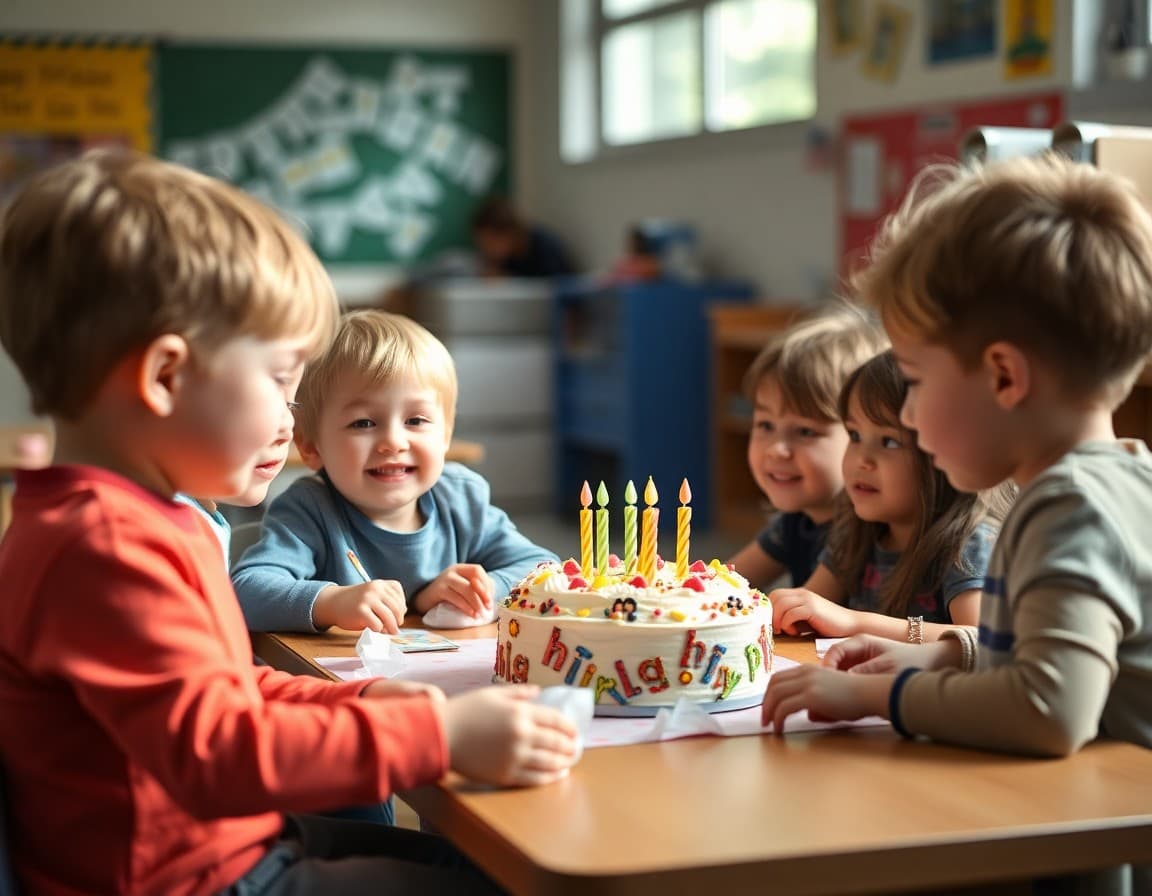
Birthday treat policies are one of the communications that generates the most family emotion disproportionate to its importance. A well-written policy newsletter addresses the safety reason directly, offers genuine alternatives that families can get excited about, and states the enforcement process clearly. A poorly written one reads as bureaucratic and joyless and generates backlash that consumes more energy than the original policy problem.
Open with the policy and the reason together
"Beginning this school year, [School Name] is updating our birthday celebration policy for classroom treats. Food items brought from home to share with the class will no longer be permitted at classroom birthday celebrations. This policy applies to cupcakes, cookies, candy, and other food treats. The reason for this change is straightforward: our school has students with severe food allergies that make it unsafe to distribute homemade or commercially prepared food in the classroom without detailed ingredient review. Rather than creating a situation where students are excluded from birthday celebrations because of their allergy, we are moving to non-food celebrations that every student can enjoy together."
Name the approved non-food alternatives specifically
"The following alternatives are fully approved and encouraged: A small non-food item for each classmate (pencils, erasers, stickers, bookmarks, seed packets for spring planting, mini activity cards). A book donated to the class library with a dedication page signed by the birthday student. A classroom activity chosen by the birthday student (selecting the game for indoor recess, choosing the afternoon read-aloud book, sitting in the principal's chair for morning circle, picking the class movement break activity). A birthday poster signed by the class, which the student takes home. None of the above (birthdays are acknowledged with a birthday song and a class shoutout and no treat or gift is needed)."
Describe what happens on the birthday at school
"Every student's birthday will be acknowledged by their teacher on the school day closest to their actual birthday. Students with summer birthdays will have a designated half-birthday celebration date. The acknowledgment includes a birthday song, a class wish, and any activity or item the family chooses from the approved list above. Birthdays are announced at the morning meeting so every classmate knows it is a birthday day. Families do not need to notify the teacher in advance unless they are bringing a non-food item to distribute."
Explain the procedure for bringing a non-food treat
"If your family would like to bring a non-food item for classmates, please bring it to the school office on the morning of your student's birthday or the day before. The item should be bagged in individual portions or pre-counted to the class total. A class list with the number of students is available from the teacher. Items will be distributed by the teacher at the end of the school day rather than during class time, to minimize disruption."

Address food treats that arrive despite the policy
"On occasion, a food treat may arrive at school that does not meet the policy. In this situation, the treat will be returned home with the student at the end of the day. We will not distribute it to classmates and we will not make the student feel badly about the situation. The student's birthday will still be celebrated with our standard class acknowledgment. We understand that the policy change is an adjustment for many families and we appreciate your patience as we transition to the new approach."
Address families who want an exception for specific dietary situations
"For families who wish to bring a commercially packaged, clearly labeled treat that meets specific dietary requirements for the class (for example, a nut-free, gluten-free, dairy-free packaged item), please contact your child's teacher at least one week in advance to discuss whether an exception can be made based on the current class allergy profile. Exceptions are reviewed on a case-by-case basis and are not guaranteed."
Close with a warm note about birthday culture
"Birthdays matter. We want every student to feel celebrated on their special day. Our goal with this policy is to make birthday celebrations more inclusive, not less joyful. A classroom where every student can participate fully in a birthday acknowledgment is a better celebration than one where someone has to sit out. Questions about the policy can be directed to [name] at [email]."
Get one newsletter idea every week.
Free. For teachers. No spam.
Frequently asked questions
Why are schools moving away from food birthday treats?
Schools move away from food birthday treats primarily because of food allergies and dietary restrictions. A cupcake that seems harmless contains dairy, eggs, gluten, and sometimes nuts. In a class with even one student with a severe allergy, a food treat creates a safety risk and an exclusion problem: the allergic student either risks exposure by eating the treat or is visibly excluded by watching classmates eat while they cannot. Non-food alternatives like pencils, stickers, bookmarks, or a class activity eliminate both problems. Some schools also cite classroom disruption and nutritional policy concerns.
What non-food birthday celebration options work well in elementary classrooms?
Popular non-food birthday alternatives in elementary classrooms include: a pencil or small school supply item for each classmate, sticker sheets, a small puzzle or activity card, a bookmark, a book the birthday student selects for the class library (often the most lasting option), or a class activity chosen by the birthday student (they pick the game for indoor recess, they choose the read-aloud, they sit in the special chair for the day). The activity options cost families nothing and are often more meaningful to the birthday student than a treat that disappears in two minutes.
How do you communicate a birthday treat policy change to families who grew up with cupcakes?
Acknowledge the tradition explicitly. 'We know that birthday cupcakes are a beloved tradition in many families. This policy change is not about removing joy from birthdays. It is about ensuring that every student can fully participate in the celebration without a safety or exclusion concern.' Then name the alternative options clearly and with enough enthusiasm that they feel like genuine alternatives, not consolation prizes. Families who see that their child's birthday will still be acknowledged and celebrated accept the policy change more readily than families who feel like the birthday is being canceled.
How should a school handle a family who brings a prohibited birthday treat?
Address this in the newsletter preemptively. 'If a treat arrives that does not follow the school's policy, the treat will be returned home with the student at the end of the day. It will not be distributed to classmates. We will acknowledge the birthday in a classroom-appropriate way, but the treat cannot be shared due to the safety policy.' That statement removes ambiguity and prevents families from assuming the policy is flexible if they simply show up with a treat anyway.
Can Daystage help schools send birthday celebration policy newsletters?
Yes. A birthday treat policy newsletter is a good use of Daystage because it needs to cover the reason for the policy, the specific alternatives, the procedure for birthdays that fall on school days, and the handling of violations, all in a tone that is warm rather than punitive. Daystage's structured newsletter format helps you cover all of these without the communication feeling like a disciplinary notice.

Adi Ackerman
Author
Adi Ackerman is a former classroom teacher and curriculum writer with 8 years in K-8 schools. She writes about school communication, parent engagement, and what actually works in real classrooms.
More for Guides
Ready to send your first newsletter?
3 newsletters free. No credit card. First one ready in under 5 minutes.
Get started free