
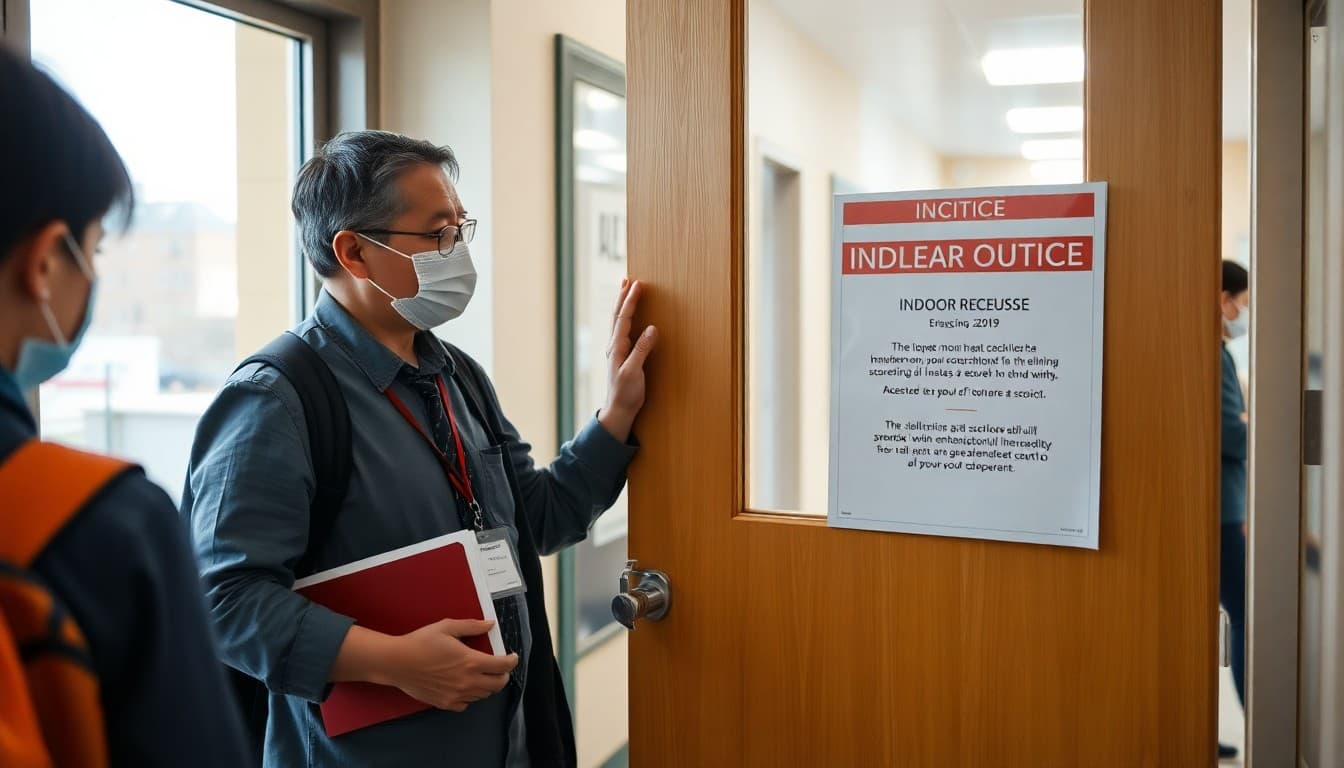
School Newsletter: Air Quality Alert and Indoor Recess Communication

Air quality alerts have become an increasingly common school communication topic, particularly in regions affected by wildfire smoke, urban pollution, or agricultural burning seasons. A clear air quality communication tells families what AQI thresholds the school uses, how outdoor activity decisions are made, and what students with respiratory conditions should know. Done well, this newsletter reduces anxiety and builds trust in the school's health decision-making.
Explain the AQI scale and your school's thresholds
Many families are not familiar with the Air Quality Index. A brief explanation pays off significantly in reducing questions. "The Air Quality Index (AQI) is a scale from 0 to 500 used by the EPA to communicate how clean or polluted the air is. A score of 50 or below is Good. A score of 51 to 100 is Moderate. Scores above 100 begin to affect sensitive groups, including people with asthma. At [School Name], we use the following thresholds for outdoor activity decisions: AQI below 100: Normal outdoor recess and activities. AQI 101 to 150: Outdoor activity is limited for students with respiratory conditions. Students without known conditions go outside but strenuous exercise is minimized. AQI above 150: All outdoor activities move indoors for the full school day." Your actual thresholds will vary by district policy, but the structure of this section should be identical.
Describe how the school monitors air quality each morning
"Each school morning by 7:00 AM, [designated staff member] checks the current AQI for our zip code using airnow.gov and the [local air district or health department] alert system. If the AQI is at or above our indoor recess threshold, we post an indoor recess notification on [school website / app] and notify staff. For rapidly changing conditions (active wildfire days), we check the AQI at midday as well. Outdoor activity decisions can change mid-day if conditions deteriorate significantly."
State what students do during indoor recess
Families with young children want to know their student still gets physical activity during indoor recess. "On indoor recess days, students participate in supervised activities in their classrooms or in the gymnasium. Activities include free play with building materials and games, organized movement activities, or structured indoor physical education. Indoor recess is supervised at the same ratio as outdoor recess. We work to ensure that indoor recess days still include physical movement, which supports student learning and wellbeing."
Address students with asthma and respiratory conditions directly
"Students with asthma, COPD, or other respiratory conditions may be more affected by poor air quality even on days below our general indoor recess threshold. We ask families of students with these conditions to: Ensure your student's rescue inhaler is at school and up to date. Review your student's asthma action plan with the school nurse by sending an updated copy to [nurse name] at [email]. Contact the nurse directly if your student's condition worsens during a sustained air quality event. On AQI days above 100, students with respiratory conditions remain indoors regardless of whether the general population threshold has been reached."

Describe the communication process during active wildfire events
"During regional wildfire events, air quality can change rapidly. We monitor conditions throughout the day and will send a rapid notification through [system] if outdoor activity decisions change after the morning check. If you have not signed up for our school's rapid notification system, please do so at [link]. During a multi-day wildfire event, we will send a daily update each morning by 7:30 AM confirming the outdoor activity plan for that day."
Address parent questions about school closures during air quality events
"We do not close school for air quality events unless the AQI reaches the Hazardous level (above 300) or the district issues a closure directive. Indoor activities can continue safely in our HVAC-filtered building even during most air quality events. Families who are concerned about their individual student's risk on a specific day should contact their child's pediatrician and may choose to keep their student home. We will mark such absences as excused during an official air quality alert period."
Close with the monitoring source and key contact
"You can check the current AQI for our area at airnow.gov or through your smartphone's weather app, which typically includes an AQI reading. If you have questions about our air quality policy or your student's specific health needs, please contact our school nurse, [name], at [email]."
Get one newsletter idea every week.
Free. For teachers. No spam.
Frequently asked questions
What AQI level triggers indoor recess at most schools?
Most school districts use the EPA Air Quality Index as their guide. The AQI categories are: Good (0-50), Moderate (51-100), Unhealthy for Sensitive Groups (101-150), Unhealthy (151-200), Very Unhealthy (201-300), and Hazardous (301+). Schools typically begin restricting outdoor activity at the Unhealthy for Sensitive Groups level (101-150), particularly for students with asthma, respiratory conditions, or other health sensitivities. Full indoor recess for all students is typically implemented at the Unhealthy level (151+). Your school or district policy should define the exact thresholds.
How should a school communicate air quality indoor recess to families?
The communication should state the specific AQI thresholds that trigger your school's indoor recess policy, explain how the school monitors air quality each morning, describe what students do during indoor recess, and give families guidance for students with asthma or respiratory conditions. Families of students with health conditions that are affected by air quality deserve a separate, specific communication in addition to the general newsletter.
How do schools monitor air quality during wildfire events?
During active wildfire events, air quality can change rapidly throughout the day. Schools in affected regions monitor the EPA's AirNow website (airnow.gov) and local environmental agency alerts throughout the day, not just in the morning. Some districts have air quality sensors on school grounds. A communication during an active wildfire event should explain that monitoring is ongoing and that outdoor activity decisions may change during the day based on conditions. Families should sign up for the school's rapid notification system during active air quality events.
What should schools tell families about students with asthma during an air quality event?
Students with asthma and other respiratory conditions are categorized as 'sensitive groups' by the EPA and are at greater risk even at AQI levels below the threshold for general population concern. A newsletter should advise families of students with asthma to send their student with their rescue inhaler on any high-AQI day, to review their student's asthma action plan with the school nurse, and to contact the school nurse if their student is having more frequent symptoms than usual. The nurse should also be prepared to contact families proactively if a student with a known condition appears symptomatic.
Can Daystage help schools communicate air quality decisions to families?
Yes. An air quality communication template works well in Daystage because the core content is reusable across multiple events in a season. During a regional wildfire event or a period of sustained poor air quality, you may need to send multiple air quality updates. Having a consistent template with the AQI thresholds, the indoor recess policy, and the health guidance saves time and ensures every communication covers the same essential information.

Adi Ackerman
Author
Adi Ackerman is a former classroom teacher and curriculum writer with 8 years in K-8 schools. She writes about school communication, parent engagement, and what actually works in real classrooms.
More for Guides
Ready to send your first newsletter?
3 newsletters free. No credit card. First one ready in under 5 minutes.
Get started free