

Back to School Newsletter for Public School Families
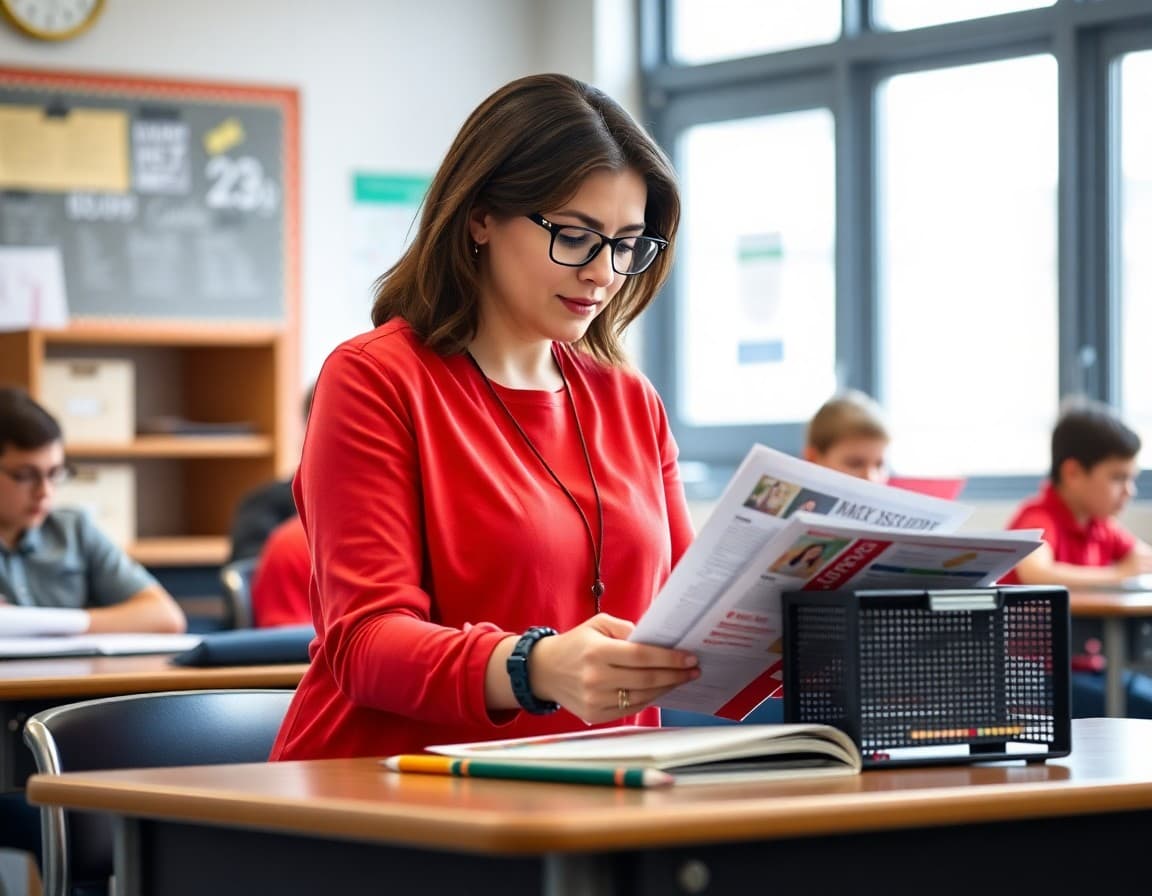
The public school back to school newsletter is sent to the most diverse family community of any educational context. It needs to reach and be useful for every family, from those who have been at the school for five years to those who enrolled in the last week of August. Designing for the full range of this community is what separates a newsletter that does its job from one that technically exists.
The Information That Every Family Needs
Start with the non-negotiables. The first day date. The start and end times. The arrival and dismissal procedures. Any special first-day instructions, where kindergartners go, whether families may walk their child to the classroom or say goodbye at the door. Bus route information if applicable. The main office phone number. These items belong at the top of the newsletter, in a section that can be scanned in 60 seconds, because some families will only have 60 seconds.
After these essentials, move to the information that requires slightly more reading: teacher assignments, supply list, food program information, and the communication channels families will use throughout the year. Save the welcome message, curriculum philosophy, and event calendar for after families have found what they need to get through the first day.
Designing for Scannability
Public school back to school newsletters are often read on a phone while a parent is waiting in a carpool line, eating lunch at work, or helping another child with homework. Design for these conditions. Use headers that make each section immediately findable. Use bullet points for lists rather than embedded them in paragraphs. Bold the most critical information, dates, times, phone numbers, so that a reader scanning for what they need can find it without reading every word.
A newsletter that can be navigated by a parent with 90 seconds of attention is doing more community service than one that requires careful reading to extract the key facts.
A Template Excerpt for a Public School Back to School Newsletter
Here is an opening section from a large public elementary school in Texas:
"School starts Thursday, August 21 at 7:45 AM. Car drop-off is on the Oak Street side. Buses arrive at 7:30 AM. All K through 2 families: teachers will meet students at the main entrance and walk them to classrooms. Grades 3 through 5 go directly to their classrooms. You can find your child's classroom assignment on the parent portal starting August 18. Breakfast is free for all students this year. Lunch is free for students who qualify. Applications are at the front office and online at risd.net/lunch. If you need a supply list, they are posted by grade level at risd.net/supplies and at the front office."
Every sentence answers a real question. The food programs are mentioned without stigma. Two resources are named with specific web addresses. This is what a first section should accomplish.
Covering Food Assistance Without Stigma
Public schools serve communities across the full income range, and the back to school newsletter is one of the most important opportunities to make sure that families who qualify for food assistance know about it and can access it without embarrassment. Present free and reduced lunch information as standard community information: "All families are eligible to apply for free or reduced-price lunch. Applications are at the front office and online. Results are confidential. If you are not sure whether your family qualifies, apply. There is no cost or obligation." That framing removes the shame barrier that keeps some families from applying.
Addressing Changes Proactively
Public school communities often experience change over summer: new principals, new teachers, new programs, changes to bell schedules or drop-off procedures. The back to school newsletter is the first opportunity to communicate these changes accurately and with context. Changes that are named and explained in the newsletter are received differently than changes that families discover upon arrival or hear about from other families before the official communication goes out.
A section titled "What's new this year" that names every significant change, with a sentence of explanation for each, is worth the space it takes. It prevents the rumor cycle that amplifies uncertainty into anxiety in the days before school starts.
Language Access and Multilingual Families
Every public school with a significant non-English-speaking population should produce the back to school newsletter in the languages those families speak. This is not a luxury. It is the minimum standard for a public institution that serves everyone. Work with your district's language access office to prepare translated versions of the key sections before the newsletter goes out. A family that receives the back to school newsletter in their home language is more likely to engage with the school, to attend events, and to contact teachers when concerns arise.
Distribution That Reaches Every Household
Digital distribution is efficient but incomplete. A significant portion of every public school's family community has limited or unreliable email access. Print distribution, whether through mail, bus drivers, community posting, or backpack delivery, ensures that the newsletter reaches the families who most need its information. Build the distribution plan before the newsletter is finalized, not as an afterthought after the digital version goes out.
Get one newsletter idea every week.
Free. For teachers. No spam.
Frequently asked questions
What should a public school back to school newsletter prioritize?
The first day date and time, arrival and dismissal procedures, bus route information, free and reduced lunch application details, supply list, and how families can reach the school with questions. These are the essentials that every family needs before the first day, and they should appear early in the newsletter before any other content. Families who only have time to read the first half of the newsletter will have the most important information.
How do I ensure the back to school newsletter reaches families who do not use email?
Plan for multiple distribution channels. Send digitally to families with email addresses and phone-based messaging to families who use it. Send printed copies home with older siblings during pre-K orientation if applicable. Mail physical copies to families on the no-email list. Post the newsletter at community locations like the library, laundromat, grocery store, and community center. Ask staff to hand copies to families at bus stops on the first day.
How should the back to school newsletter address changes from last year?
Name every significant change directly and explain the reasoning. New principal, new bell schedule, new drop-off policy, new reading curriculum: families who hear about changes from neighbors or social media before seeing an official explanation feel that the school is not communicating with them. A newsletter that names changes with honest rationale prevents the spread of inaccurate information and demonstrates that the school respects families enough to explain its decisions.
Should the back to school newsletter mention food assistance programs?
Yes, always. Free and reduced lunch eligibility, Community Eligibility Provision status, food pantry availability, and breakfast program information all belong in the back to school newsletter. These programs are available for families who need them, and a newsletter that presents them as standard information for all families, rather than as something targeted at specific households, removes the stigma that prevents some families from accessing support they qualify for.
What platform works well for public school back to school newsletters?
Daystage is a strong option because it handles large family lists efficiently and produces newsletters that work well on mobile devices. For public schools that need to send to hundreds or thousands of families and track who received and opened the newsletter, Daystage handles that scale without requiring separate email marketing software.

Adi Ackerman
Author
Adi Ackerman is a former classroom teacher and curriculum writer with 8 years in K-8 schools. She writes about school communication, parent engagement, and what actually works in real classrooms.
More for Guides
Ready to send your first newsletter?
3 newsletters free. No credit card. First one ready in under 5 minutes.
Get started free