

Kansas Elementary School Newsletter Guide for Teachers
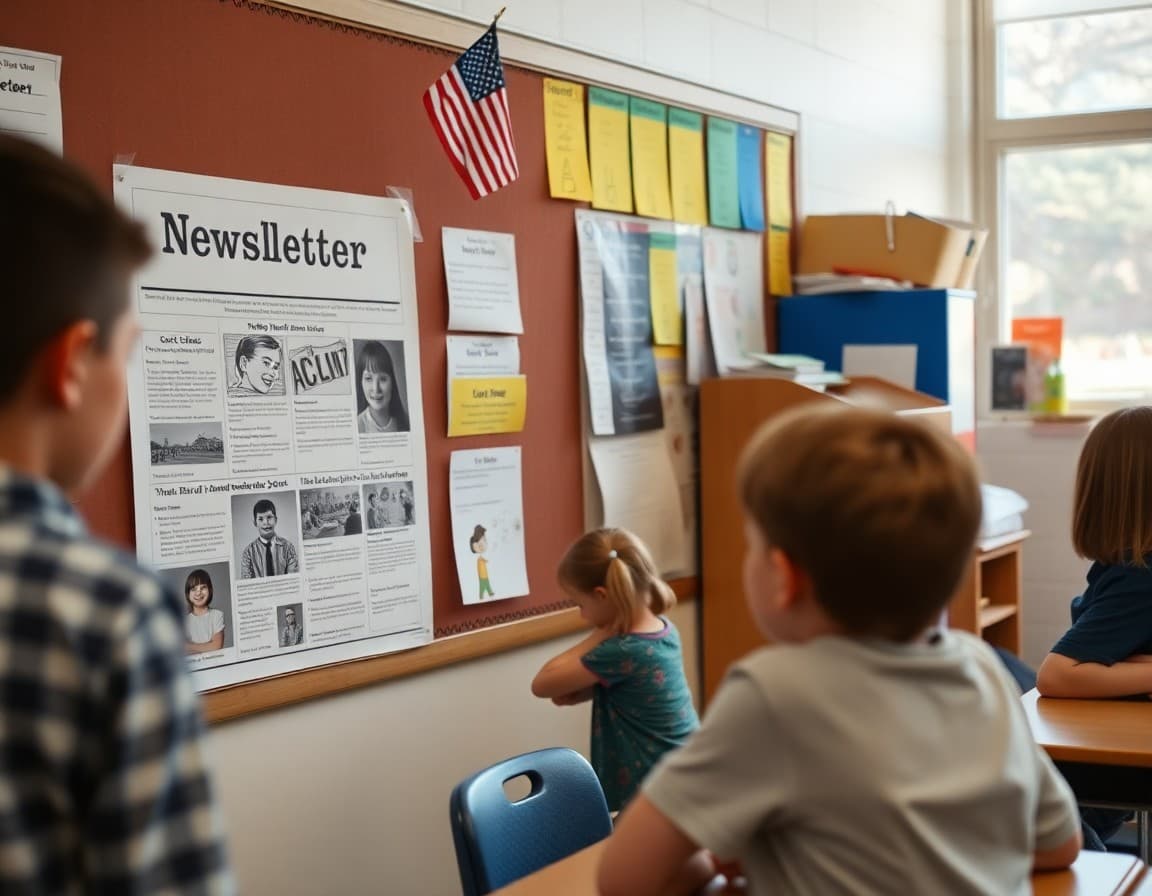
Kansas elementary schools span some of the most geographically and culturally varied communities in the Midwest -- from Wichita's urban diversity to the Spanish-speaking meatpacking communities in Garden City and Liberal to the small farming towns of northwest Kansas. A good elementary newsletter works across that range by being specific about what students are learning, clear about upcoming assessments, and accessible to the families whose primary language may not be English. This guide covers what Kansas elementary newsletters should include and how to structure them for year-round use.
Kansas Academic Standards and Newsletter Content
Kansas adopted Kansas Academic Standards for ELA, math, and other subjects that align with but are distinct from Common Core. A monthly newsletter section that explains which standards students are currently working toward -- in parent-friendly language -- helps families understand why certain homework activities look the way they do. "This month in 4th grade ELA, we are working on comparing and contrasting how two texts on the same topic present different information. This is a Kansas Academic Standard for 4th grade and directly supports the kind of reading students will do on the Kansas Assessment in spring. Ask your child to compare two books or articles they have both read."
Kansas Assessment in Grades 3-5: Preparing Families Early
Kansas administers its annual assessment (formerly Kansas Assessment Program, now aligned with the National Assessment) to students in grades 3-8. The spring testing window typically runs from March through May. Elementary families in grades 3-5 need newsletter coverage starting in January. Many Kansas families, particularly those in communities where standardized testing culture is less familiar, benefit from a plain-language explanation of what the Kansas Assessment measures, what scores mean, and what home preparation looks like. A February newsletter that covers these basics prevents the last-minute family anxiety that comes when testing begins without warning.
Newsletter Structure for Kansas K-5
A practical structure for Kansas elementary newsletters:
- Classroom update: current units in ELA, math, science/social studies in 2-3 sentences
- Reading update: (K-3) current grade-level target and what families can do
- Assessment preparation: (grades 3-5, January-May) Kansas Assessment timeline and support
- Important dates: state assessment windows, school events, early release days
- One action item: the single most important thing families need to do this month
Southwest Kansas: Communicating with Meat Processing Community Families
Kansas's meatpacking communities in Garden City, Liberal, Dodge City, and Emporia have large Spanish-speaking populations, many from Mexico and Central America. These families often have limited formal schooling and work demanding schedules in processing plants that run multiple shifts. A newsletter that reaches these families needs Spanish translation of all key sections, simple language at approximately a 5th-grade reading level, and awareness that many parents may have limited literacy in Spanish as well as English. Including visual cues -- bold text for dates, bullet points for action items -- helps readers with limited literacy extract the most important information efficiently.
Template Excerpt: February Kansas 3rd Grade Newsletter
A sample opening section:
"February newsletter. Kansas Assessment testing for 3rd graders begins March 25. We have been preparing all year, and this month we focus on practice reading passages and timed math problems. The best preparation is 20 minutes of reading every evening and a good night's sleep during test week. If your student is anxious about tests, remind them that this test helps us understand how to teach better -- it does not affect their grade. I will send home a complete test schedule on March 10. Reading benchmarks from the January assessment are going home Friday. Please contact me if your child scored below the grade-level target."
Reaching Kansas's Diverse Elementary Families
Beyond the Spanish-speaking southwest Kansas communities, Wichita USD 259 serves one of the most diverse student populations in the region -- with significant Burmese, Somali, Vietnamese, and other communities in addition to Latino families. For Wichita teachers, knowing which languages your specific school community speaks is essential before deciding what to translate. Your school's EL coordinator can provide language demographics. For Garden City and Liberal schools, Spanish is the overwhelming priority -- invest your translation resources there rather than spreading them thin across many languages.
Building a Consistent Kansas Elementary Newsletter Practice
Consistency is what makes newsletters useful rather than just occasional. Kansas elementary teachers who send newsletters reliably each week or month build family habits -- families begin looking for the update and acting on what it contains. Building that habit requires a template that saves your format, a fixed production day on your calendar, and a tool that does not require starting from scratch each time. The goal is to spend your newsletter time on content, not on formatting. A weekly or monthly newsletter that takes fifteen minutes to produce is sustainable; one that takes two hours is not.
Get one newsletter idea every week.
Free. For teachers. No spam.
Frequently asked questions
What should a Kansas elementary school newsletter include?
Kansas elementary newsletters should cover current academic units aligned to Kansas Academic Standards, upcoming Kansas Assessment dates for grades 3-5, school events, homework expectations, and family involvement opportunities. Kansas's early literacy emphasis through the Kansas Early Childhood Literacy Initiative makes K-3 reading benchmark communication especially important. A standing 'reading update' section in primary grade newsletters helps families track progress toward grade-level targets.
How often should Kansas elementary teachers send newsletters?
Weekly newsletters work well for K-2 classrooms in Kansas, where reading benchmark tracking and sight word lists are high-value content for families. Grades 3-5 can manage with twice-monthly or monthly newsletters. Kansas districts vary in their communication expectations from large urban districts like Wichita USD 259 to small rural districts in Barton or Comanche County. Check your district's family engagement policy for any specific requirements.
Does Kansas have requirements for elementary school newsletters?
Kansas does not have a state law mandating a specific newsletter format, but Title I schools in Kansas must have a written family engagement plan that describes how the school communicates with families. The Kansas Department of Education's family engagement framework encourages regular, substantive communication at all grade levels. Many Kansas districts have their own communication guidelines that teachers should check.
What languages matter for Kansas elementary newsletters?
Spanish is the most widely needed language for Kansas elementary newsletters, particularly in Garden City, Liberal, Dodge City, Emporia, and parts of Wichita and Kansas City. Kansas's meat processing industry has created significant Spanish-speaking communities in southwest Kansas, particularly in Finney County (Garden City) and Seward County (Liberal). These communities have high proportions of families with limited English and limited formal schooling who benefit significantly from Spanish-language school communication.
Is there a simple tool for Kansas elementary teachers to send newsletters?
Daystage is a practical option for Kansas elementary teachers who want professional newsletters without design work. A reusable template reduces monthly production time significantly. For Kansas teachers in rural districts without dedicated communications staff, a self-contained newsletter tool that handles delivery and tracking is especially useful during busy assessment seasons.

Adi Ackerman
Author
Adi Ackerman is a former classroom teacher and curriculum writer with 8 years in K-8 schools. She writes about school communication, parent engagement, and what actually works in real classrooms.
More for Guides
Ready to send your first newsletter?
3 newsletters free. No credit card. First one ready in under 5 minutes.
Get started free