

Georgia Elementary School Newsletter Guide for Teachers
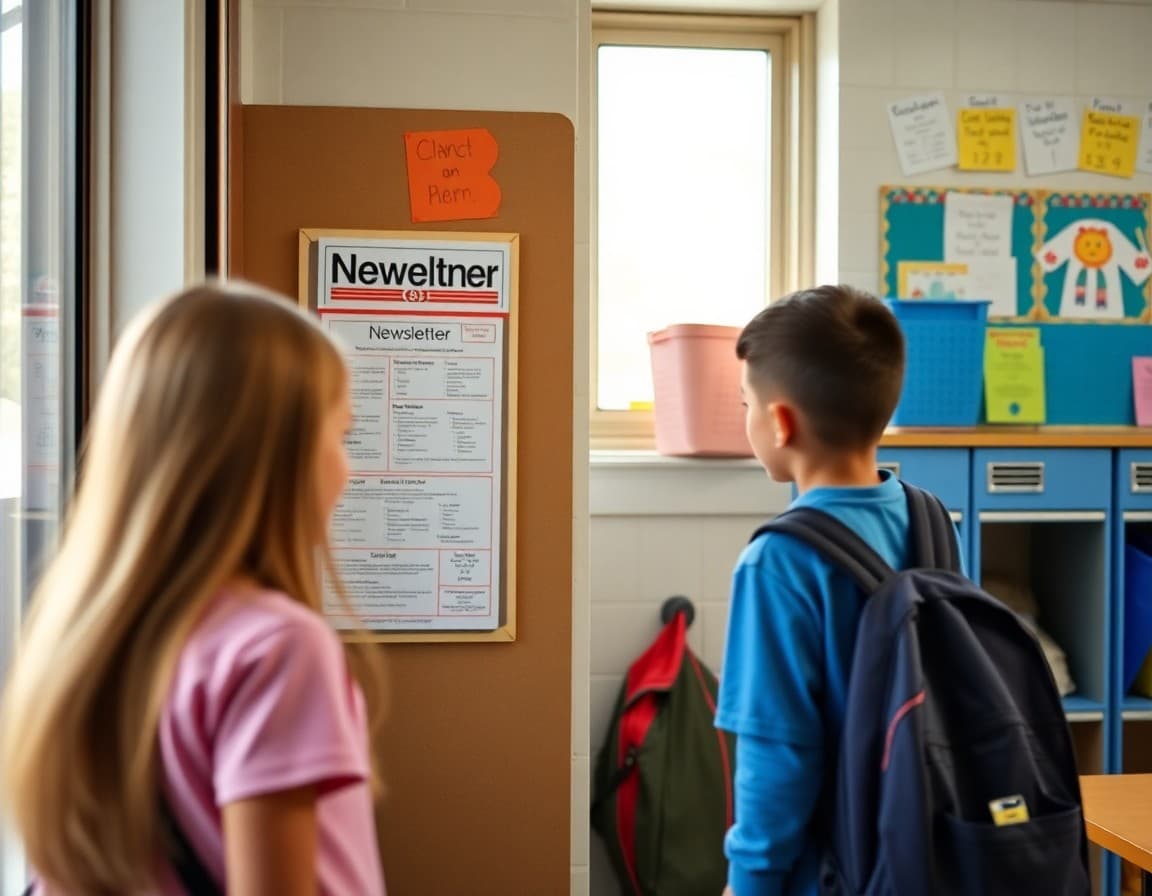
Georgia elementary teachers face a specific communication challenge: families of K-5 students want frequent, specific updates, but teachers have limited time to produce them. A newsletter that runs on a clear template and covers the right topics each week or month solves that problem without adding hours to your workday. This guide covers what Georgia elementary newsletters should include, how to structure them, and how to make them work for the diverse families in your classroom.
Georgia Elementary Academic Standards and What to Communicate
Georgia's K-12 academic standards (the Georgia Standards of Excellence) give elementary teachers a natural framework for newsletter content. Each month, a brief note on which standards students are working on helps families understand why certain homework assignments or reading activities are being sent home. For example: "This month in math, we are building fluency with multiplication facts, which is a Georgia Standards of Excellence requirement for 3rd grade. Timed fact practice at home for 5-10 minutes helps significantly." That kind of specificity turns abstract state standards into something families can actually act on.
Georgia Milestones: Preparing Families Without Creating Panic
The Georgia Milestones Assessment System is a major annual event for grades 3-5 (and end-of-course exams for secondary). Elementary families need to hear about Milestones preparation starting in January, not just the week before the test window in April or May. A monthly newsletter section called "Milestones Update" can carry this information piece by piece: in January, explain what Milestones tests cover; in February, share practice resources; in March, give logistics like test dates and what students should bring. By the time the test arrives, families are informed rather than anxious.
The Structure That Works for Georgia Elementary Newsletters
A structure that works across K-5:
- This week/month in class: 2-3 sentences on current units in ELA, math, and science/social studies
- Homework and reading: what to expect and how families can help
- Important dates: school events, early release days, Milestones windows
- Volunteer and involvement opportunities: specific asks, not just a generic "we need help"
- Resource or tip: one concrete strategy families can use at home this week
Template Excerpt: A Georgia Third-Grade February Newsletter
Here is an example opening section:
"February is a great month for reading. We are starting our informational text unit, and students will be practicing how to identify main idea and supporting details -- a key Georgia Standards of Excellence skill for 3rd grade. Our Milestones test window opens April 21. I'll send a full prep guide home in March, but for now, the best preparation is 20 minutes of independent reading each evening. Our class library has informational books students can borrow anytime."
Title I Family Engagement Requirements in Georgia
Georgia has hundreds of Title I schools, particularly in rural areas and metro Atlanta. Title I schools must have a school-parent compact and a written family engagement policy. While newsletters are not specifically mandated, they are one of the most practical tools for meeting the "regular communication" expectation in Title I plans. If your school is a Georgia Title I school, confirm with your principal what documentation is required and whether newsletter archives count toward your family engagement record-keeping.
Making Your Newsletter Work for Multilingual Georgia Families
The Atlanta metro area includes some of the most linguistically diverse school populations in the Southeast. Gwinnett County, for example, has students speaking over 100 languages. For elementary newsletters, Spanish translation is the highest-priority investment. A parent who receives your newsletter in their home language is far more likely to respond to requests, attend conferences, and support homework routines. If full translation is not feasible, translate the subject line, dates, and the one action item you most need families to act on.
Building Consistency: A Georgia Elementary Newsletter Calendar
Inconsistent newsletters frustrate families. If you send one in September, skip October, and then send two in November, families stop looking for them. Build a simple content calendar in August with your newsletter send dates marked for the entire year. Align it with Georgia's school calendar -- avoid sending newsletters on early release days or during holiday weeks. A predictable monthly or weekly schedule, combined with a tool that saves your template between issues, makes consistency achievable even during the busiest parts of the school year.
Get one newsletter idea every week.
Free. For teachers. No spam.
Frequently asked questions
What should a Georgia elementary school newsletter include each month?
A monthly Georgia elementary newsletter should cover the current academic unit, upcoming Milestones assessment preparation, school events, volunteer opportunities, and any behavior or attendance notes relevant to the whole class. For K-2, reading benchmark progress is a priority topic. For grades 3-5, writing and math standard updates help families understand where their child is relative to Georgia's CCGPS standards.
How often should Georgia elementary teachers send newsletters?
Weekly newsletters work well for K-2 classrooms where families need frequent updates on reading groups and sight word practice. Grades 3-5 can often manage with a twice-monthly newsletter. The Georgia Department of Education's family engagement guidance encourages consistent, predictable communication, so whatever frequency you choose should be maintained throughout the year.
Does Georgia have specific requirements for elementary school communication?
Georgia's Title I schools are required under federal law to have a written parent and family engagement policy that describes how the school will communicate with families. While there is no state mandate specifying newsletter formats, Georgia's Every Student Succeeds Act plan emphasizes family engagement at the elementary level, particularly around early literacy. Most Georgia districts have their own communication frequency guidelines in their family engagement plans.
How can Georgia elementary teachers make newsletters accessible to all families?
Georgia's elementary schools serve families speaking Spanish, Vietnamese, Korean, Chinese, and other languages, particularly in metro Atlanta districts. Translating the newsletter's subject line, key dates, and homework instructions makes a significant difference for families with limited English. Also consider font size and reading level -- aim for a 6th-grade reading level for newsletter text even when writing for parents, as this improves clarity for all readers.
What is the easiest way to send weekly newsletters as a Georgia elementary teacher?
A template-based tool dramatically reduces the time required. Daystage lets you set up a reusable newsletter format so each week you are adding current content into a consistent structure rather than redesigning from scratch. Many Georgia elementary teachers save 30-40 minutes per newsletter once they have a stable template running.

Adi Ackerman
Author
Adi Ackerman is a former classroom teacher and curriculum writer with 8 years in K-8 schools. She writes about school communication, parent engagement, and what actually works in real classrooms.
More for Guides
Ready to send your first newsletter?
3 newsletters free. No credit card. First one ready in under 5 minutes.
Get started free