

Florida Elementary School Newsletter Guide for Teachers
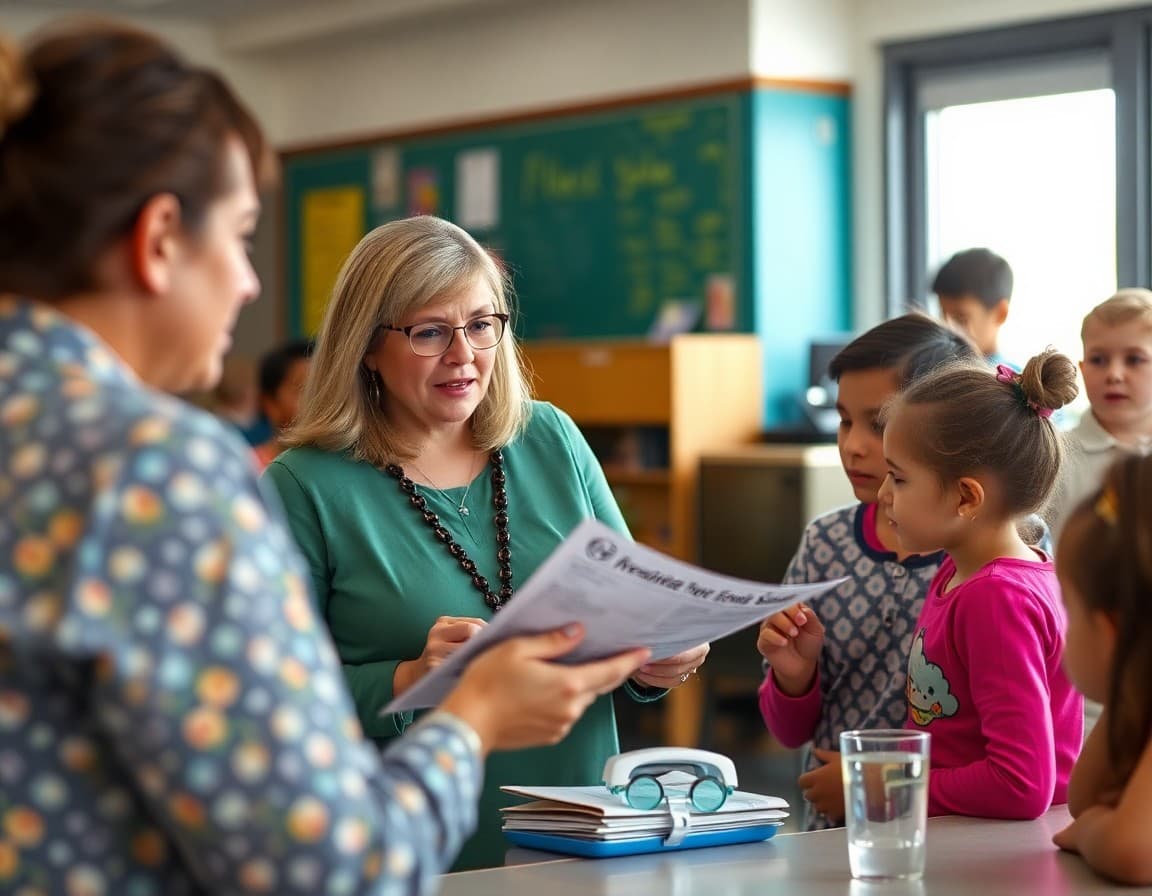
Florida elementary teachers are communicating within a high-accountability reading environment where 3rd grade reading outcomes have real consequences for students. A newsletter that explains testing, reading requirements, and home practice clearly -- before crises develop -- is not optional in Florida's current policy landscape. It is essential.
Communicate the 3rd Grade Reading Requirement Early
Florida's reading retention policy requires schools to retain 3rd grade students who do not demonstrate reading proficiency. The primary measure is the ELA FAST assessment, and students who score at Level 1 are subject to retention unless they qualify for a good cause exemption. This requirement is not new but has been updated under recent Florida legislation. Your newsletter to 3rd grade families should explain this requirement in the fall, describe what reading proficiency means in specific terms, and detail what interventions the school provides for students who are not on track. Families who receive this information in September have months to support additional practice at home before the spring assessment window.
Explain Florida's Three-Per-Year FAST Assessment
Florida's FAST assessment is administered three times per year in ELA and math, unlike the once-per-year assessments in most states. This schedule means your newsletter should address testing three times: in the fall before the first window, in the winter before the second window, and in spring before the third. For each window, briefly explain what is being assessed, what the performance levels mean for a 3rd grade reading retention context, and what families can do to support their student at home. Three testing windows also means three opportunities for progress data -- frame them as diagnostic tools rather than repeated high-stakes tests.
Connect B.E.S.T. Standards to Home Learning
Florida's B.E.S.T. standards for ELA focus on writing, close reading of complex text, and knowledge-building. In your newsletter, translate these into specific home activities: "We are working on Florida B.E.S.T. standard ELA.3.R.1.1, identifying the main idea of a text -- ask your child to summarize in one sentence what any article or video they saw this week was mostly about." This translation makes the standard actionable without requiring families to read the standards document.
A Weekly Florida Elementary Template
Week of [Date] -- [Teacher]'s Class
What we're learning: [ELA B.E.S.T. standard] and [Math]
Reading focus: [Current book or skill connected to retention standard if grade 3]
Try at home: [One specific activity]
FAST note: [If testing window approaching]
Upcoming dates: [Events]
Contact: [Email and best contact time]
Reach South Florida's Diverse Communities
South Florida's elementary schools serve extraordinary diversity: Miami-Dade's Cuban American community with multi-generational roots, newer Venezuelan and Colombian communities, Puerto Rican families throughout the Orlando and Tampa areas, Haitian Creole-speaking families in Miami-Dade and Broward, and Brazilian Portuguese speakers in South Florida. Each community has distinct communication preferences and cultural contexts. Spanish translations are essential in most South Florida schools, but Haitian Creole is equally important in many Miami-Dade communities. Understanding which language communities your specific school serves determines which translation resources to request.
Address Florida's Heat Safety and Hurricane Protocols
Florida's school year begins in August with temperatures and humidity that significantly affect outdoor activities. Your back-to-school newsletter should cover heat safety protocols: when outdoor recess is limited, what students should bring for hydration, and how to dress for Florida's combination of outdoor heat and indoor air conditioning. For schools in hurricane-prone areas, the newsletter should also explain the school's emergency communication system for severe weather events and how closure decisions are communicated to families.
Highlight Florida-Specific Family Resources
Florida's school choice system includes charter schools, magnet programs, Hope Scholarships for students in certain circumstances, and Family Empowerment Scholarships for students with special needs. A newsletter that accurately describes these options, without advocating for or against any particular choice, gives families information they can use when making school enrollment decisions. For Title I schools, information about the Title I transfer option and supplemental services should be communicated clearly as required under ESSA.
Maintain a Consistent Newsletter Archive
Post newsletters to your school's parent portal or class website. Florida's high student mobility rate in some communities -- particularly in areas with significant seasonal or migrant worker populations -- means families arrive mid-year needing to catch up on program information. An archive allows them to do that without requiring individual teacher briefings. For schools serving migrant agricultural families, the Migrant Student Program coordinator can help ensure your newsletter reaches families who move between Florida and northern states seasonally.
Get one newsletter idea every week.
Free. For teachers. No spam.
Frequently asked questions
What is Florida's third grade reading retention policy and how should elementary newsletters address it?
Florida's current literacy law, updated under HB 1467, requires that 3rd grade students who do not demonstrate reading proficiency on the Florida Assessment for Student Thinking (FAST) or the Florida Reading Diagnostic Assessment may be retained in 3rd grade. Students who receive a Level 1 score on the ELA FAST assessment are subject to retention unless they qualify for a good cause exemption. Your newsletter should explain this requirement to 3rd grade families early in the year, not in April when results arrive.
What assessments should Florida elementary newsletters cover?
Florida uses the FAST (Florida Assessment for Student Thinking) assessment in ELA and math, administered three times per year in grades 3-10. Florida also uses the Florida Reading Diagnostic Assessment (FRDA) in grades K-3. Before each assessment window, your newsletter should explain what is being measured and what the results will be used for. The three-times-per-year FAST schedule means families should receive testing information three times, not just once in the spring.
What is Florida's BEST Standards curriculum and how should newsletters explain it?
Florida replaced Common Core with the B.E.S.T. (Benchmarks for Excellent Student Thinking) standards for ELA and math. B.E.S.T. has some differences from Common Core that families who have older children in school may notice. Your newsletter can reference B.E.S.T. by name and explain how the standards connect to what students are doing in class.
How should Florida elementary teachers reach Spanish-speaking families?
Florida has one of the largest Spanish-speaking populations in the US, concentrated in Miami-Dade, Broward, Palm Beach, Orlando, and Tampa. Cuban, Puerto Rican, Venezuelan, Colombian, Dominican, and other Latin American communities each have distinct cultural communication preferences. Providing Spanish translations of key newsletter sections is standard practice in most South Florida and Central Florida elementary schools. Your district's bilingual resources and community liaisons can assist with translation review.
Does Daystage work for Florida elementary school newsletters?
Yes. Daystage lets Florida elementary teachers send formatted newsletters to families with event calendars, learning updates, and testing information. It works on any device, which is important for teachers who finalize newsletters in the evening or on weekends.

Adi Ackerman
Author
Adi Ackerman is a former classroom teacher and curriculum writer with 8 years in K-8 schools. She writes about school communication, parent engagement, and what actually works in real classrooms.
More for Guides
Ready to send your first newsletter?
3 newsletters free. No credit card. First one ready in under 5 minutes.
Get started free