

California Elementary School Newsletter Guide for Teachers
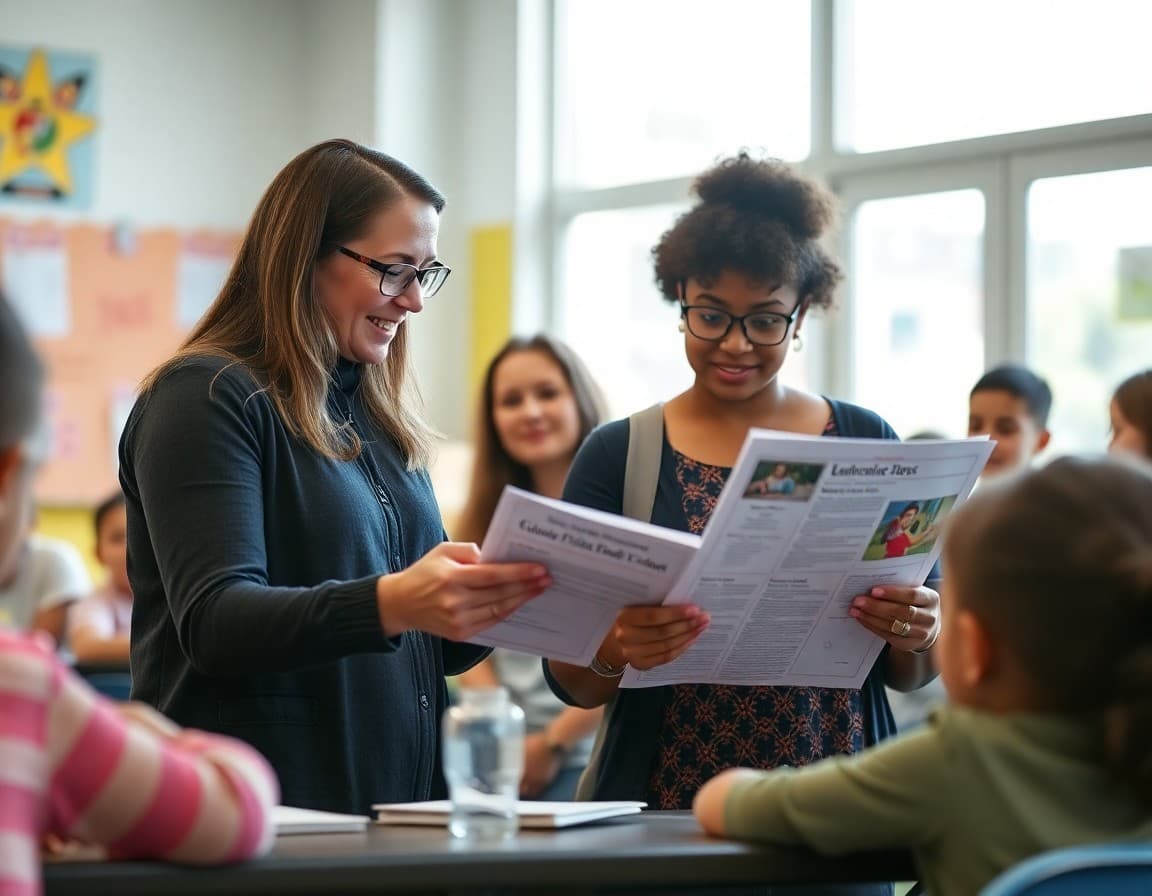
California elementary teachers operate in the most linguistically diverse state in the US, with over 1.1 million English learner students and communities that span dozens of cultural contexts. A newsletter that works for your specific school community -- not a generic California template -- will reach more families more effectively.
Understand California's Family Engagement Framework
California's Local Control Funding Formula requires districts to demonstrate meaningful parent engagement through the LCAP process. Title I schools have additional requirements under ESSA. As an elementary teacher, your newsletter is part of your school's parent engagement evidence. Understanding what your school's LCAP commitments include for parent communication -- specific languages, specific channels, specific frequency -- helps you align your newsletter with the school's documented goals rather than working independently.
Address California's Linguistic Diversity Directly
California has the largest ELL population in the US, and many elementary schools in Los Angeles, the Central Valley, the Bay Area, and other communities serve majority non-English-speaking families. Before writing your newsletter, identify the three to five home languages most common in your class through your school's home language survey. Prioritize translation for Spanish first (largest population), then address your school's next most common language communities. California's Department of Education provides translated parent notice templates that can be adapted for newsletter content.
Connect to California Common Core Standards
California adopted the Common Core State Standards for ELA and math. In your newsletter, translate standard references into home practice: "We are working on California Standard CCSS.ELA-Literacy.RL.3.3, identifying characters, settings, and events in a story -- ask your child to tell you about a character from their current reading book and what that character wants most." This connection requires knowing which standard you are focusing on but takes under two minutes to translate into family language once you have the habit.
A Weekly California Elementary Template
Week of [Date] -- [Teacher]'s Class
What we're learning: [ELA standard] and [Math standard] in plain language
Try at home: [One specific activity]
CAASPP note: [If testing is approaching, one relevant sentence]
Upcoming dates:
- [Date]: [Event]
Languages: [Spanish version below if applicable]
Contact: [Email]
Communicate CAASPP Testing Accurately
CAASPP testing in California generates significant family questions, particularly around opt-out rights and how scores affect students. Your newsletter should explain that California families have a right to information about the assessment but that opting out means the student's results will not be included in school accountability data. For families asking about testing preparation, recommend consistent reading practice, adequate sleep, and regular breakfast as the most effective preparation -- and note that test anxiety is real and that encouraging students without pressuring them is the most useful approach families can take.
Cover California Safety Protocols Relevant to Your Region
California elementary schools deal with diverse safety concerns depending on location: earthquake preparedness is universal, wildfire evacuation is critical for schools in fire-prone areas, and extreme heat protocols matter in the Central Valley and Inland Empire. Your fall newsletter should cover the emergency procedures most relevant to your specific location, how the school communicates closures and early dismissals (alert system, local radio, school app), and what families should ensure their student always has at school (emergency contact information, any medical supplies).
Address California's LCAP Parent Engagement Opportunities
California's LCAP process includes formal parent engagement opportunities through School Site Councils, English Learner Advisory Committees (ELAC), and district-level committees. Many families do not know these structures exist or how to participate. Including a brief note in your newsletter each fall about when School Site Council meets and how families can attend creates an accessible on-ramp to formal participation without requiring families to independently discover these channels.
Build and Maintain a Newsletter Archive
Post newsletters to your class website or school parent portal. California's high mobility rate in some communities means families arrive mid-year needing to catch up on program information. An archive allows them to do that without requiring teacher time for individual briefings. For Title I schools with significant populations of families who access school information on smartphones, ensure your newsletter is mobile-readable and that the archive link works on a phone without requiring a desktop browser or specific app.
Get one newsletter idea every week.
Free. For teachers. No spam.
Frequently asked questions
Does California require family communication for elementary schools?
California's Local Control Funding Formula (LCFF) requires districts to engage parents meaningfully, particularly through the Local Control and Accountability Plan (LCAP) process. Title I schools have additional federal parent engagement requirements. While newsletters are not individually mandated, regular written communication is part of demonstrating the family engagement that LCFF and federal law require. Check your district's parent engagement policy and your school's LCAP commitments.
What should California elementary newsletters include?
California Common Core State Standards learning updates, CAASPP assessment preparation information, school safety and emergency protocols, information about LCFF parent engagement opportunities, and bilingual content for California's large ELL population. California's diversity means that newsletters often need to address multiple cultural contexts and home languages simultaneously.
How many languages do California elementary schools need to communicate in?
California has ELL students from over 60 home language backgrounds, but Spanish, Cantonese, Mandarin, Vietnamese, Filipino/Tagalog, and Korean represent the majority. Your school's specific home language survey data will identify which languages require translation resources. California's Department of Education provides translated parent notification templates in these languages as required under Proposition 58.
How should California elementary teachers communicate CAASPP testing?
CAASPP (California Assessment of Student Performance and Progress) includes the Smarter Balanced Assessments for ELA and math in grades 3-8 and 11, the California Science Test, and the ELPAC for ELL students. Before each testing window, your newsletter should explain which test is coming, what it covers, and what families can do to support their student without causing test anxiety. Families who receive accurate testing information are less likely to opt students out based on misconceptions.
Can Daystage help California elementary teachers with multilingual newsletters?
Yes. Daystage lets California elementary teachers create and send newsletters to families. Teachers who maintain Spanish and English versions can send them to separate family groups or combine them in one document. The platform's simple formatting makes managing multilingual communication less time-intensive.

Adi Ackerman
Author
Adi Ackerman is a former classroom teacher and curriculum writer with 8 years in K-8 schools. She writes about school communication, parent engagement, and what actually works in real classrooms.
More for Guides
Ready to send your first newsletter?
3 newsletters free. No credit card. First one ready in under 5 minutes.
Get started free