

Air Quality Alert School Communication: Keeping Students Safe
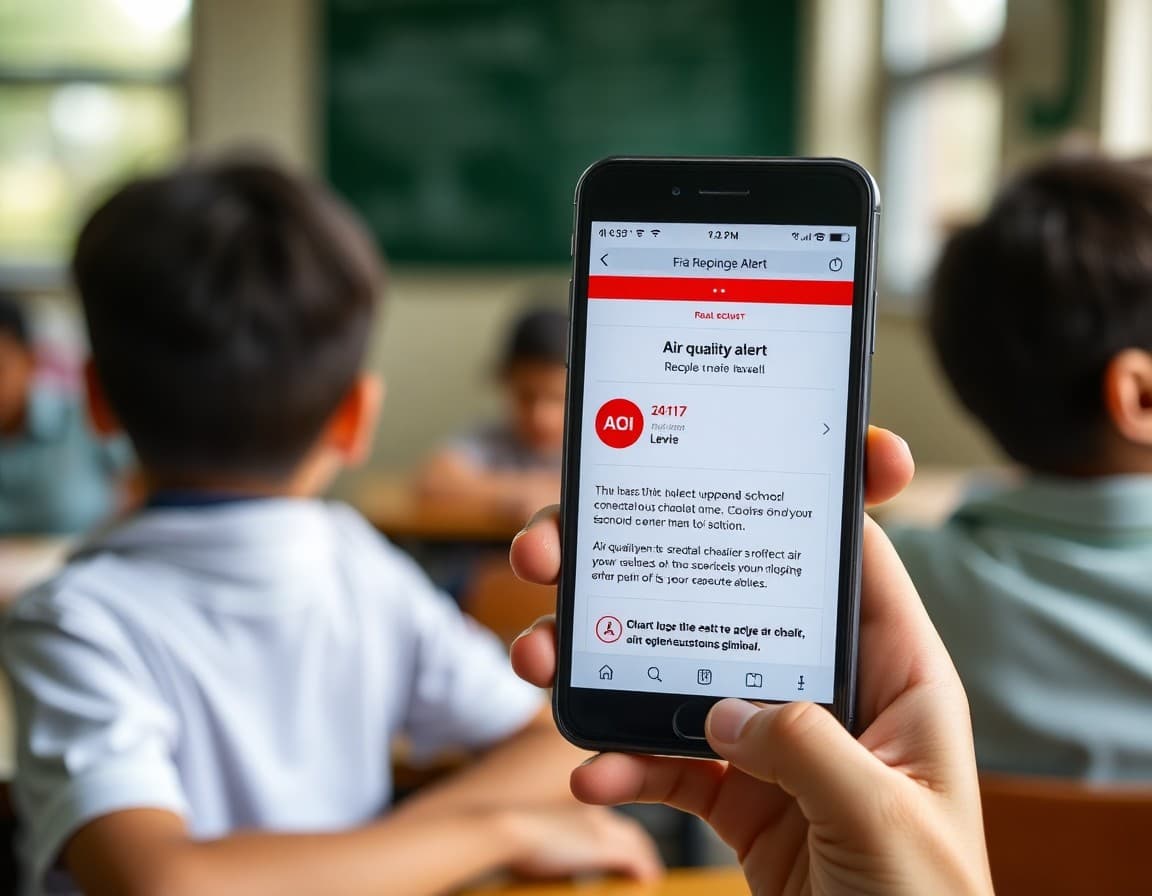
Wildfire smoke has moved into the region overnight. The air quality index is at 175 and rising. School may need to close or move fully indoors. Families are waking up to hazy orange skies and checking their phones. What do you send, and how do you explain a health risk that many families have never navigated before?
Why Air Quality Communication Is Different
Snow day closures are intuitive: families can see the snow and understand the hazard. Air quality closures are less intuitive, especially in regions where wildfire smoke is new or infrequent. Your notification needs to do more than announce a closure. It needs to briefly explain why the air is dangerous in language parents can act on, even those who have never looked at an AQI reading before.
Translating AQI into Plain Language
Do not assume families know what an AQI number means. "Today's air quality index is 175" means nothing to most parents. "Air quality today is in the 'unhealthy' range due to wildfire smoke. Breathing outdoor air today can cause symptoms even in healthy individuals, and is particularly harmful for children with asthma or breathing conditions." That sentence communicates the risk in terms families can act on without a background in environmental health.
The School's Response in Concrete Terms
Tell families specifically what the school is doing in response to the air quality alert. Are all outdoor activities cancelled? Is the building being kept sealed with windows closed? Are HVAC systems running air filtration? Is the school moving to remote learning? Concrete descriptions of the school's actions reassure families that the school is taking the situation seriously and has a plan.
The Air Quality Notification Template
"[SCHOOL NAME] is [CLOSED / operating with indoor-only programming] on [DATE] due to unhealthy air quality. The air quality index in our area is [NUMBER], which [EPA category description]. [Outdoor activities are cancelled / School is fully closed]. Students with asthma or breathing conditions should take extra precautions. Air quality is monitored at airnow.gov. We will provide an update by [TIME]. Questions: [CONTACT]."
When School Is Open but Outdoor Activities Are Restricted
On days when the AQI is elevated but not high enough to close the school, communicate clearly about outdoor restrictions. "School is open today, but all outdoor activities including recess, PE outdoors, and outdoor clubs are cancelled due to air quality. Students should stay inside throughout the day." Families whose children have asthma may want to keep them home regardless, and acknowledging that is appropriate: "If your child has a respiratory condition and you prefer to keep them home today, please let us know."
Ongoing Air Quality Situations
When poor air quality persists for multiple days, send a daily morning update rather than making families check news sources themselves. The update can be brief: today's AQI, the school's policy for today, and whether conditions are expected to improve. Families managing children with respiratory conditions need reliable daily information from the school to make decisions. Providing that information builds trust and reduces the volume of individual calls and emails to the office.
Directing Families to Reliable Resources
Include a link to airnow.gov, the EPA's official air quality tracking resource, in every air quality notification. Families who want to monitor conditions themselves should have a reliable source. Avoid linking to news sources that may cover the situation with a sensationalist framing that increases anxiety beyond what the facts warrant. Government health agency resources are the right reference for a school communication about a public health matter.
Get one newsletter idea every week.
Free. For teachers. No spam.
Frequently asked questions
At what air quality index level should schools typically close?
Many school districts follow EPA guidelines and consider restricting outdoor activities when the AQI reaches 101 (unhealthy for sensitive groups), cancel all outdoor activities at 151 (unhealthy for all groups), and consider full closure or remote learning at 201 or above (very unhealthy). Exact thresholds vary by district. Schools in regions with frequent wildfire smoke may have established policies; schools in areas where poor air quality is unusual may need to make case-by-case decisions.
How do you explain air quality to parents who are unfamiliar with AQI?
Keep the explanation simple. "Air quality is unhealthy today due to wildfire smoke in the region. The air quality index is [NUMBER], which means breathing outdoor air can cause health problems, especially for children with asthma or respiratory conditions." Translate the number into plain language rather than expecting families to know what the AQI scale means.
Should air quality notifications mention students with asthma specifically?
Yes, but carefully. Acknowledge that students with asthma or respiratory conditions are at higher risk, and advise those families to take additional precautions. Do not identify or single out specific students. The communication is to all families, with an additional note for those whose children are more vulnerable.
What should a school do if air quality improves during the school day?
If outdoor activities were restricted but conditions improve, send a brief update before resuming outdoor time. Do not simply open outdoor spaces without communication. Families who were told outdoor activity was suspended need a notification that conditions have improved enough to change the policy for the day.
How does Daystage support urgent air quality notifications?
Daystage lets you send to your full parent list quickly with a clear subject line and short message. For air quality notifications, the same short format works: what is happening, what the school is doing, what families should know. A pre-built air quality notification template means you can adapt and send in minutes when conditions change quickly.

Adi Ackerman
Author
Adi Ackerman is a former classroom teacher and curriculum writer with 8 years in K-8 schools. She writes about school communication, parent engagement, and what actually works in real classrooms.
More for Guides
Ready to send your first newsletter?
3 newsletters free. No credit card. First one ready in under 5 minutes.
Get started free