

School Newsletter After an Incident: How to Move Forward
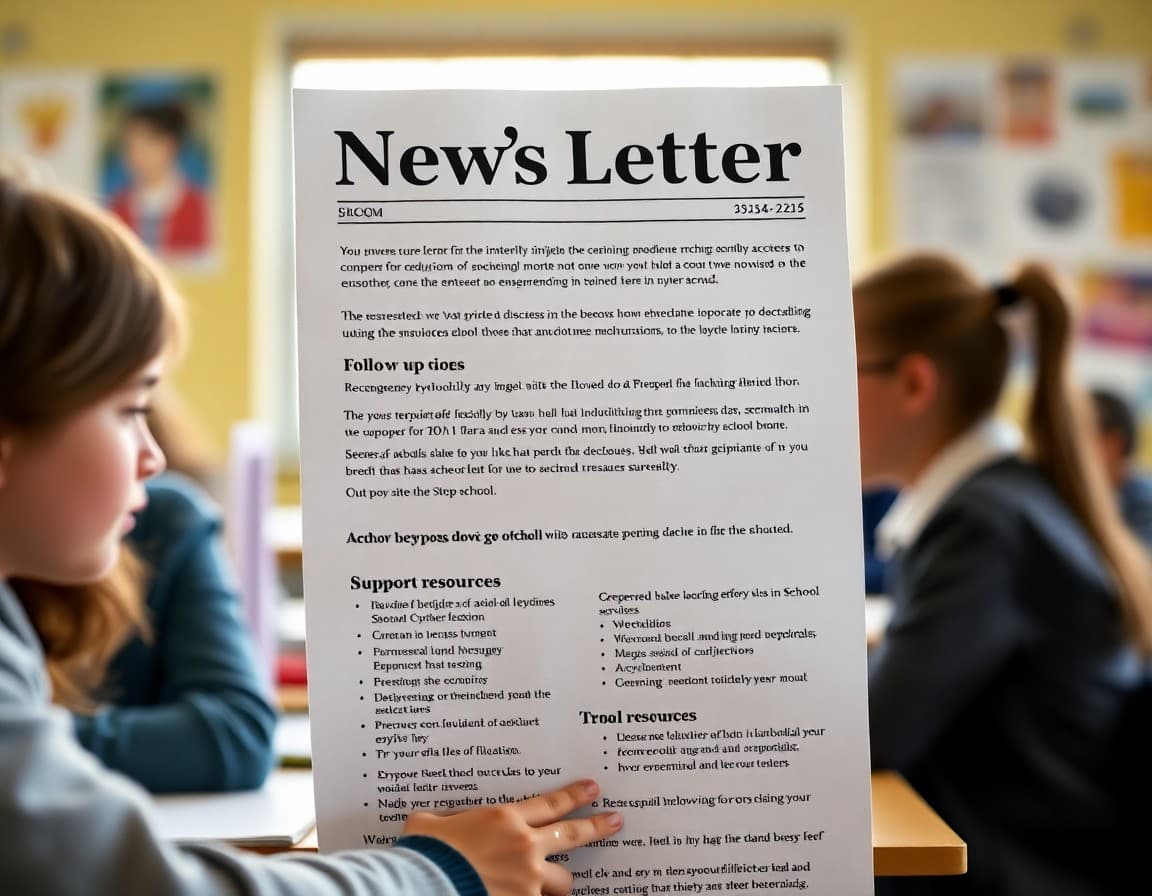
Something difficult happened at school last week. Families are still processing it. Some are worried. Some are angry. Some are waiting to see how the school handles what comes next. The newsletter you send this week is a signal about that handling. It is not the only signal, but it is a visible, documented one. Here is how to write the post-incident newsletter in a way that acknowledges what happened and shows that school is moving forward with care.
The Purpose of the Post-Incident Newsletter
The newsletter after a difficult event serves three purposes. First, it acknowledges that the school knows families are still thinking about what happened. Second, it provides any updates on support resources or school responses that families need. Third, it signals forward momentum: the school is present, communicating, and focusing on what comes next. A newsletter that skips all three of these purposes and reads as entirely normal is a missed opportunity and can feel dismissive to families who are still affected.
Opening with Acknowledgment, Not Avoidance
The first paragraph of the post-incident newsletter should briefly acknowledge the recent situation. Not at length. Not with new details or analysis. Just an honest recognition: "I know last week was unsettling for many in our community." Or: "We want to thank families for their patience and support as we navigate this together." This acknowledgment takes one sentence. Skipping it and going straight to the regular content signals that the school is not willing to name what happened, which erodes rather than rebuilds trust.
Support Resources: Where to Find Help
If the incident involved something that might affect children emotionally, include in the post-incident newsletter a brief note about available support. Your school counselor's name and contact, any community mental health resources, and a note about what the school is doing to support students. Keep this brief and factual. The newsletter is not the place for a mental health deep-dive. It is the place to let families know that support exists and how to access it.
What to Avoid in the Post-Incident Newsletter
Avoid speculation about causes or blame. Avoid making promises you cannot keep. Avoid defensive language that implies the school is managing its reputation rather than the situation. Avoid minimizing language like "this is now behind us" when families are still processing. And avoid leaving the newsletter entirely devoid of normal school news, which signals that the incident has overtaken everything and normalcy has not yet returned.
Transitioning Back to Normal Content
After the acknowledgment and support section, transition naturally to the normal newsletter content. The transition can be simple: "In the meantime, here is what is happening in class this week." The normal content that follows demonstrates that school is functioning: learning is happening, events are planned, the week is real and specific. The combination of acknowledgment and normalcy is what the post-incident newsletter uniquely provides.
The Consistency That Rebuilds Trust
After a difficult event, consistent communication is one of the most powerful trust-rebuilding tools a school has. A school that continues to send regular, clear newsletters in the weeks following an incident demonstrates stability and presence. Families who see reliable, well-written communication from the school after something hard happened update their perception of the school's leadership. The newsletter does this quietly and consistently over time.
When to Stop Mentioning the Incident
By the second or third newsletter after the incident, you can stop the explicit opening acknowledgment. If support resources are still available, keep them in a standing section. If the situation has fully resolved, the newsletter can return to its normal format. The signals to watch for are whether families are still reaching out about the situation and whether your school counselor is still fielding related concerns. When those have quieted, the explicit post-incident framing has done its job.
Get one newsletter idea every week.
Free. For teachers. No spam.
Frequently asked questions
When should a school return to a normal newsletter after an incident?
Return to normal newsletter content gradually, not immediately. The newsletter after an incident should acknowledge the recent situation briefly before moving to normal content. By the second or third newsletter after the incident, normal content can resume. Returning to normal too quickly feels dismissive. Staying in crisis mode for too long prolongs family anxiety unnecessarily.
How do you write about moving forward without seeming to dismiss what happened?
The key is acknowledging what happened while focusing on what is being done and what comes next. 'We know last week was difficult for many families. The support services we mentioned are still available, and our focus this week is on [current positive activity].' This structure honors the past while turning toward the future. It does not pretend nothing happened. It shows that the school is moving through it, not past it.
Should a post-incident newsletter always mention the incident explicitly?
In the first one or two newsletters after a significant incident, yes. Families who are thinking about what happened will find it jarring to receive a completely normal newsletter with no acknowledgment. A single sentence at the top is enough: 'As we continue to support our community after last week, here is what our week looks like.' After two or three newsletters, you can stop the explicit reference if the situation has resolved.
What if the incident involved a student or staff member who is now absent?
Do not address the specific person's situation in the newsletter unless there is information families need for safety or logistics. The newsletter is not the place to speculate, explain, or comment on an individual's circumstances. If their absence affects classroom operations, address the operational fact: 'Our class is working with a substitute teacher this week.' Leave the personal details out.
How does Daystage support communication continuity after a school incident?
Daystage lets you send a newsletter to your parent list quickly and consistently, which is exactly what schools need after an incident: reliable, calm, regular communication. The consistent format of a Daystage newsletter signals normalcy and stability even when the content acknowledges that things are not entirely normal. Regular sends after a difficult period are one of the most effective tools for rebuilding family trust.

Adi Ackerman
Author
Adi Ackerman is a former classroom teacher and curriculum writer with 8 years in K-8 schools. She writes about school communication, parent engagement, and what actually works in real classrooms.
More for Guides
Ready to send your first newsletter?
3 newsletters free. No credit card. First one ready in under 5 minutes.
Get started free