
Academic Team Win Newsletter Template for Schools
Academic competition wins are exactly the kind of achievement that deserves more attention than they typically get. Athletic wins routinely make it onto school marquee signs and into newsletters the next morning. Academic team wins often get a brief mention in the weekly bulletin or nothing at all.
This template and guide helps you give academic achievement the same visibility that sports wins get, with a newsletter format that is fast to produce and specific enough to actually mean something.
Lead with the Win, Not the Background
Open the newsletter with the actual result. "The Eastview Science Olympiad team won first place at the Regional Invitational on April 19, defeating 23 other schools" is how to start. Save the explanation of what Science Olympiad is for the second paragraph.
Academic newsletters too often bury the achievement in program context. Families scroll to find the outcome. Give it to them first.
What to Include in the Core Section
After the opening result, include: the competition format in one sentence, the team's overall score or ranking, individual event results if applicable, team member names in full, and coach or advisor names. If there is a state or national competition ahead, note the date and what the team needs to qualify.
For competitions with multiple categories or events, a simple table or bulleted list of event results by name is cleaner than trying to work them into prose.
Sample Newsletter Template Excerpt
Here is a template you can adapt for your own competition:
Subject line: Eastview Science Olympiad Takes First at Regional Invitational
Opening: The Eastview Science Olympiad team finished first at the Regional Invitational on April 19, outscoring 23 competing teams to earn a spot at the State Science Olympiad Championship on May 17 in Columbus.
Competition Results:
Ecology - 1st place (Jordan Lee, Marcus Rivera)
Chemistry Lab - 2nd place (Priya Patel)
Disease Detectives - 1st place (Jordan Lee, Sam Torres)
Overall Team Score: 312 points (First Place)
Team Members: [Full list of names]
Coach: Ms. Ellen Park, Science Department
State Championship: The team will compete at Ohio State University on May 17. Qualifying score needed: top 15 out of 80 teams statewide.
Explaining the Competition for Families Who Are New to It
Not every family knows what Science Olympiad, Academic Decathlon, or MATHCOUNTS is. A brief two-sentence description removes confusion and helps families understand the scope of what their student's team accomplished. Something like: "Science Olympiad is a team competition covering 23 STEM events. Teams have practiced since September and competed in two invitational tournaments before qualifying for regionals."
Photos from the Event
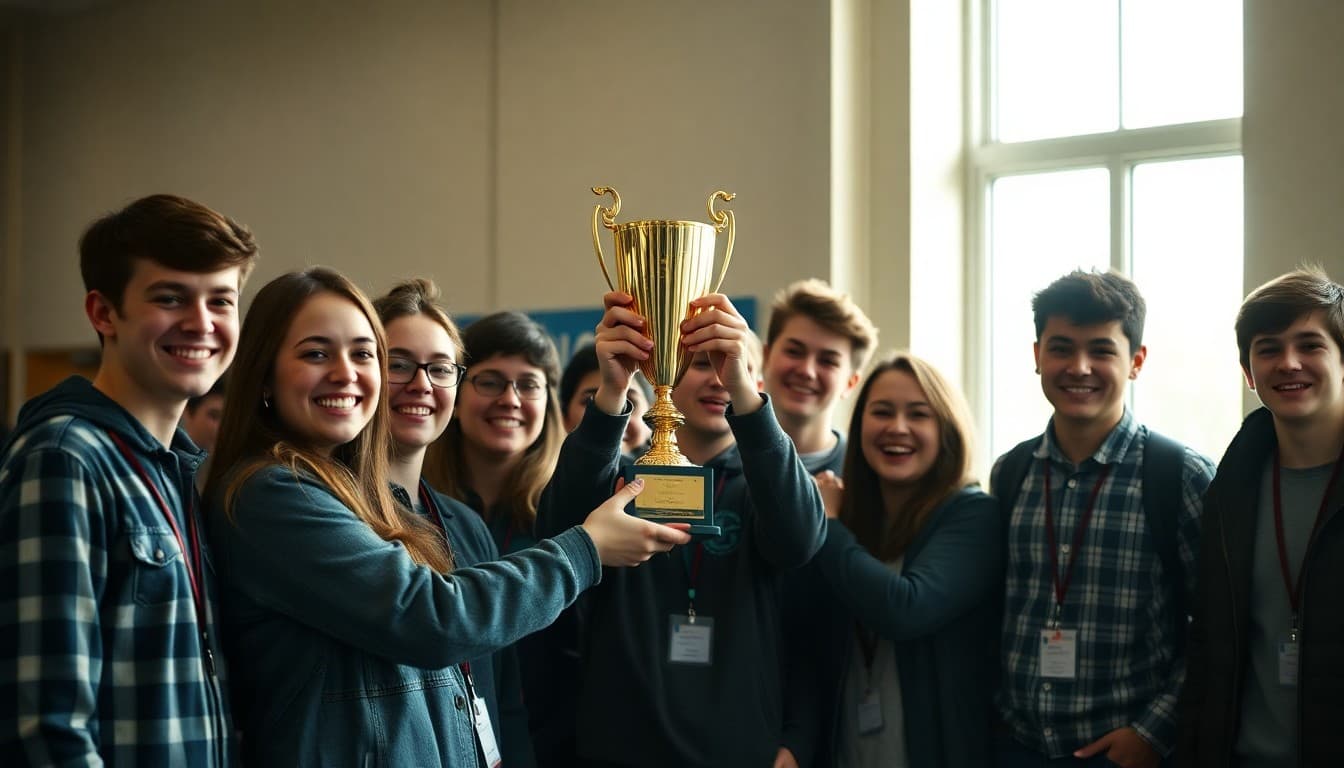
A photo from the competition or from the team posing with their trophy or certificate dramatically increases the newsletter's impact. If a coach or chaperone took photos, use one in the header. If no event photos are available, a photo of the team at school works. Even a photo of the trophy or plaque on its own is better than no visual element.
Acknowledging the Coach and Advisor
Academic competition teams typically practice for months. The coach or faculty advisor invests significant time outside of regular school hours in preparation, travel, and team development. Name them explicitly in the newsletter with their department affiliation. A short quote from the coach about the team's preparation or the result adds warmth without much effort.
Sharing the Newsletter Beyond the School Community
Academic team wins are worth distributing to the district office, the school board newsletter, and local media. Many local papers run brief competition results as community news items. A short press release version of your newsletter, stripped down to competition name, school name, result, and team size, can often be submitted directly to the paper's education reporter or community events editor.
Get one newsletter idea every week.
Free. For teachers. No spam.
Frequently asked questions
What details should an academic team win newsletter always include?
Include the competition name and level (regional, district, state, national), the date and location, your team's placement or score, the names of all team members and coaches, and any individual awards. If there is a next-round competition, include the date and stakes. Families and students who were not present at the competition need these specifics to understand what the team achieved.
How quickly should the newsletter go out after a competition win?
Within 24 to 48 hours is ideal. Academic competition wins generate social media attention and informal communication quickly. A newsletter that arrives while the excitement is still fresh reinforces the achievement with official recognition. A newsletter that arrives a week later feels like an afterthought even if the content is well written.
Should the newsletter explain what the academic competition is?
Yes, briefly. Not all families are familiar with academic decathlon, Science Olympiad, mock trial, or debate competitions. A single sentence describing the competition format gives context without slowing down the announcement. For well-known competitions like a spelling bee, this explanation is less necessary.
How do you handle individual awards within a team competition?
Acknowledge individual awards in a separate section or subsection below the team recognition. If one student won a specific category award or earned a high individual score, name them with the specific award. Be careful not to let individual recognition overshadow the team achievement, particularly for team members who did not win individual awards but contributed equally to the overall result.
Can Daystage help format a competition win newsletter with photos and a results section?
Yes. Daystage lets you build a structured newsletter with a results section, team photo, individual highlights, and a competition schedule for upcoming rounds. You can send it to parents, staff, and your broader community list from the same platform.

Adi Ackerman
Author
Adi Ackerman is a former classroom teacher and curriculum writer with 8 years in K-8 schools. She writes about school communication, parent engagement, and what actually works in real classrooms.
More for Guides
Ready to send your first newsletter?
3 newsletters free. No credit card. First one ready in under 5 minutes.
Get started free