
Talent Development Program Newsletter: Communicating Strength-Based Learning to Families
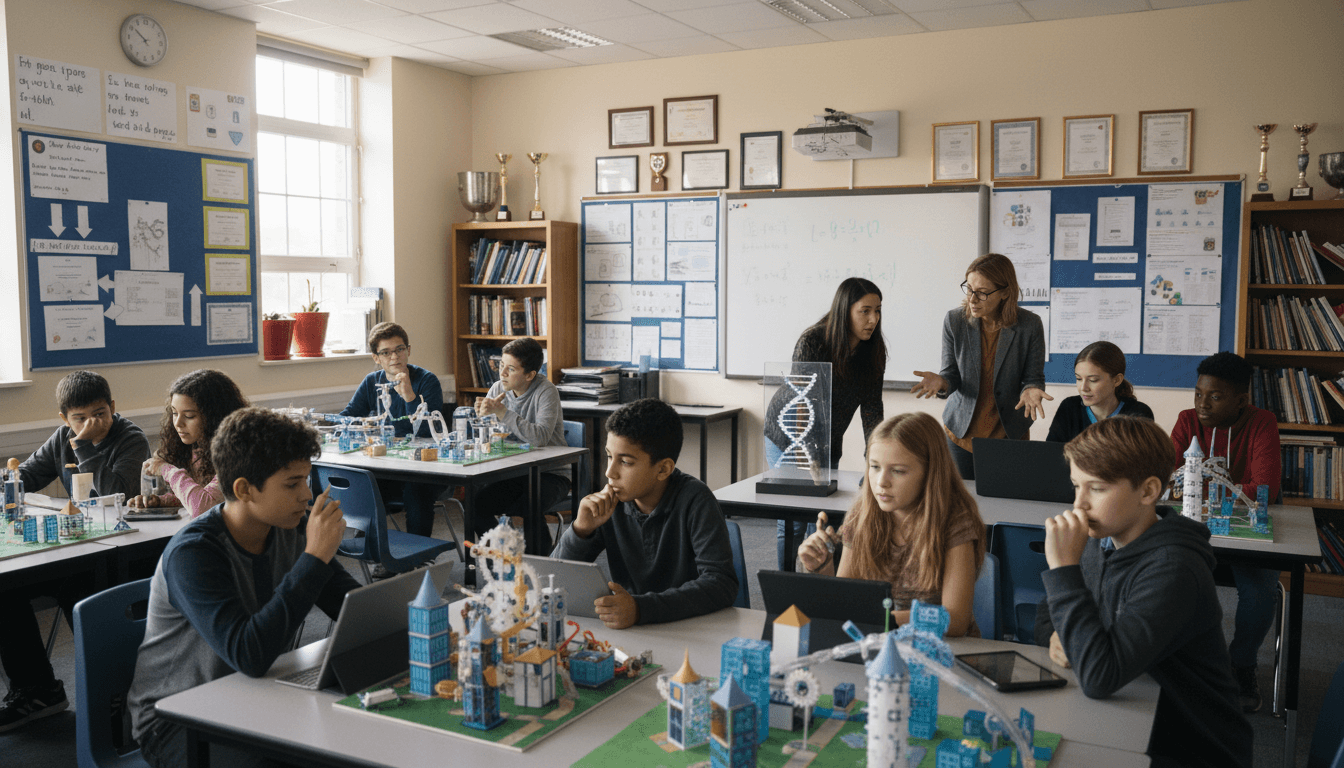
Talent development programs take a different approach to gifted education than traditional enrichment programs. Rather than treating giftedness as a fixed trait expressed across all subjects, talent development programs identify and invest in each student's specific areas of extraordinary potential. A newsletter that explains this philosophy and connects it to what students are actually doing builds genuine family investment in a model that can look quite different from conventional gifted services.
This guide covers what to communicate about the talent development approach, how to write about portfolio and domain work clearly, and how to use the newsletter to build toward showcase events.
Explaining the talent development philosophy
Most families understand gifted education as 'faster and harder.' Talent development programs often move slower and deeper rather than faster, focusing on domain expertise and the identity of a student as a mathematician, writer, or scientist rather than on grade-level acceleration.
A newsletter that explains this distinction early in the year prevents the confusion families feel when their child's talent development work does not look like what they expected from a gifted program. The key message: the goal is depth of mastery and passion in a specific domain, not coverage of more content at a faster pace.
What to include in each newsletter
- Domain focus this month: What domain or skill students are developing, what the work involves, and where it falls in the portfolio arc for the year.
- Portfolio milestone update: Where students are in the portfolio development process, what milestone is coming next, and what families can expect to see at the upcoming showcase.
- A student work spotlight: A brief description of one student's current domain project (with permission). This is the most read section in talent development newsletters because families love to hear about the diversity of work happening in the program.
- Extending at home: One way families can support the student's domain development outside of school. This is more specific in talent development than in general gifted programs because the domain is known: a student identified as a mathematician benefits from different at-home suggestions than a student identified as a creative writer.
Building toward the showcase
Talent development program showcases are high-value family events where students present domain work to an audience of families, teachers, and sometimes community mentors. The newsletter in the months leading up to a showcase should build anticipation explicitly: 'Our spring showcase is on [date]. Students will present their portfolio projects from this year's domain work. Here is what each student has been working toward and what the presentation format will look like.'
Communicating mentorship opportunities
Many talent development programs connect students with community mentors in their domain. When these connections exist, they deserve prominent newsletter coverage. A brief description of the mentorship relationship, what students are learning from their mentor, and how the mentorship complements the program work gives families a window into one of the most distinctive features of the model.
Helping families support domain passions outside of school
Talent development philosophy holds that domain passion should extend beyond school hours. A newsletter that specifically supports families in nurturing that passion at home, through recommendations of domain-specific resources, community programs, summer opportunities, and family activity suggestions, is living the program philosophy in the communication itself.
Get one newsletter idea every week.
Free. For teachers. No spam.
Frequently asked questions
How often should a talent development program send a newsletter?
Monthly works for most programs. Talent development programs often run on semester or quarter cycles, so aligning the newsletter to phase transitions, portfolio milestones, and showcase events gives each issue a natural focus.
What should a talent development newsletter include?
Cover the current domain focus, what students are building or developing, portfolio milestones and showcase dates, how families can support talent development at home beyond school hours, and any mentorship or community connections available through the program. A spotlight on a specific student's domain work (with permission) also works well in talent development newsletters.
How do you explain talent development theory to families who are unfamiliar with it?
Lead with what it means for their child. 'We believe that every identified student has specific areas of strength worth developing intensively, not just general academic ability. This program helps each student identify and build their strongest domain, whether that is mathematics, writing, visual art, or another area, with depth and support they would not get in a standard enrichment setting.'
What is the biggest mistake talent development programs make in newsletters?
Describing the program philosophy without connecting it to what students are actually doing. Families can read a philosophy statement once. What keeps them engaged is knowing what their child is working on right now, how it is going, and when they will see the results.
What tool helps talent development programs share showcase events and portfolio milestones through newsletters?
Daystage makes it easy to include event details and dates prominently in a newsletter. For talent development programs where showcase events are central to the student experience, a well-formatted newsletter that arrives well in advance of the event is one of the most effective ways to ensure family attendance.

Adi Ackerman
Author
Adi Ackerman is a former classroom teacher and curriculum writer with 8 years in K-8 schools. She writes about school communication, parent engagement, and what actually works in real classrooms.
More for Gifted & Advanced
Gifted Art and Music Program Newsletter: Communicating Advanced Creative Programs to Families
Gifted & Advanced · 5 min read
Gifted Program Back-to-School Newsletter: Starting the Year with Clarity and Confidence
Gifted & Advanced · 5 min read
Gifted Program Parent FAQ Newsletter: Answering the Questions Families Always Ask
Gifted & Advanced · 5 min read
Ready to send your first newsletter?
3 newsletters free. No credit card. First one ready in under 5 minutes.
Get started free