
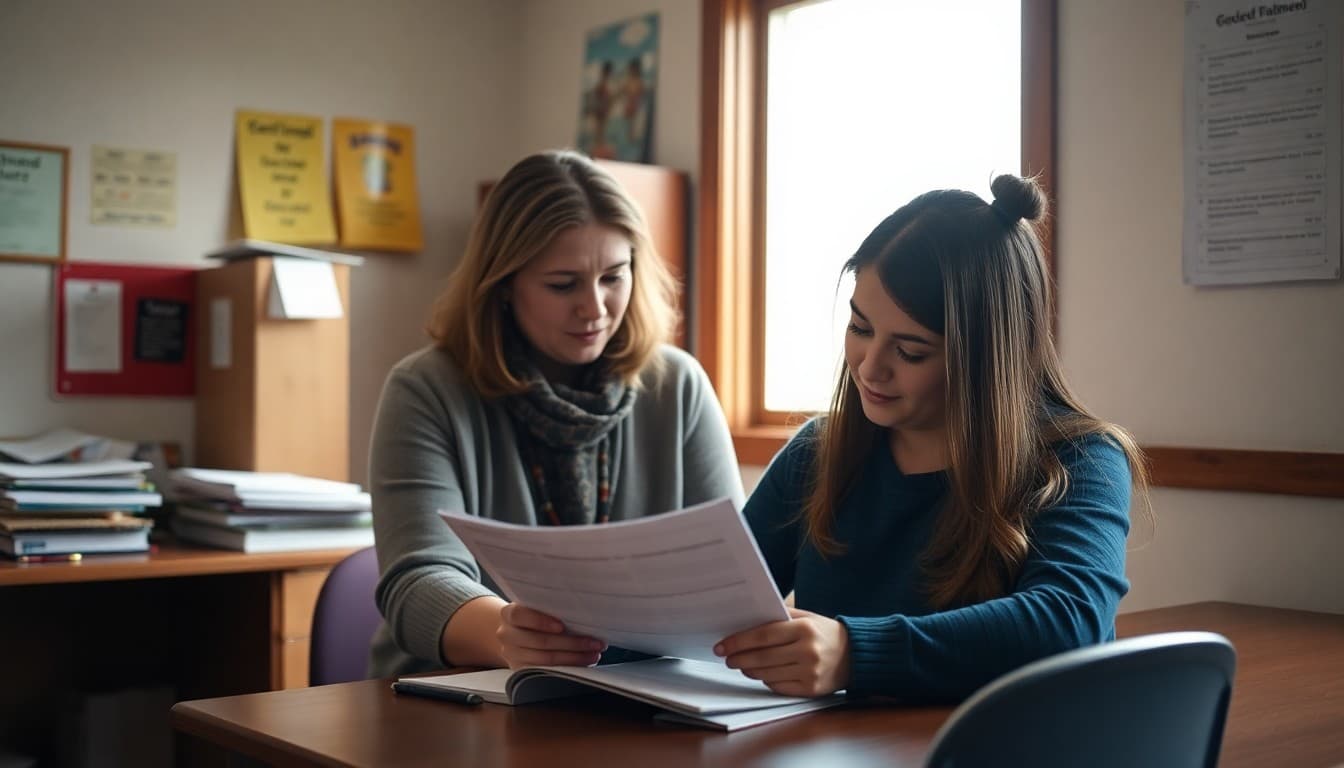
Montana Gifted Program Newsletter Guide for Coordinators

Montana's gifted education landscape is shaped by geography, small communities, and local control. A gifted student in Billings or Missoula has access to enrichment resources that a student in a small rural district simply does not. Your newsletter has to work within that reality, describing what your specific program offers honestly while also connecting families to the distance learning and online enrichment options that can partially compensate for geographic limitations.
Montana's Local Control Framework
Without a state mandate for gifted education, Montana's districts design and fund their own advanced learner programs. Some larger districts have dedicated gifted specialists and enrichment budgets. Smaller districts may rely on classroom differentiation or teacher initiative. Your newsletter should describe your program honestly, including both what it provides and any constraints on what it can offer. Families who understand the actual program are better positioned to supplement it and advocate for improvements.
Identification and Advanced Learner Designation
Explain your district's approach to identifying or designating advanced learners. Without state guidance, Montana districts use widely varying methods. Some use formal cognitive ability testing. Others use achievement data, teacher nominations, or readiness-based placement. Whatever your approach, describe it clearly in your fall newsletter. Families who understand the criteria are more likely to engage constructively with the process and less likely to feel that placement decisions are arbitrary.
Montana's Environmental Enrichment Context
Montana's natural environment provides enrichment context that few states can match. Advanced learners in Montana can engage with real geological survey data, participate in wildlife monitoring programs, conduct environmental science research with university partners, and connect to National Park Service educational programs. Your newsletter should describe these opportunities specifically and explain how they connect to your enrichment program. Montana's distinctive context is an asset for gifted programming that coordinators sometimes underutilize.
Distance Learning and Online Enrichment
For gifted students in rural Montana, online enrichment is often the only available supplement to what the local school provides. Art of Problem Solving courses, Stanford Online High School, online AMC competition preparation, virtual math circles, and dual enrollment through Montana universities all provide challenge for advanced learners regardless of their location. Internet connectivity quality varies across rural Montana, which is worth noting when you describe online options. Your newsletter should list these resources specifically with enrollment information and any cost or scholarship details.
University of Montana and Montana State Programs
UM and MSU both run programs for advanced learners, including summer institutes and enrichment courses. Dual enrollment through Montana University System institutions allows qualifying high school students to earn college credit. The Montana Science and Mathematics Alliance has programs relevant to gifted students in STEM areas. For families in Missoula, Bozeman, or Billings, these options are relatively accessible. For rural families, the online components of university enrichment programs deserve explicit mention.
Academic Competition Opportunities
Montana Science Olympiad, MATHCOUNTS Montana chapter and state competitions, and National History Day Montana all draw gifted student participation. Montana Science Fair provides a research and presentation pathway. AMC 8, AMC 10, and AMC 12 mathematics competitions are available at most Montana schools and do not require travel. For each competition, include grade eligibility, registration deadline, and logistics information. For rural Montana families, being clear about which competitions require travel to Billings, Helena, or Missoula allows them to plan ahead or identify transportation resources.
A Sample Montana Newsletter Section
Here is language that works: "This month our advanced students completed a water quality assessment project using data collected from the creek behind our school. They tested for pH, dissolved oxygen, nitrates, and macroinvertebrates. Their report went to the county extension office. This kind of project is available because we are in Montana. Not every school can walk outside and do legitimate environmental science. We try not to take that for granted." Daystage makes sharing that kind of specific, place-based description in a professional newsletter format simple and quick.
Building Program Support in Small Communities
Montana gifted programs in small communities often depend on one or two committed educators and a small group of engaged families. Your newsletter builds the community awareness and investment that keeps those programs alive when staff changes or budget pressures occur. Include outcome information periodically: competition results, student projects that made it to state or national competition, alumni who credit the program. Those stories accumulate into the case for the program's value.
Get one newsletter idea every week.
Free. For teachers. No spam.
Frequently asked questions
What does Montana require for gifted program communication?
Montana does not have a specific mandate for gifted education services. School districts make their own decisions about whether and how to identify and serve gifted students. The Montana Office of Public Instruction provides guidance and resources for districts that choose to offer advanced learner programming. Without a state mandate, your newsletter is even more important as the document that defines what your program is and builds the local support it needs to continue.
How do Montana districts approach advanced learner identification without a state mandate?
Montana districts that offer gifted programs use varying approaches, from formal cognitive ability testing to portfolio review to teacher nomination to simply making advanced coursework available to any student who demonstrates readiness. Your newsletter should explain your district's specific approach in plain language, since families who have moved from states with mandatory gifted programs may be surprised by Montana's less structured framework.
What enrichment opportunities are available to Montana gifted students?
Montana gifted students have access to enrichment through University of Montana and Montana State University programs, online competition platforms, and regional academic competitions. Montana's natural environment provides unique enrichment contexts in environmental science, geology, and ecology. Distance learning and virtual programs are particularly important for Montana's rural population, where gifted students may be the only advanced learner in their class.
What academic competitions are available in Montana?
Montana has Science Olympiad participation, MATHCOUNTS chapter and state competitions, and National History Day Montana competition. Montana Science Fair draws entries from schools across the state. For rural Montana students, online competitions including AMC mathematics and virtual academic bowl formats are particularly valuable given the geographic distances involved in attending in-person events. Your newsletter should list accessible competitions with registration details.
What newsletter tool works for Montana gifted programs?
Daystage works well for Montana gifted coordinators, particularly those managing small programs in rural districts where they may be the only advanced learning specialist. The platform handles email delivery and scheduling without IT involvement, which matters in small districts where IT support is limited. Coordinators who send consistent newsletters find it builds the family engagement that protects programs during budget reviews.

Adi Ackerman
Author
Adi Ackerman is a former classroom teacher and curriculum writer with 8 years in K-8 schools. She writes about school communication, parent engagement, and what actually works in real classrooms.
More for Gifted & Advanced
Gifted Distance Learning Program Newsletter: Communicating Advanced Online Learning to Families
Gifted & Advanced · 5 min read
Gifted Program Parent Newsletter: What Your Child Is Doing
Gifted & Advanced · 6 min read
Gifted Identification Newsletter: How We Find and Serve Students
Gifted & Advanced · 6 min read
Ready to send your first newsletter?
3 newsletters free. No credit card. First one ready in under 5 minutes.
Get started free