
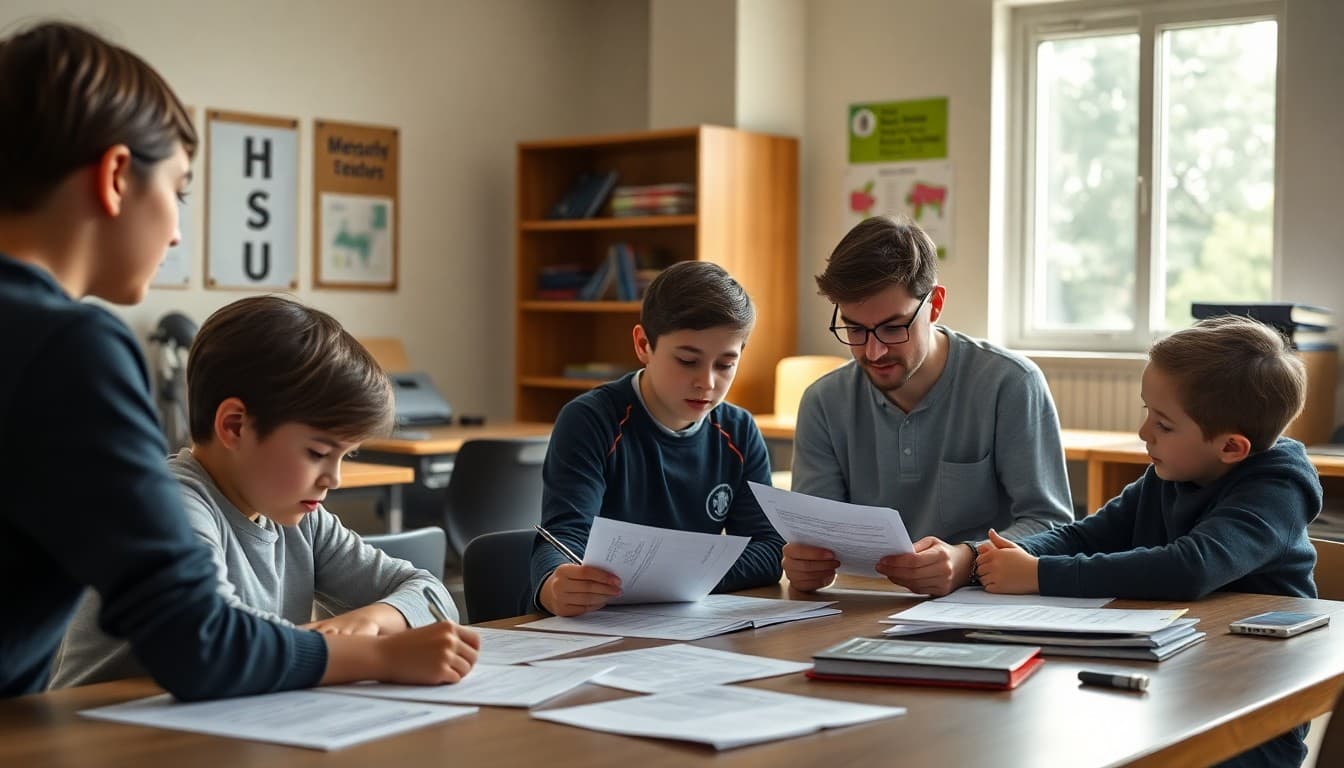
February Gifted Education Newsletter: Competition Season and Depth of Learning

February is competition season and deep-learning season simultaneously. Students are preparing for academic competitions, finishing mid-year projects, and navigating the social-emotional pressure that comes with performing at a high level. Your February newsletter addresses all of it directly and gives families the tools to support their child through it.
Update families on competition season
February is typically when academic competitions are in active preparation or early rounds. Give families a current update: which teams are competing, what their preparation looks like, and what is coming in the next four weeks. If any competitions have already produced results, share them. "Our Math Counts team competed in the chapter round on February 8. Three students advanced to the state competition on March 22. We are proud of every student who participated and are in full preparation mode for the next round."
Describe current depth-of-learning projects in specific terms
Gifted families want to know what their child is working on. A concrete description of where students are in a current project, the questions being explored, and what the end product will look like gives families real context. "Students have completed their data collection phase for the community impact project and are now analyzing their findings. Final presentations are scheduled for March 7. Each student will present their findings and conclusions to a panel that includes one community member in their topic area."
Address perfectionism during competition season
February is when perfectionist stress is highest. Competitions, mid-year projects, and grade reviews all create evaluation pressure simultaneously. Give families a specific response for when they see their child struggling: "If your child is catastrophizing about a competition result or a project grade, try asking: 'What is the worst realistic thing that could happen? And what would you do if that happened?' Walking through the fear to its realistic conclusion often defuses it."
Mention one enrichment opportunity for February break
If your school has a February break, give families one specific suggestion they can take up. Connect it to something your class is working on or something that is genuinely interesting right now. "If your child is interested in what we have been doing in our innovation unit, the museum of science's new exhibit on bioengineering runs through March. It is a hands-on exhibit that works well for ages 10 and up."
Share a mid-year program reflection
February is a natural mid-year moment to reflect on what the program has accomplished and where it is heading. A brief paragraph on what students have built since September, what skills they have developed, and what the second half of the year will focus on gives families a sense of trajectory and program value.
Preview spring program milestones
Give families a brief forward look at spring. Major projects, competition finals, any spring program application deadlines for next year's gifted placement, and testing windows. Gifted families plan ahead and appreciate knowing what is coming before it arrives.
Close with recognition and forward energy
End with genuine acknowledgment of what your students are accomplishing, a thank-you to the families who support their children's intellectual curiosity, and something you are genuinely looking forward to in the coming weeks.
Daystage makes your February gifted program newsletter easy to send and track. Your families are among the most engaged newsletter readers in your school. Give them content worth reading.
Get one newsletter idea every week.
Free. For teachers. No spam.
Frequently asked questions
What should a gifted teacher include in a February newsletter?
Competition season updates and upcoming deadlines, depth-of-learning project progress, perfectionism support during high-pressure periods, Valentine's Day social-emotional considerations for gifted students, enrichment suggestions for February break, and any spring program application deadlines that are approaching.
How do I describe depth-of-learning projects in a February gifted newsletter?
Give families a concrete snapshot of what students are working on: the question being explored, the method being used, and where students are in the process. 'Students are in the analysis phase of their community impact research projects, evaluating data they collected in January against their original hypotheses.' That is specific enough to spark a dinner conversation.
Should I address perfectionism again in February?
Yes. Competition season amplifies perfectionist stress for many gifted learners. A brief, practical note, with one parent phrase, is worth including in the February newsletter even if you addressed it in November. The pattern recurs under pressure, and families benefit from the reminder when it is contextually relevant.
What enrichment activities work for February break in a gifted newsletter?
Suggest one activity that connects to your current classroom theme and is genuinely interesting rather than educational-feeling. A design challenge, a specific museum exhibit, a biography of a figure your students are studying, or a documentary recommendation works better than a general list of enrichment resources.
What newsletter tool works for gifted program communication?
Daystage is a clean, professional school newsletter platform that gifted program teachers use to reach engaged families. You build your template once and update the content for February. Open rates tend to be high for gifted program newsletters because families are actively interested in what is happening in the program.

Adi Ackerman
Author
Adi Ackerman is a former classroom teacher and curriculum writer with 8 years in K-8 schools. She writes about school communication, parent engagement, and what actually works in real classrooms.
More for Gifted & Advanced
Acceleration Program Communication: Helping Families Navigate Grade Skipping and Subject Acceleration
Gifted & Advanced · 6 min read
AP Course Newsletter: What College-Level Learning Looks Like
Gifted & Advanced · 6 min read
AP Exam Prep Newsletter: Getting Ready for May Testing
Gifted & Advanced · 6 min read
Ready to send your first newsletter?
3 newsletters free. No credit card. First one ready in under 5 minutes.
Get started free