
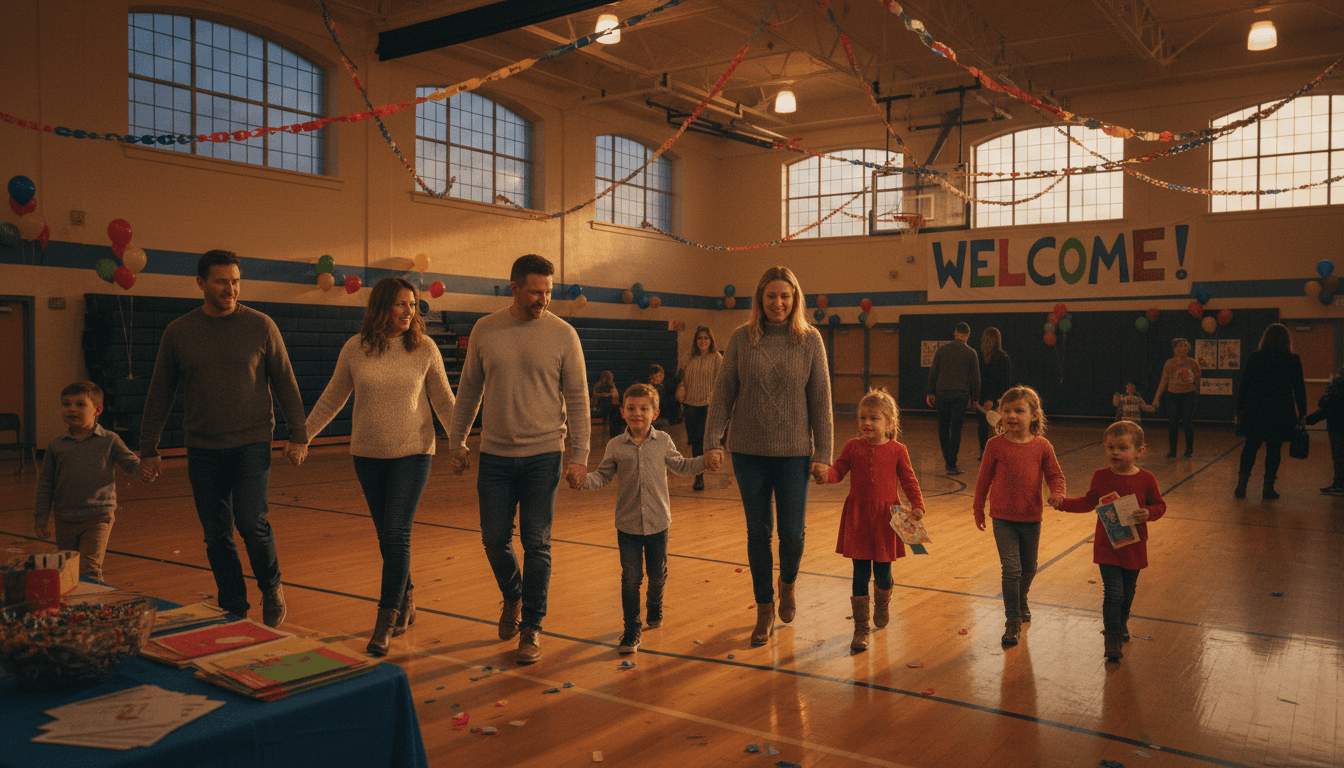
Family Engagement Event Newsletter: Getting Parents to Show Up

Family engagement events are judged by attendance. You can plan a perfect evening with great content, free food, and engaged teachers, and if 14 families show up to a school of 600, the room feels empty and the staff morale takes a hit. The newsletter you send before the event matters more than almost any other planning decision. This guide covers what to write, when to send it, and how to make parents actually clear their Tuesday night to be there.
Start with what the family gets, not what the school is doing
Most engagement event invitations open with a description of the event. Family Math Night. STEAM Showcase. Literacy Together. Those names mean something to the people who planned the event and almost nothing to a parent reading the email at 10 pm after putting kids to bed. Lead with what the family walks away with. "Bring your second grader. Walk out with three games you can play at the dinner table that build multiplication fluency." That sentence does more work than three paragraphs of description.
Be specific about logistics, including the awkward parts
Working parents make decisions about events based on logistics. Where do I park. Can I bring younger siblings. Is dinner provided or do I feed them first. How long will it actually take. Answer all of those questions in the email, in plain language, without making families dig. If childcare is provided for younger siblings, say so in the subject line. That single detail can double attendance for families with multiple young kids.
Send three touches, not one
The first email goes out three weeks ahead and announces the event with full detail. The second goes out ten days before with one new piece of information (a teacher quote, a sneak peek of an activity, a sign-up link). The third goes out 48 hours before with logistics only: time, place, parking, what to bring. Each email serves a different purpose. The final one is the workhorse for attendance. Most parents do not decide to come until two days out.
Sample paragraph that works for the first announcement
Here is a sample opening you can adapt. "On Thursday October 17 from 6 to 7:30 pm, every K-2 family is invited to Reading Together Night in the cafeteria. We will give you three reading strategies your child's teacher uses every day, and you will leave with a printed handout and a free book chosen for your child's level. Pizza and salad will be served starting at 5:45. Younger siblings welcome, and we have a supervised play space in the gym. Park in the back lot so the front entrance stays clear for school buses." Notice how every objection is answered.
Use a teacher voice, not an institutional voice
Parents tune out when newsletters sound like the district speaking. They lean in when a teacher speaks. Include a one paragraph quote from the teacher leading the event. "I have been teaching first grade for eleven years and the question I get most from parents is how to help with reading at home without making it feel like school. That is exactly what we are answering on Thursday." That paragraph signals that a real person, who knows the families, is going to be in the room.
Make the RSVP optional, but track interest
Hard RSVPs depress attendance, because parents who are not 100 percent sure they can come will not click yes. Use a soft signal instead: "Let us know you are planning to come so we have enough pizza." That gets you a workable headcount and does not lose the maybe-attendees. Track opens and clicks on your newsletter. If the open rate on the final reminder is under 40 percent, the subject line did not land and your attendance will reflect that.
Follow up with a thank-you the next day
Send a short email the morning after the event. Thank everyone who came by name (or by class). Share one photo. Recap the three takeaways. Invite the families who could not make it to access the handout digitally. That follow-up turns a one-night event into a longer engagement loop and primes families for the next invitation.
How Daystage helps with family engagement event newsletters
Daystage gives you a clean, mobile-friendly newsletter editor designed for schools. Save the three-touch template once, duplicate it for each event, and swap in the new details. The whole sequence for an event takes 20 minutes instead of an afternoon. You can send to your full family list, segment by grade, and see who opened each email so you know whether the message landed.
Get one newsletter idea every week.
Free. For teachers. No spam.
Frequently asked questions
How far in advance should a family engagement event newsletter go out?
Three weeks before the event for the first announcement, ten days before for the reminder, and 48 hours before for the final push. That cadence gives working parents time to arrange childcare and shift schedules. A single email five days out is the most common reason events under-attend. Three touches always beats one polished email.
What is the single biggest reason parents skip school events?
They do not know what is actually going to happen and whether it is worth the trip. Vague invitations get vague turnouts. If your newsletter says 'come learn about literacy', families weigh that against dinner and bedtime and stay home. If it says 'we will give you three specific things to try with your child this week, and there is pizza', they come.
Should the newsletter be in multiple languages?
Yes, if you have more than 5 percent of families who speak a language other than English at home. Send a separate email per language rather than stacking translations in one message. Stacked translations train families to scroll past and miss the point. A clean Spanish-only email to Spanish-speaking families gets read.
How do you write a subject line that gets opened?
Use the family's situation, not the school's calendar. 'Tonight at 6: bring your kindergartner, leave with three reading tricks' beats 'Family Literacy Night reminder'. Specific, time-stamped, benefit-forward. Avoid all caps. Avoid 'Important' or 'Reminder'. Those words signal junk to most parents.
What is the easiest tool for sending these newsletters?
Whatever lets you write, format, and send to your full family list without IT help. Many schools end up using a generic mass-email tool that breaks formatting on phones, which is where most parents read. Daystage was built for school newsletters and renders cleanly on every device, with templates you can save and reuse for each event.

Adi Ackerman
Author
Adi Ackerman is a former classroom teacher and curriculum writer with 8 years in K-8 schools. She writes about school communication, parent engagement, and what actually works in real classrooms.
More for Family Engagement Events
Family Literacy Night Newsletter: How to Drive Real Attendance
Family Engagement Events · 6 min read
Multicultural Night Newsletter: Inviting Every Family Without the Awkwardness
Family Engagement Events · 6 min read
School Open House Newsletter: A Template Schools Reuse Every Year
Family Engagement Events · 6 min read
Ready to send your first newsletter?
3 newsletters free. No credit card. First one ready in under 5 minutes.
Get started free