
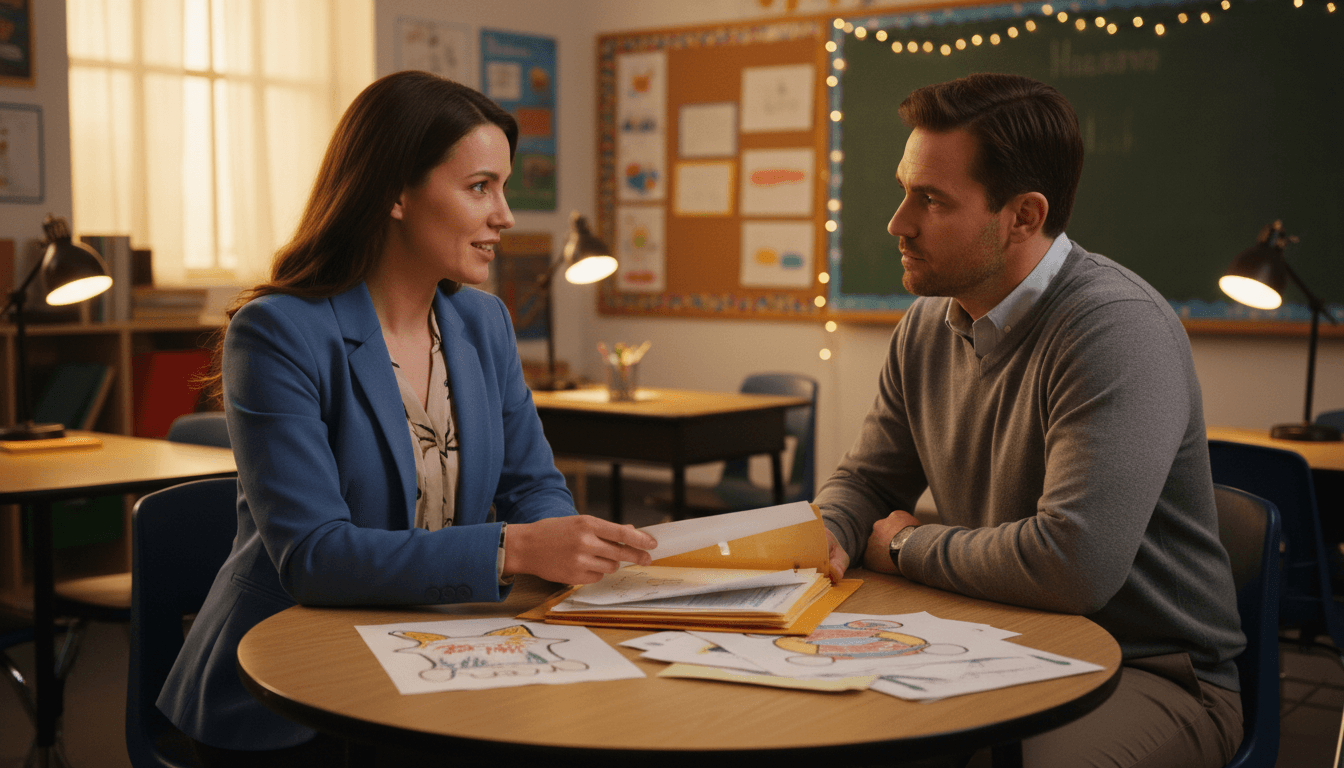
Parent Teacher Conference Newsletter: What to Send Before, During, and After
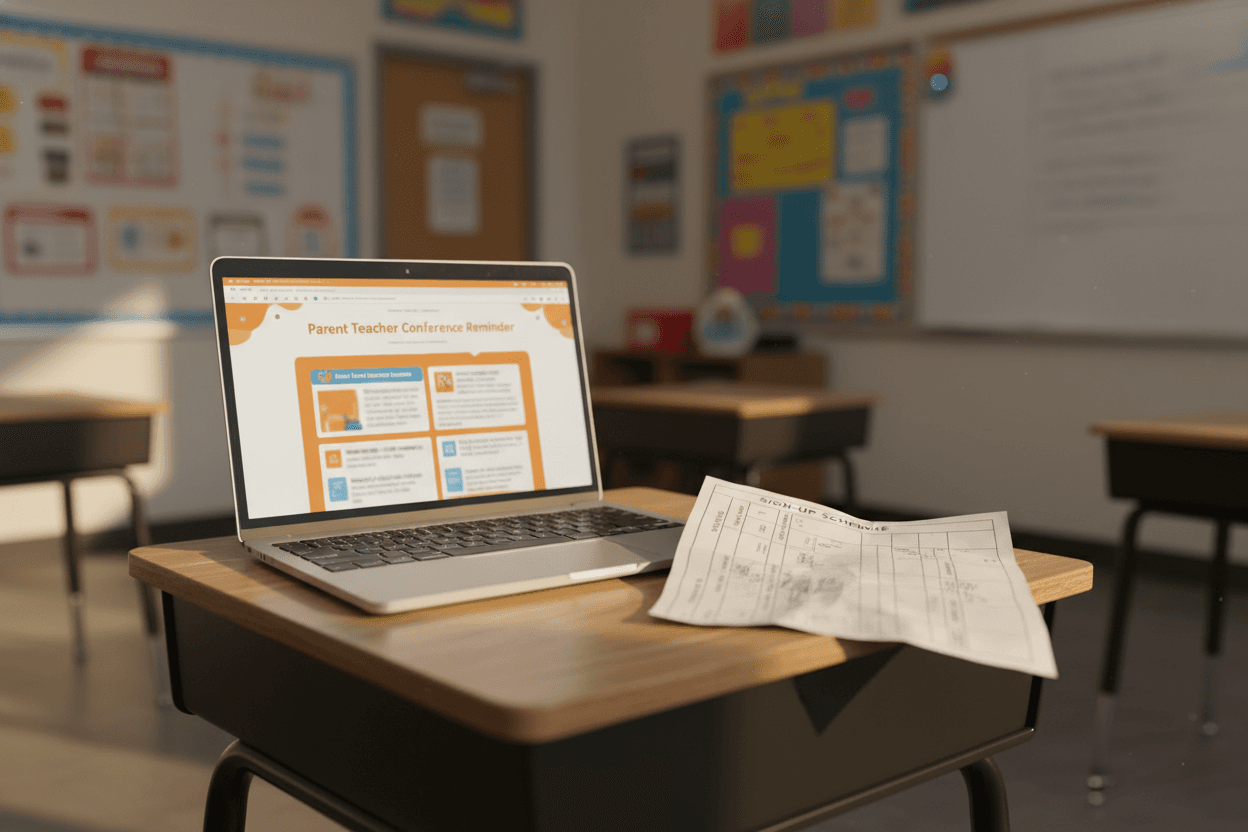
Parent teacher conference week generates more email traffic than almost any other event on the school calendar, and most of it is forgettable. The good newsletters do three jobs: get every family to sign up for a slot, set expectations for what the meeting will cover, and follow up with action items afterward. Done well, conference week builds trust for the rest of the year. Done poorly, it leaves families feeling rushed and confused. This is the three-email playbook that works.
Email one: the sign-up announcement
Three weeks before conference week, the principal sends a school-wide newsletter explaining the schedule and the sign-up process. Lead with the dates and the link. Spell out the slot length (most schools use 15 or 20 minutes). Tell families they will sign up with their child's teacher directly. Include a sentence about evening slots if you offer them, because working parents will sign up first to grab those.
Sample opening for email one
"Conference week is November 12 to 14. Every family will meet with your child's teacher for 20 minutes. Sign-ups open today and close Friday November 7. Use the link below to choose a slot with your teacher. Evening slots from 4 to 7 pm are available Tuesday and Wednesday. Daytime slots are available all three days. Childcare for younger siblings is provided in the library during all conference hours."
Email two: the teacher's personal note
Two days before each family's conference, the classroom teacher sends a one-paragraph personal email. "Hi Maya's family, looking forward to seeing you Tuesday at 4:15. We will spend most of our time on Maya's progress in reading and writing, with quick updates on math and how she is doing socially. If there is anything specific you want to make sure we cover, reply to this email and I will hold time for it. Bring any questions." That email turns a generic 20-minute slot into a meeting with a clear shape.
Email three: the night-before reminder
24 hours before each family's conference, send a logistics-only reminder. Time, room number, where to park, where to wait if you arrive early. Two sentences. No fluff. "Reminder: your conference is tomorrow at 4:15 in Room 12. Park in the back lot and enter through the side door. If you arrive early, the seating area outside the library is open." That email is the difference between a parent wandering the building and a parent walking straight to the right place.
The follow-up email after the conference
Within 48 hours, the teacher sends a one-paragraph recap. "Thanks for coming in Tuesday. We talked about Maya's reading progress (she is ready to move into longer chapter books), the math fluency goal we are working toward by January, and your concern about how she is handling friend-group changes at recess. The one thing I want to try this month is the daily check-in I described. I will email you at the end of November with a quick update." That email is the artifact parents reread for weeks.
How to handle no-shows
Some families will miss their slot. Send a brief, warm email the next morning offering to reschedule. "Sorry we missed you yesterday. I know schedules slip. Here are three open slots in the next two weeks if any work. If they do not, tell me what does and I will make it work." That tone keeps the relationship intact for families who are often the ones who most need the conversation.
Tone and length
Conference newsletters are read on phones, often during pickup or right before bed. Keep the school-wide email under 250 words. Keep the teacher emails under 100. Use short paragraphs. Bold the date and the link. Avoid education jargon. Sound like a person who knows the family and is glad they are coming in.
How Daystage helps with parent teacher conference newsletters
Daystage gives you templates for each of the three emails (sign-up, personal note, night-before reminder) that you can save once and reuse every conference cycle. The teacher email template lets you merge in the student name, time, and room number so the personal notes go out in minutes instead of hours. Mobile rendering is clean by default, which matters when 80 percent of these emails are read on phones.
Get one newsletter idea every week.
Free. For teachers. No spam.
Frequently asked questions
When should the conference sign-up newsletter go out?
Three weeks before conference week. That gives working parents enough lead time to request the slot they need without feeling rushed. Send a reminder one week out for families who have not signed up, then a final reminder 48 hours before each conference with the time and the room number. Three touches gets near-100 percent sign-ups.
Should the newsletter come from the principal or the teacher?
Both, in different emails. The principal sends the school-wide newsletter that explains the schedule, sign-up link, and logistics. The classroom teacher sends a personal email to their families with what the conference will cover, what the parent should bring, and any specific concerns or wins to discuss. Two emails, two voices, two purposes.
What should the teacher's pre-conference email actually say?
Three or four sentences. 'Looking forward to meeting on Tuesday at 4:15. We will spend the first ten minutes on reading and writing progress, the next five on math, and the last five on social-emotional. Please bring any questions you want to make sure we cover.' That structure tells parents what to expect and makes the 20 minutes feel productive.
How do you handle parents who do not sign up?
Send a personal email from the teacher (not from the school office) by the one-week mark. 'Hi, I have not seen a sign-up from your family yet and I really want to connect about how Maya is doing. Here are three slots that are still open. If none work, let me know what does and I will hold time outside the regular hours.' That email gets responses where the school-wide reminder does not.
What should the post-conference newsletter include?
Send a thank-you to all families the morning after the last conference, with a brief recap of common themes (without naming students) and a reminder of how to follow up. The teacher should send a personal one-paragraph follow-up to each family within 48 hours summarizing what was discussed and the one or two action items. Daystage makes this easy with templates that pull in the student name and one editable paragraph.

Adi Ackerman
Author
Adi Ackerman is a former classroom teacher and curriculum writer with 8 years in K-8 schools. She writes about school communication, parent engagement, and what actually works in real classrooms.
More for Family Engagement Events
Family Literacy Night Newsletter: How to Drive Real Attendance
Family Engagement Events · 6 min read
Multicultural Night Newsletter: Inviting Every Family Without the Awkwardness
Family Engagement Events · 6 min read
School Open House Newsletter: A Template Schools Reuse Every Year
Family Engagement Events · 6 min read
Ready to send your first newsletter?
3 newsletters free. No credit card. First one ready in under 5 minutes.
Get started free