
Family Literacy Night Newsletter: How to Drive Real Attendance
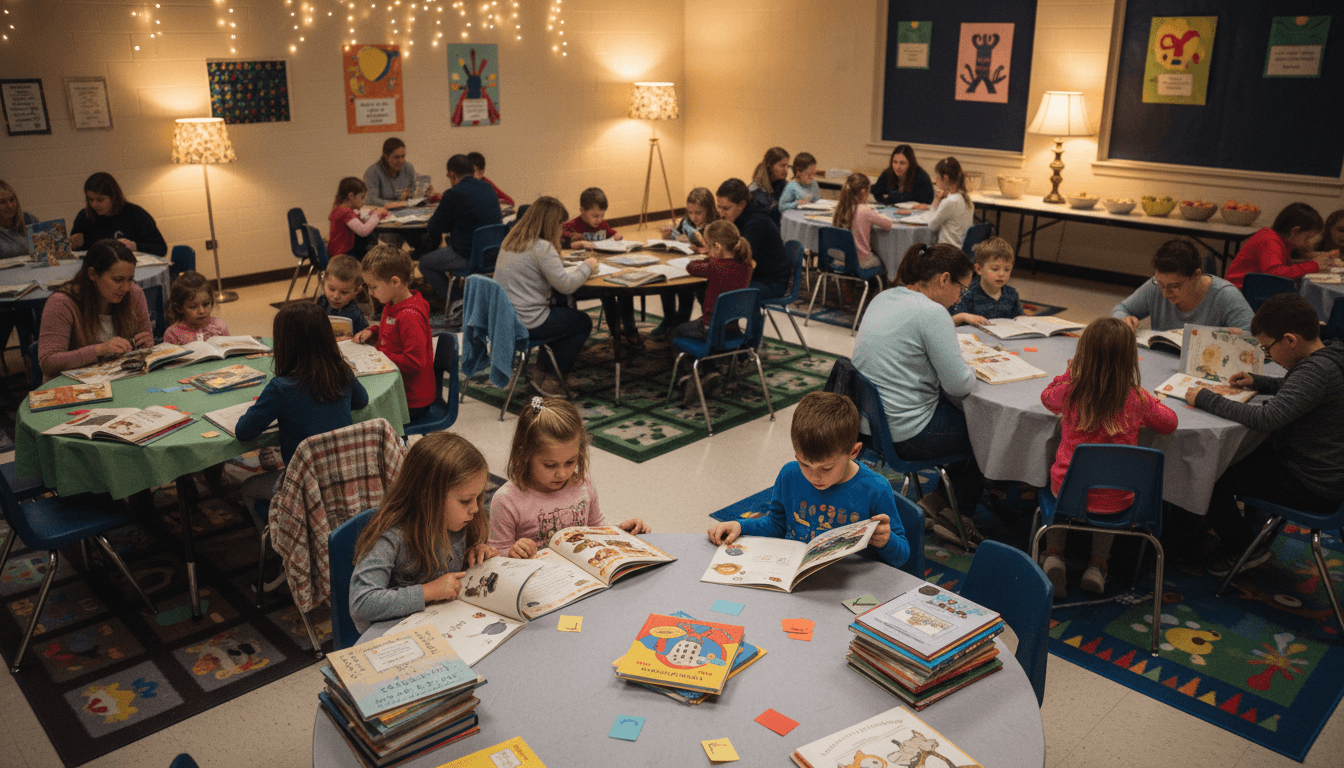
Family literacy night is the engagement event with the highest no-show rate in most schools. Parents see the word literacy and assume it means a lecture about reading levels. The newsletter has to fight that assumption from the subject line forward. Done right, literacy night fills the cafeteria with families who walk out feeling like they can actually help their child at home. Done wrong, you serve pizza to twelve people. The difference is almost always the email.
Lead with what the family takes home
Open the newsletter with a concrete, specific takeaway. "On Tuesday October 22 from 6 to 7:30 pm, every K-2 family will walk out with three bedtime reading tricks our teachers use every day, and a free book chosen for your child's level." That sentence answers the parent's unspoken question: is this worth my Tuesday night. If the answer is clear in the first line, you have already won attendance.
Drop the jargon
Reading specialists love precision. Parents want simplicity. A newsletter that promises "strategies for fluency, comprehension, and decoding" reads like homework. A newsletter that promises "three things to try at the dinner table to help your child read with more confidence" reads like a gift. Use the second framing. Save the technical language for the in-room presentation, where the specialist can give context and answer questions.
Sample subject lines that work
"Tuesday at 6: free books for your kindergartner and three reading tricks" outperforms "Family Literacy Night Reminder" by a wide margin in every school I have seen test it. "Tomorrow: pizza, books, and 90 minutes that change how you read at home" works for the final reminder. Specificity, time, benefit. That is the formula.
Address the working parent's calculus
Most parents who skip literacy night are not uninterested. They are tired and weighing one more after-school commitment. The newsletter has to do the math for them. Tell them dinner is provided so they do not have to cook. Tell them younger siblings are welcome and supervised so they do not have to find a sitter. Tell them the event ends at 7:30 sharp so they can be home for bedtime. Each of those details removes a reason to stay home.
Sample paragraph for the body
Here is a working body paragraph you can adapt. "Tuesday October 22, 6 to 7:30 pm, in the cafeteria. Pizza and salad starting at 5:45. Kindergarten through second grade families: come for a 30-minute session with our reading specialist on three reading habits you can start tonight. You will leave with a printed handout, a free book at your child's level, and a bookmark with reminders. Younger siblings are welcome in our supervised play space. Park in the back lot. We end at 7:30 sharp." Every objection is answered.
Send in the family's first language
If 30 percent of your families speak Spanish at home, send a Spanish-only email to those families, signed by a staff member who speaks Spanish. Same content, native phrasing. Stacked translations train families to scroll past the English block and never reach theirs. A clean, segmented send respects the family and dramatically lifts the open rate.
Pair the email with a text and a video
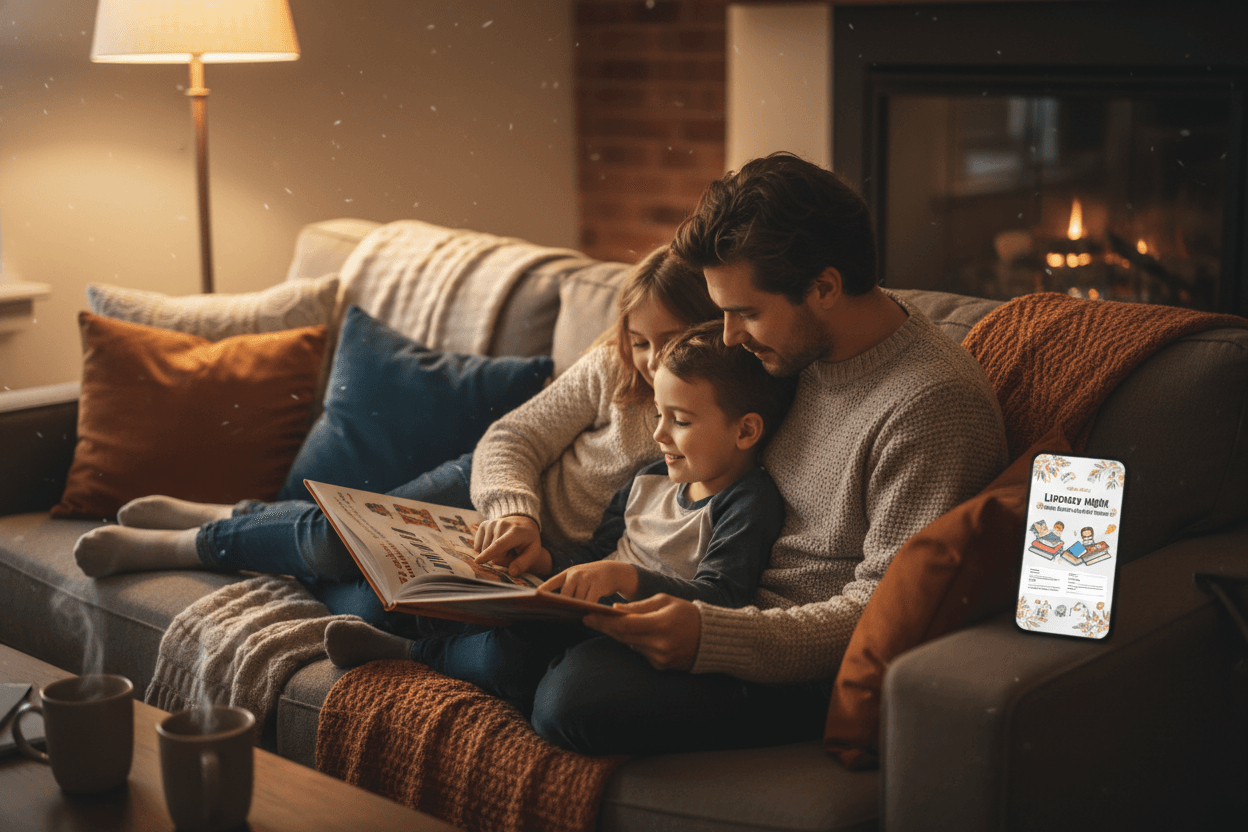
Send a 90-character text the morning of the event with the time and location. Have your reading specialist record a 45-second selfie video the week before, posted to the school's social channels: "Hi, I am Mrs. Patel, the reading specialist. Tuesday I want to show you a bedtime reading trick that works for almost every kid. Come hang out with us." That video does work the email cannot.
Follow up the next morning
Send a thank-you email the morning after. Share two photos. Recap the three takeaways. Link the handout for families who could not come. That follow-up is what turns a one-night event into year-long engagement.
How Daystage helps with family literacy night newsletters
Daystage gives you mobile-first templates designed for the way parents actually read school email (on a phone, in two minutes). You can save the literacy night sequence once, segment by grade or home language, and reuse the template every year. The follow-up email is a duplicate of the invite with three lines swapped, so the whole event takes fifteen minutes of writing across the full sequence.
Get one newsletter idea every week.
Free. For teachers. No spam.
Frequently asked questions
What makes a family literacy night newsletter different from a generic event email?
Literacy night attracts parents who feel uncertain about how to help their child read. The newsletter has to lower that anxiety, not raise it. Avoid education jargon like 'phonemic awareness' or 'decoding strategies' in the email. Use plain language: 'we will show you three things to do at bedtime that build reading skills'. The whole point is to make parents feel competent walking in.
How do you reach families who never come to school events?
Send the newsletter through the channel they actually read. For many families, that is text message or WhatsApp, not email. Pair the email with a 100-character text the morning of the event. Have your reading specialist make a 60-second video for the school's social channels. Multi-channel beats one polished email every time, especially for Title I families.
Should the newsletter mention free books or giveaways?
Yes, prominently, in the subject line if possible. Most schools give away books at literacy night and bury that detail in paragraph three. Lead with it. 'Every K-2 child leaves with a free book chosen for their level' is a more powerful invitation than any description of the program. Free books move attendance.
How do you handle non-English-speaking families?
Send a separate email per language to the families who speak that language at home, not a stacked translation in one message. If you have Spanish-speaking families, the Spanish newsletter should come from a Spanish-speaking staff member if possible, with a Spanish-speaking person named as the on-site contact. That single detail signals 'this event is for you' more than the content does.
What is the easiest way to send a literacy night newsletter that does not break on phones?
Use a tool that renders cleanly on mobile by default. Most parents read school emails on their phone in line at pickup or before bed. A newsletter with broken images or tiny text on mobile gets skipped. Daystage was designed for school newsletters, with mobile-first templates that hold their formatting across email clients without testing.

Adi Ackerman
Author
Adi Ackerman is a former classroom teacher and curriculum writer with 8 years in K-8 schools. She writes about school communication, parent engagement, and what actually works in real classrooms.
More for Family Engagement Events
Multicultural Night Newsletter: Inviting Every Family Without the Awkwardness
Family Engagement Events · 6 min read
School Open House Newsletter: A Template Schools Reuse Every Year
Family Engagement Events · 6 min read
Parent Teacher Conference Newsletter: What to Send Before, During, and After
Family Engagement Events · 6 min read
Ready to send your first newsletter?
3 newsletters free. No credit card. First one ready in under 5 minutes.
Get started free