
School Winter Concert Newsletter: Managing Expectations for Your Biggest Event of the Year
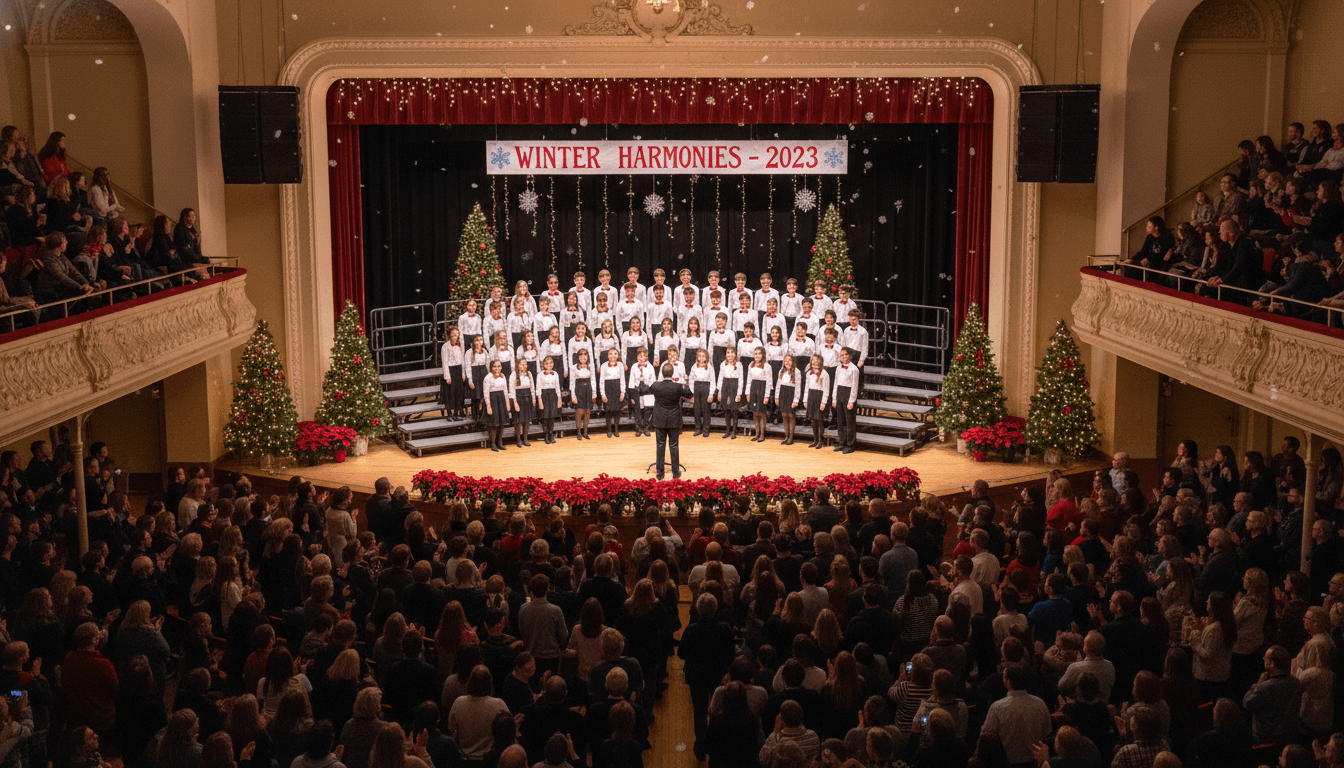
The winter concert is typically the most attended school event of the year. It is also one of the most anxiety-producing for music teachers and administrators because the expectations families bring to it vary enormously and are rarely addressed directly in pre-event communication.
A clear winter concert newsletter sequence manages those expectations before they become problems, gives performer families everything they need for a smooth evening, and helps audience families arrive excited rather than uncertain.
Two weeks out: the full information newsletter
Send the first winter concert newsletter two weeks before the event. This is the comprehensive communication and it covers logistics, expectations, and any information that requires families to act in advance.
What performer families need
Performer families have a different set of needs than audience families. Their primary concerns are practical: when does my child need to arrive, what should they wear, and where do they go when they get there?
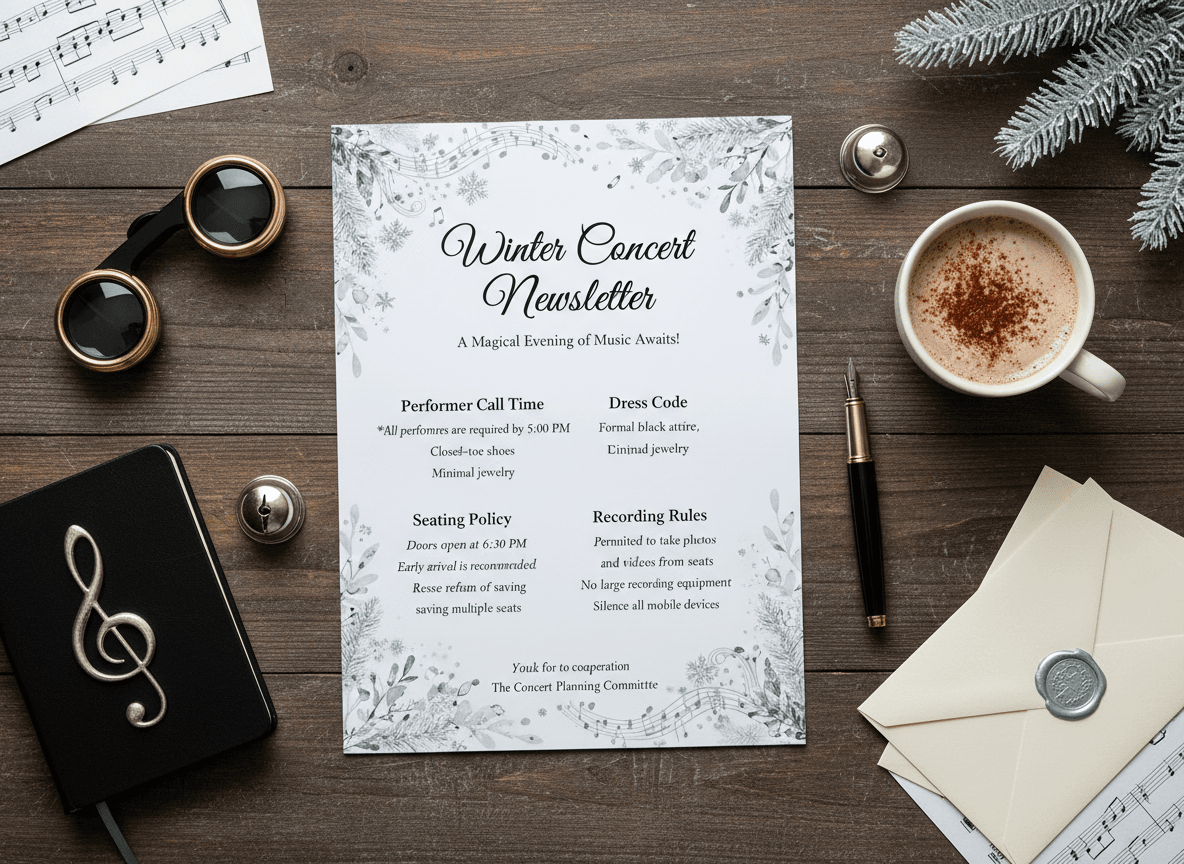
- Call time: State the performer arrival time explicitly and separately from the general audience arrival time. "Concert begins at 7 pm, performers should arrive by 6:15 pm and check in with their teacher in Room 14" is a complete instruction. "Performers should come early" is not.
- Dress code: Be specific. Black pants and a white shirt, the school uniform, or specific holiday attire. What about shoes? What about accessories? A detailed dress code prevents the last-minute scramble the morning of the concert.
- Where performers go when they arrive: Do they go directly to the stage area? To a backstage holding room? To their classroom? Families dropping off a performer need to know exactly where to deliver their child.
- Whether performers stay for the whole concert: If only one grade performs, are those students released to their families after their portion or do they stay for the rest of the program? This changes the logistics significantly for families with young children who need to leave early.
Managing expectations around concert length
Winter concerts that involve multiple grade levels can run ninety minutes or longer. Families who expected a forty-five-minute program and stay through an hour and a half leave frustrated. Families who are told the program runs approximately ninety minutes can plan accordingly.
Include a general program length in the newsletter. Not a minute-by- minute schedule. A general estimate: "The program includes five groups and typically runs about 75 minutes." That is enough to set expectations without over-promising on timing that is always approximate.
Individual performance time expectations
Every family at the winter concert wants to see their child perform. They are often less enthusiastic about sitting through the performance of every other group before or after. This is a reality of school concerts and addressing it directly in the newsletter is more effective than ignoring it.
A sentence like "each group performs for approximately 10 to 12 minutes" tells families what to expect and acknowledges that the whole program is longer than any one group's portion. Families who feel that expectation has been managed honestly are more patient during the full program.
Recording policy
Winter concerts generate more aisle-blocking, seat-standing, and stage-approaching behavior than almost any other school event because families want to photograph and video their child's performance. State the recording policy in the newsletter before the event: recording from your seat is encouraged, standing in the aisle is not permitted, and approaching the stage during the performance is not allowed.
If you will share a school-recorded video of the full program after the event, say so. Families who know a full recording is coming are significantly less likely to disrupt the live performance to get their own footage.
Non-performing siblings
Winter concerts are held in the evening, and many families bring younger siblings who are not performing. Address this directly. Are young children welcome at the concert? Is there a quiet room for families with infants? If the auditorium will be at capacity, are there expectations around young children who become disruptive during the performance?
Ignoring the sibling question does not make it disappear. It just means families either bring young children without guidance or leave them home without knowing that they were welcome.
Building the concert newsletter in Daystage
The winter concert newsletter has enough content to justify a clear structure: a warm opening, a performer section, an audience section, and a brief logistics summary at the close. In Daystage, you can organize those sections using different block types so the newsletter is easy to scan on a phone. Performer families see what they need. Audience families see what they need. Both feel informed without having to read through content that does not apply to them.
The concert is the easy part. The communication is the work.
Music teachers spend weeks preparing students for the winter concert. The newsletter that invites families to attend should match that level of preparation. Clear, warm, complete pre-concert communication is what ensures that when students walk out on stage, their families are seated, settled, and ready to listen.
Get one newsletter idea every week.
Free. For teachers. No spam.
Frequently asked questions
When should schools send a school winter concert newsletter?
Send the full information newsletter two weeks before the concert so performer families have time to prepare costumes and practice schedules. Audience families need ticket information at the same time, especially if concerts sell out. A brief day-before reminder covers final logistics.
What should a school winter concert newsletter include?
For performer families, include the rehearsal schedule, costume requirements and due dates, performer arrival time, and what to do with siblings attending the concert. For audience families, cover ticket availability, show times, venue details, seating policy, recording rules, and expected concert length.
How far in advance should schools send winter concert communications to families?
Two weeks for the main newsletter is standard, but four weeks is better for concerts with limited seating and ticket sales. Schools that sell out every year should send a save-the-date or ticket release notice a month out so families do not miss the window.
What are common mistakes in winter concert newsletter communication?
Not setting expectations about concert length is a common problem, particularly for concerts featuring multiple grade levels where individual classes perform for only a few minutes. Families who stay for the full two-hour program when they expected forty minutes leave frustrated.
What is the best tool to send a school winter concert newsletter?
Daystage handles the winter concert communication sequence for both performer and audience families, with scheduling tools that ensure the two-week newsletter and day-before reminder go out on time. Managing the highest-attendance event of the school year is easier when communication is organized in one place.

Adi Ackerman
Author
Adi Ackerman is a former classroom teacher and curriculum writer with 8 years in K-8 schools. She writes about school communication, parent engagement, and what actually works in real classrooms.
More for School Events
Grandparents Day Newsletter: How to Include Every Family in the Celebration
School Events · 6 min read
School Black History Celebration Newsletter: Making Black History Month Meaningful
School Events · 6 min read
International Night Newsletter: Celebrating Diversity and Getting Families Involved
School Events · 7 min read
Ready to send your first newsletter?
3 newsletters free. No credit card. First one ready in under 5 minutes.
Get started free