
School Talent Show Newsletter: Communicating Auditions, Rehearsals, and the Big Night
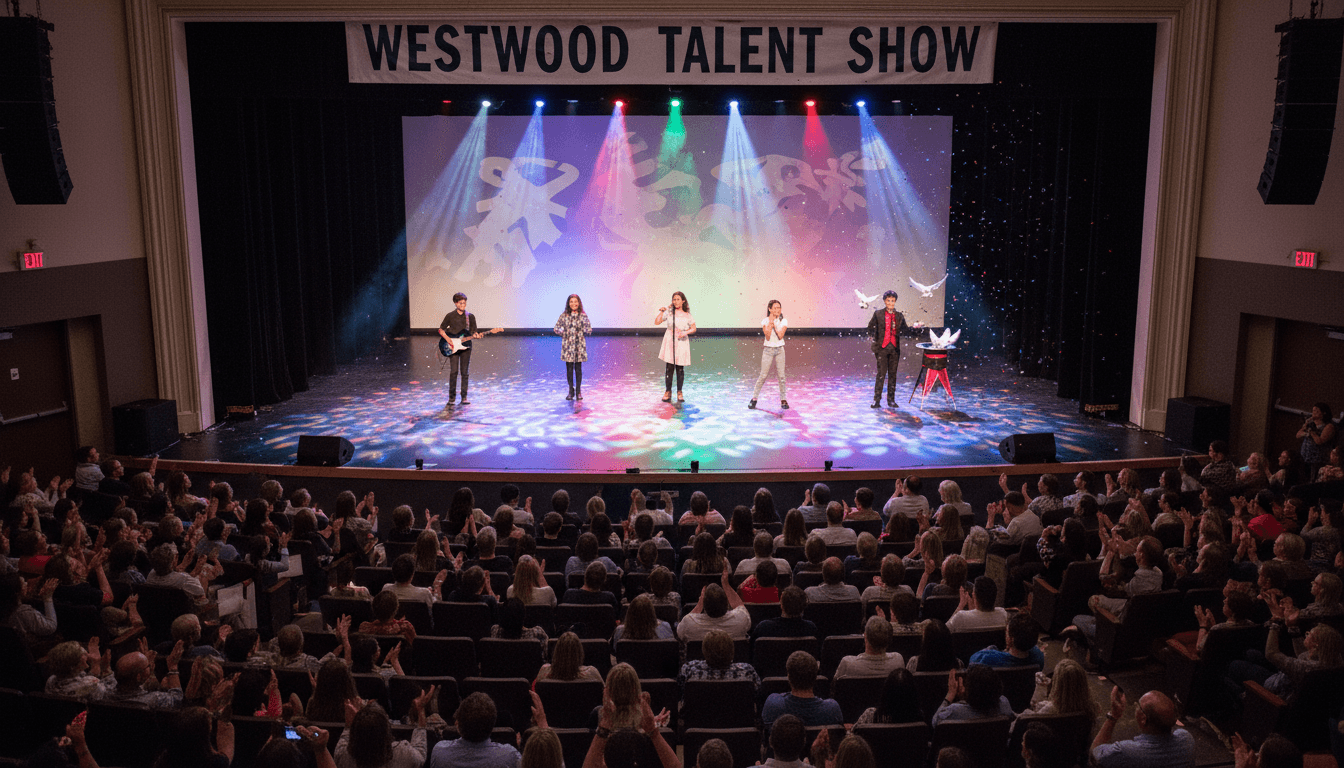
A school talent show involves two very different audiences: the families of students who are performing and the families of students who are watching. Most talent show newsletters try to serve both groups in a single communication and end up doing neither well. The result is performer families who do not know the rehearsal schedule and audience families who do not know where to buy tickets.
Splitting your talent show communication into clear phases and occasionally into separate tracks for performers vs. audience solves most of this. Here is what a talent show newsletter sequence should cover at each stage.
Audition communication
The first talent show newsletter goes home before auditions. It needs to reach every family, not just those whose children plan to audition. The full school community should know the talent show is coming, what auditions involve, and what the timeline looks like.
Audition newsletter content: what types of acts are eligible, how long acts should be, how to sign up for an audition slot, what the audition process involves (performed in front of judges? recorded video? self-submission?), and what criteria will be used to select acts. Clarity here prevents disappointment later. Families whose child is not selected are less upset when they understood the process from the start.
Callback and selection communication
After auditions, send a newsletter to the full school community (or grade level) confirming that selections have been made and that performer families will receive a separate notification. This prevents the situation where families who did not hear anything assume their child was selected and show up to the first rehearsal unexpectedly.
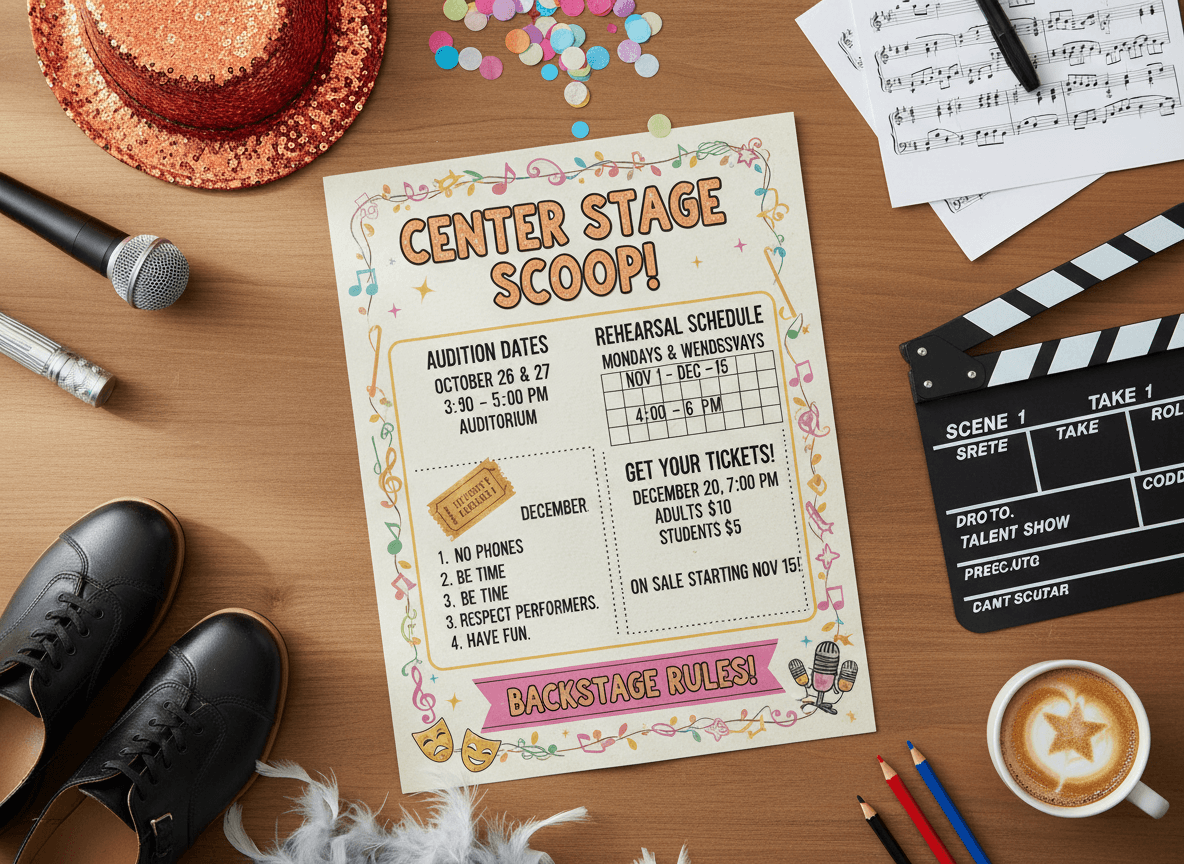
For families of selected performers, send a dedicated communication with: the rehearsal schedule (dates, times, locations), what to do if a student needs to miss a rehearsal, costume or prop requirements and when those need to be ready, and who to contact with questions.
Rehearsal schedule communication
Rehearsals are where most talent show communication breaks down. The schedule changes. Dress rehearsal gets added. Tech week has different requirements. Every change needs a clear notification to performer families who are managing childcare, transportation, and schedule coordination around these dates.
Send a rehearsal summary newsletter at least one week before the rehearsal phase begins. Update it when anything changes. Do not assume a verbal announcement at rehearsal will reach the parent who is picking their child up from the curb. Any schedule change needs a written notification home.
Ticket information for audience families
Not every talent show charges for tickets, but many do. Even when tickets are free, they may be required for entry, distributed through a specific process, or limited in quantity. The audience newsletter needs to cover this clearly.
Ticket newsletter content: cost (if any), how to obtain tickets, whether tickets can be purchased at the door or must be obtained in advance, any limits on the number of tickets per family, and whether performers receive complimentary tickets for their family members. A family that shows up expecting to buy tickets at the door and finds the event is sold out will not be happy with how the school communicated.
Backstage rules for performer families
On the night of the performance, families of performers need specific information that the general audience does not. Where do performers check in? Who are they released to backstage? Can parents visit backstage before the show or only after? Are performers expected to stay through the entire show or are they released after their act?
Send a dedicated backstage-night newsletter to performer families the day before the show. Keep it focused on logistics and timing. Do not mix it with the general audience newsletter, or the performer-specific information gets lost.
Volunteer coordination
Talent shows need backstage monitors, audience coordinators, set assistance, and often a tech team. If parent volunteers fill any of these roles, include a volunteer section in the audience newsletter two weeks before the show. Specify which roles are open, what each involves, and how to sign up. A talent show that runs smoothly on the night depends significantly on volunteers who knew what they were signing up for.
After the show: the appreciation newsletter
Send a post-show newsletter within two days. Thank performers, thank volunteers, thank the families who attended. Share any aggregate numbers (total acts, number of performers, audience count) that feel celebratory. If the show raised money for a cause, share the total. Include a few photos if your school has photo permissions that allow it.
Daystage makes it straightforward to manage parallel communication tracks for a talent show. You can keep performer-family newsletters separate from the general audience newsletters using custom subscriber lists, then merge back into the full subscriber base for the post-show celebration. The whole sequence lives in one place so nothing falls through between the audition announcement and the closing thank-you.
The show matters. So does the communication around it.
Families of performers remember the talent show as one of the peak experiences of the school year. Families of audience members enjoy it when they know how to get tickets and what to expect. A well-run communication sequence around the talent show does not just inform. It builds the anticipation that makes the actual performance feel like an event worth attending.
Get one newsletter idea every week.
Free. For teachers. No spam.
Frequently asked questions
When should schools send a school talent show newsletter?
Send the audition announcement newsletter four to six weeks before the show so students have time to prepare. Callback results go out within two days of auditions, rehearsal schedules follow immediately after, and ticket information for audience families should go out three to four weeks before the performance.
What should a school talent show newsletter include?
The audition newsletter should cover eligibility, what to prepare, audition dates and format, and the selection timeline. Performer newsletters cover rehearsal schedules, tech week dates, and backstage rules for show night. Audience newsletters cover ticket purchase, show times, and the recording policy.
How far in advance should schools send talent show communications to families?
Audition information should go out four to six weeks before the show, which gives students enough preparation time and the school enough rehearsal weeks after selection. Ticket information for audience families should go out three to four weeks before the performance before demand outpaces availability.
What are common mistakes in talent show newsletter communication?
Sending callback results without a clear timeline for what comes next is a common mistake that leaves selected students and their families uncertain about the rehearsal commitment. Sending the same newsletter to performer families and audience families is another problem since the two groups need completely different information.
What is the best tool to send a school talent show newsletter?
Daystage lets you manage parallel communication tracks for performers and audience families across a multi-week talent show production. Scheduling the audition announcement, callback results, rehearsal updates, and ticket information in advance keeps the sequence on track without drafting newsletters mid-production.

Adi Ackerman
Author
Adi Ackerman is a former classroom teacher and curriculum writer with 8 years in K-8 schools. She writes about school communication, parent engagement, and what actually works in real classrooms.
More for School Events
Graduation Ceremony Newsletter: Communicating the Details Families Actually Need
School Events · 7 min read
School Auction Newsletter: Communicating a Fundraising Event That Builds Community
School Events · 7 min read
School International Languages Day Newsletter: Celebrating Linguistic Diversity
School Events · 5 min read
Ready to send your first newsletter?
3 newsletters free. No credit card. First one ready in under 5 minutes.
Get started free