
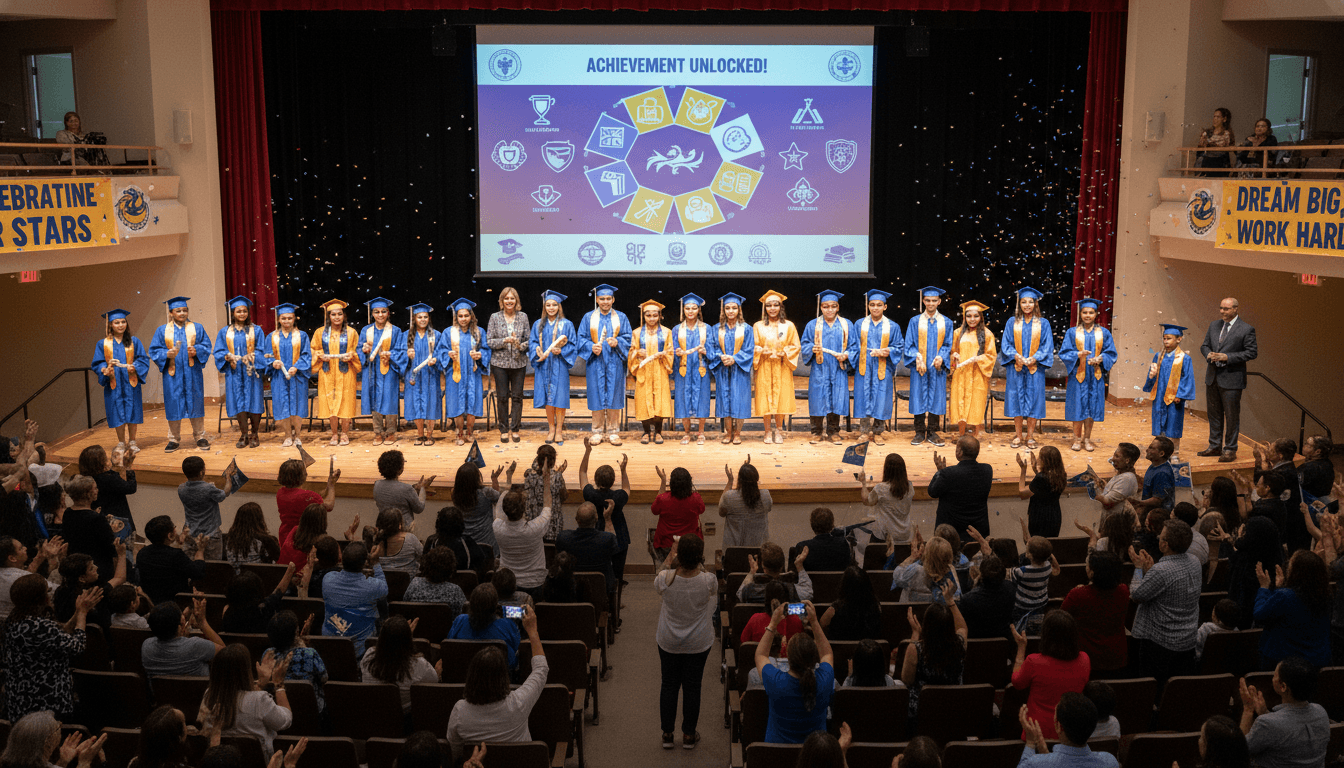
School Senior Showcase Newsletter: Celebrating Four Years of Growth

A senior showcase is one of the most meaningful events in a school year. It is the moment when students demonstrate not just what they have learned but who they have become as thinkers, researchers, and communicators over four years. A newsletter that treats it as such, that explains the scope of student work and invites families to witness something genuinely significant, fills the room with people who are ready to engage.
What the senior showcase is
Open the newsletter by explaining what visitors will experience. If students present capstone projects in a science-fair format, describe it. If they give speeches, explain the topics they have chosen. If they display portfolios of work across their senior year, describe the range.
Families who have never attended a senior showcase do not have a mental model for it. A newsletter that describes the experience in specific, visual terms, what the room looks like, what students are doing, and what visitors do when they walk in, creates the right expectation and generates genuine anticipation.
The work behind the showcase
Describe how long students have been working on their projects and what the process involved. For a traditional capstone, this might include months of research, multiple rounds of revision, a faculty mentor relationship, and a formal defense or presentation rehearsal. For a portfolio showcase, it represents four years of accumulated work and a reflective process to curate and present it.
Families who understand the preparation appreciate what they are seeing far more deeply than families who walk into a room of students with posters without knowing the backstory.
Event logistics
Include the date, start and end times, location within the school, and any parking or entry logistics. For families of presenting students who need to arrive early, specify the time separately from the general family arrival time.
If there is a reception or celebration following the showcase, include that information as well. Families who know the full event arc can plan the day appropriately.
Celebrating individual students
If the showcase allows for it, include a preview of some of the project topics students are presenting. Naming a few of the research questions or project themes, without revealing specific student names unless you have permission, gives families a sense of the intellectual range and ambition on display.
Inviting the broader community
Senior showcases benefit from having audience members beyond immediate family. Community members, alumni, local professionals, and underclassmen all bring energy and credibility to the event. A newsletter that explicitly invites these groups, and explains how to register if space is limited, expands the audience in a way that honors the scope of the work students have done.
Get one newsletter idea every week.
Free. For teachers. No spam.
Frequently asked questions
What should a senior showcase newsletter include?
Cover the event date, time, and location, what format the showcase takes, whether students present in a science-fair style, give speeches, or perform, the range of projects or work that will be featured, how families register or secure a spot, and what visitors can expect the experience to be like. A description of what students have done to prepare, including the scope and duration of the work, helps families understand the significance of what they are coming to see.
How do you communicate the significance of a senior showcase to families who are unfamiliar with capstone projects?
Explain what a capstone project represents: a multi-month independent project that requires students to identify a question or challenge, research it, develop a solution or perspective, and present their findings to a real audience. For families whose students have completed traditional coursework their entire academic career, a capstone project is a fundamentally different kind of work, and explaining that difference builds appropriate appreciation for what the showcase represents.
How far in advance should a senior showcase newsletter go out?
Four to six weeks before the event for families of presenting students, so they can plan extended family attendance, transportation, and any celebration that follows. Two to three weeks for the broader school community, which may include family members of younger students and community guests. A reminder one week before, with a note on what to expect and any last logistics, handles the final outreach.
How do you handle community members who want to attend and provide feedback to students?
If community feedback is part of the showcase format, explain the process in the newsletter. Who is eligible to provide feedback? Is there a structured form? What kind of feedback is appropriate? Community members who know their role in advance engage more thoughtfully than those who are uncertain about whether they are expected to do anything beyond observe.
How does Daystage help schools communicate senior showcase events to families?
Daystage lets administrators send senior showcase newsletters to all enrolled families, so this milestone event receives the community attention it deserves from the start.

Adi Ackerman
Author
Adi Ackerman is a former classroom teacher and curriculum writer with 8 years in K-8 schools. She writes about school communication, parent engagement, and what actually works in real classrooms.
More for School Events
Spirit Week Newsletter: Building School Pride Through Clear Daily Communication
School Events · 7 min read
Community Service Day Newsletter: Mobilizing Families for School-Wide Giving
School Events · 6 min read
Readathon Newsletter: How to Run a School Reading Marathon That Families Actually Support
School Events · 7 min read
Ready to send your first newsletter?
3 newsletters free. No credit card. First one ready in under 5 minutes.
Get started free