
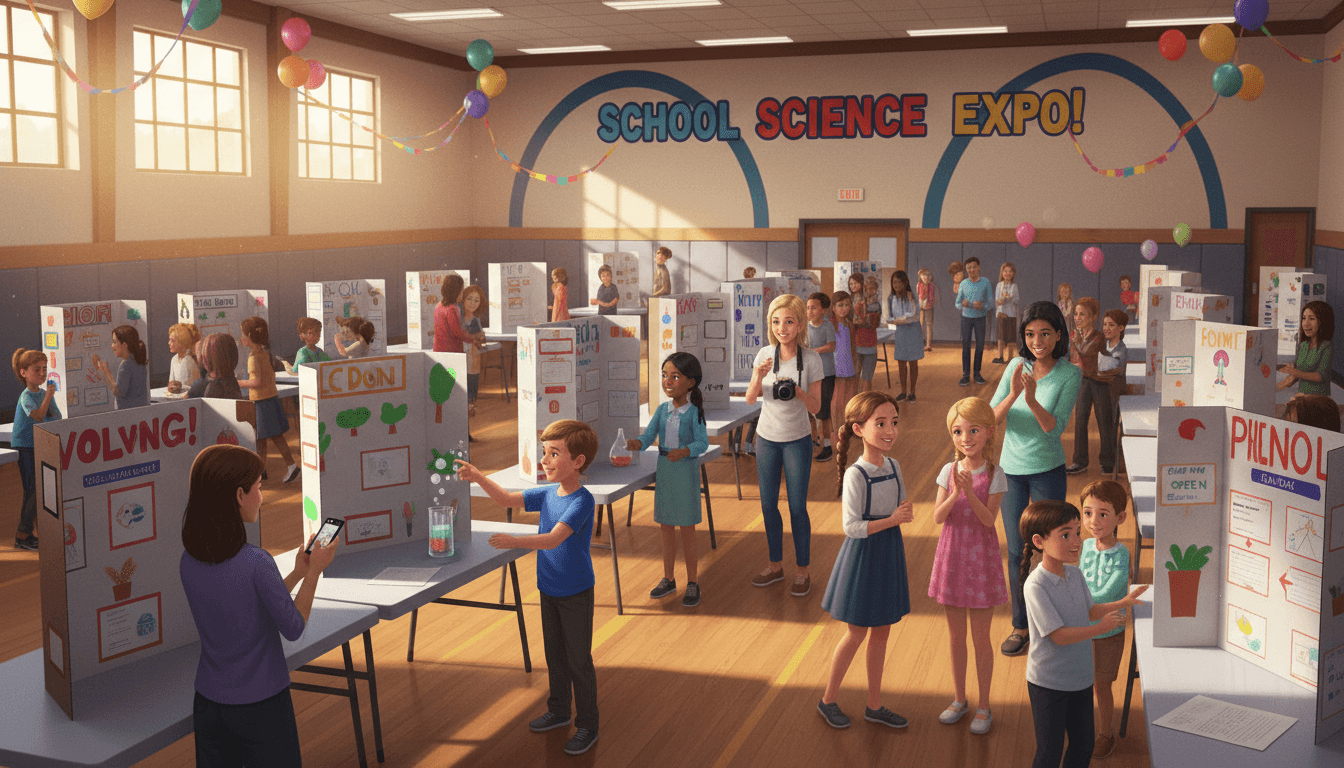
Science Fair Newsletter: Communicating Before, During, and After the Event
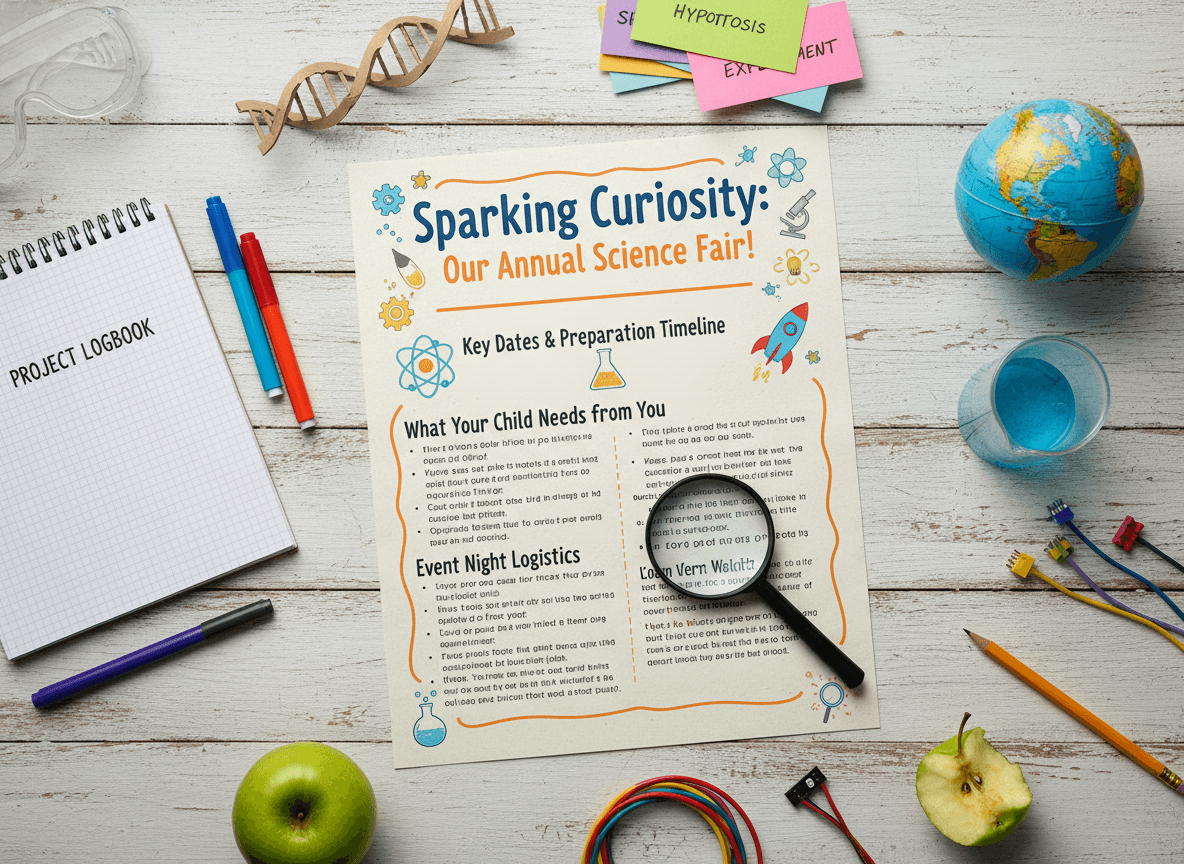
The science fair is one of the most logistically demanding events on the school calendar from a communication standpoint. Students work on projects for weeks, parents are expected to provide materials and support, judging happens on a specific timeline, and the event itself requires families to show up on the right night.
Poor science fair communication creates the same problems every year: students who do not understand the requirements until the last week, parents who did not know they were expected to support the project at home, and families who miss the display night because the date got buried in a folder. A four-touch newsletter sequence prevents most of that.
Six weeks out: the kickoff newsletter
The first science fair newsletter should go home the day the project is assigned or within a day of it. This newsletter sets up everything parents need to understand about the next several weeks.
Include: the project requirements and due dates, what the judging criteria are, what materials students will need and approximately what they cost, and the date of the science fair itself. Parents who receive this information early can budget for materials, plan their schedule around the display night, and understand how they are expected to help without doing the project for their child.
Two weeks out: the support newsletter
At two weeks, most students have chosen a topic and are somewhere in the middle of their research or experimentation phase. This is when parents most need guidance on how to help without taking over.
The two-week newsletter should include: specific ways parents can support the project at home (asking questions, helping gather materials, reviewing the display board draft), what to do if a student is stuck or has changed direction, and a reminder of the final submission deadline. Be specific about the line between appropriate parent support and doing the work for the student. Parents who do not know where that line is will often cross it without meaning to.
The day-before reminder
Send a short newsletter the afternoon before the science fair. Include the event time and location, where students should set up their boards, whether projects need to be brought that morning or the night before, and any logistics families need for the evening (parking, entry point, whether students should be in a specific room at a specific time).
This newsletter should be short and scannable. Families have seen the full information already. They need a quick reference for the morning rush.
Science fair vs. science night: knowing the difference
Not every school event with projects is a competitive science fair. Some schools run a science night or science exhibition where every student presents their work without judging or awards. The communication for these two formats is different.
A competitive fair needs to communicate judging criteria, award categories, and how scores are determined. A science night needs to communicate that every student's work matters and that the goal is sharing and explaining, not competing. Using the wrong framing in your newsletter creates anxiety for students and parents about something that is meant to be celebratory.
Day-of communication for parents attending
Parents attending the science fair need to know where to go when they arrive. Include a simple layout of the event: which grade level is in which area, whether there is a viewing order or if it is open browsing, and what time students will be at their boards for questions.
If there is a judging period during the school day before the evening event, make that clear. Parents who do not understand the timeline sometimes arrive during judging and disrupt the process.
The post-fair celebration newsletter
After the science fair, send a celebration newsletter within two days. This is not primarily about who won. It is about recognizing the work every student put into the project across several weeks.
If you are sharing award results, share them honestly and without excessive emphasis. Families whose children did not win are also reading the newsletter. Lead with what students learned and accomplished, then mention awards as part of the recap. Include a few photos if possible. A newsletter that celebrates the process alongside the results is one that every family can feel good about reading.
Building the science fair sequence in Daystage
In Daystage, you can draft and schedule all four newsletters at the start of the science fair unit: kickoff, support, day-before, and celebration. The scheduled send feature means the reminders go out on time even during the busiest stretch of the project. Your subscriber list stays consistent across the sequence, so every family gets the full communication arc from the first newsletter to the final recap.
The communication is part of the project
Science fair projects fail at home when parents do not understand what is expected of them. They succeed when families feel informed, prepared, and genuinely invited to participate in the celebration at the end. A four-touch newsletter sequence is not extra work on top of the science fair. It is what makes the science fair work for every family, not just the ones who already know how school events operate.
Get one newsletter idea every week.
Free. For teachers. No spam.
Frequently asked questions
When should schools send a school science fair newsletter?
Send the kickoff newsletter six weeks before the fair when project guidelines are distributed. Follow with a support newsletter two weeks out, a day-before reminder, and a post-fair celebration newsletter within two to three days of the event.
What should a school science fair newsletter include?
The kickoff newsletter should cover project requirements, topic selection guidelines, the timeline with key deadlines, and available resources for families supporting students at home. Later newsletters cover board setup logistics, judging schedules, and viewing hours for families attending the fair.
How far in advance should teachers send science fair communications to parents?
Six weeks is necessary because science fair projects require planning, material sourcing, and sustained work over several weeks. Starting communication at six weeks aligns the newsletter with when students receive their project guidelines, so families have context from day one.
What are common mistakes in science fair newsletter communication?
Sending project requirements less than three weeks before the due date is a common mistake that leaves families scrambling. Another problem is not distinguishing between a competitive science fair (with judges and winners) and a science night (where projects are on display without judging), since families need to prepare their students differently for each.
What is the best tool to send a school science fair newsletter?
Daystage supports the full science fair communication sequence, from the six-week kickoff to the post-fair celebration newsletter. Scheduling all four newsletters at the start of the project cycle means communication stays consistent even when the middle weeks of a long project get busy.

Adi Ackerman
Author
Adi Ackerman is a former classroom teacher and curriculum writer with 8 years in K-8 schools. She writes about school communication, parent engagement, and what actually works in real classrooms.
More for School Events
School Fundraiser Newsletter: How to Communicate the Ask Without Losing Trust
School Events · 7 min read
School Spirit Night Newsletter: Turning a Local Event Into a Community Moment
School Events · 5 min read
College Fair Night Newsletter: Preparing Students and Families for the College Search
School Events · 7 min read
Ready to send your first newsletter?
3 newsletters free. No credit card. First one ready in under 5 minutes.
Get started free